Sign up for the daily CJR newsletter.
Didi Ogba, who is twenty-two and works in finance in New York, told me that she no longer watches or reads the news. Growing up, she engaged passively; when she was in high school, her family usually had MSNBC on in the background. She never liked it. She was particularly upset by coverage of immigration, she said, because she and her family officially became citizens just last year, and the subject elicited in her a sense of dread. When she started living on her own, she decided to opt out of news coverage. Now “I’m actually not constantly bombarded by all the horrible, horrible things that are happening in our world,” as she put it. “I think that subconsciously was making me stressed out.”
Following the news can be depressing, devastating, boring, time-consuming, or anxiety-inducing—or so goes the logic of “news avoidance.” News avoiders and, lately, “news minimalists” have been the subject of surveys and books, their “news fatigue” examined and assessed as trending in a worrisome direction. For instance, a report released early this year from the Reuters Institute, which polled some thirty-four thousand people across seventeen countries, found that, in the past ten years, news consumption has been trending down; 40 percent of respondents said they often or sometimes avoid the news. The most common reasons cited were the negative effect of news on their mood and a sense of feeling “worn out” by the amount of news.
But according to Benjamin Toff—an associate professor at the Hubbard School of Journalism & Mass Communication at the University of Minnesota and the author of Avoiding the News: Reluctant Audiences for Journalism—we cannot get away so easily. Many of the people who describe themselves as “actively avoiding news,” who are cutting back on their engagement with traditional forms of news coverage, he said, are still getting what he calls “secondhand news.” This can involve hearing about the news from friends or family, or “seeing discussions of things that happened in the news on Facebook describing ‘that thing that Trump said’”—that is, indirect exposure. “After all, you need to be exposed to news often to be able to actively avoid it,” as Toff told me. So-called news avoiders are, he argued, for the most part still regularly consuming information: “What makes them news avoiders is having this experience of regularly avoiding it, but that isn’t the same thing as screening out news altogether from their lives.”
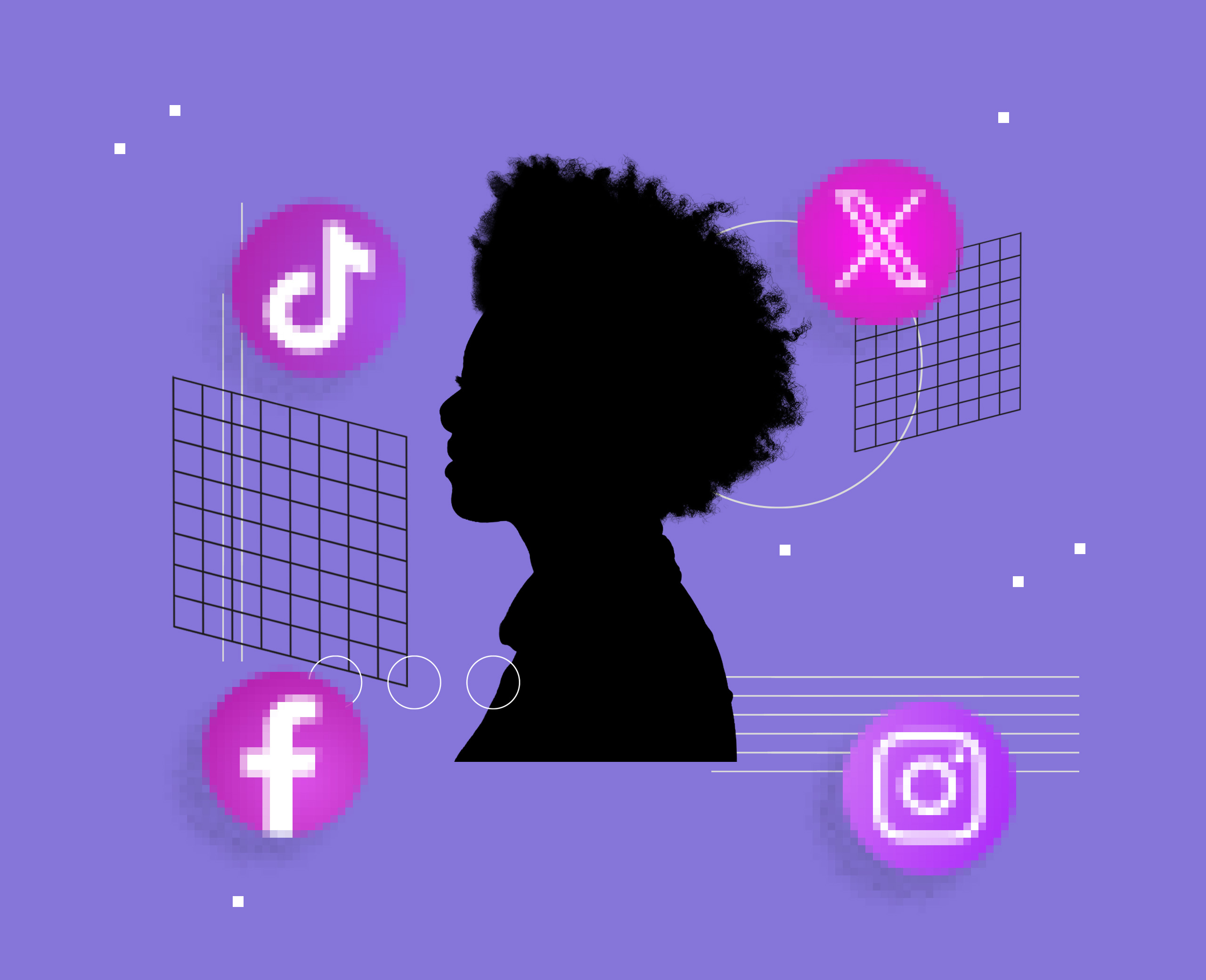
As it turns out, that has been true for Ogba, who said she feels content in her decision to avoid news coverage because, she figures, “I’ll just hear about it eventually from somewhere.” Usually, she said, her news source is her mom or a friend. “If not that, then I just will hear about it on TikTok.” According to recent data from the Pew Research Center, 43 percent of adults under thirty in the United States report that they regularly get news from TikTok—a number dramatically on the rise, from 9 percent in 2020. Another Pew study found that 38 percent of Americans regularly get news from Facebook, 35 percent from YouTube, 20 percent from Instagram, and 12 percent from X. News is there, albeit sometimes without the vetting and context provided by the outlets audiences increasingly want to skip.
Maybe we should not be surprised, given the record-low trust levels in the press: according to a Gallup poll from October, confidence in mass media to report news “fully, accurately, and fairly” is now at 8 percent. “People are maybe more inclined to trust what’s coming from a person rather than what’s coming from a brand,” Philip Lewis, an editor at HuffPost, told me. Lewis, who is thirty-four, may be better known for his X account, which has some 430,000 followers, and his Substack, What I’m Reading, both of which aim to share news related to African Americans. He describes himself as a “curator of a lot of different sources.”
Lewis wonders about the “news avoider” term, having seen through his rise how much news consumption habits are personal, and based on identity. Black people often overindex in watching the news, he noted: according to 2024 Pew data, 76 percent of Black adults say they at least sometimes get news from TV, compared with 62 percent of both white and Hispanic adults and 52 percent of Asian adults. Black adults in the US also seek out news from YouTube, Facebook, Instagram, and TikTok at higher rates than white Americans do. “We want to know what’s going on; we want to know what’s happening,” he said. “I think it’s a matter of how it gets to us.” The notion of avoidance rang somewhat false to him. “Obviously you have the entire history of Black people and the news,” he said. “We’ve been distrusting because we’ve been left out of the conversation for so long, we don’t know if we can trust anyone.” Pew has also reported that 63 percent of Black Americans take issue with how Black people are portrayed in news coverage.
When is someone a news avoider, really, as opposed to being selective about their media consumption? Rachel Lewis (no relation to Philip), a thirty-two-year-old social media manager living in coastal North Carolina, told me that she doesn’t put much stock in local news because it never actually tells her what’s going on in her area. “This could just be where I live, but I feel like there’s so much about ‘We’re getting a new Dunkin,’” she said, when she wanted to know “what is actually happening.” Besides, as she told me, reading traditional news outlets, she’ll wonder: “Is this a real article? This is an AI article. Who wrote this article? It’s so much work to just figure out if what you’re even looking at is real. Are there still editors at this paper?”
Recently, Lewis began a quest to get sidewalks built in her neighborhood. The available local news wasn’t much help in providing the information she needed. “I pay a lot of attention to my town’s Reddit and what people are talking about there,” she said. (Pew has found that about 9 percent of Americans get their news from Reddit.) It’s ultimately easier, she told me, to do a Google search on her town and sidewalks, find the subreddit, and tell herself, “I don’t know who these people are, but I imagine they actually do live here.” Through her Reddit searches, she discovered that her city has an urban planning organization with a bicycle and pedestrian planning committee. She has since started going to meetings.
Lewis said her ideal way of getting news would be to attend a town hall. “I just want to sit in a circle with people in my community and talk about issues that matter to all of us,” she said. “But everyone is so busy, everyone is so overwhelmed. No one wants a stranger knocking on their door. So I think something like Reddit or a Facebook group becomes the closest you can get.” Other avenues—such as WhatsApp groups; crowdsourced apps that, say, track the activity of Immigration and Customs Enforcement; and peer-to-peer Google Docs—won’t show up on news search results, whose algorithms have been trained to dial back on press coverage anyway, in part because of “news avoidance” research. Nor are they taken into account in most studies, including the one done by the Reuters Institute, whose primary sponsor is the Google News Initiative. “TikTok is good, and short-form content I really enjoy,” Ogba told me, “because I can’t sit still.”
This piece is part of Journalism 2050, a project from the Columbia Journalism Review and the Tow Center for Digital Journalism, with support from the Patrick J. McGovern Foundation.
Has America ever needed a media defender more than now? Help us by joining CJR today.