

Sign up for the daily CJR newsletter.
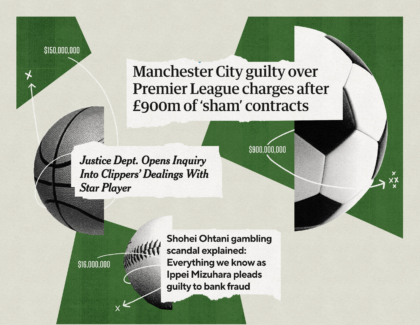
In the 2024 US presidential election, prediction markets achieved a double victory: they accurately predicted the result—prompting unmatchable publicity—and they found in Donald Trump a powerful ally and promoter. Donald Trump Jr. is an adviser to and investor in both Kalshi and Polymarket, the two leading companies in the industry. In the past two years, they have exploited a newly friendly regulatory environment to make their profits and popularity soar. Between May and July, the amount being traded on Polymarket and Kalshi doubled, to fifty-three billion dollars a month. They are now worth an estimated sixty billion dollars combined.
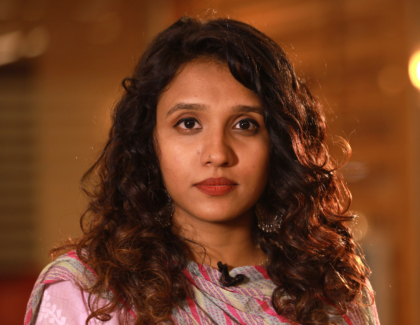
Prediction markets let users put down wagers—which look and sound a lot like bets, but with even looser regulations—on almost everything: traditional sports, tomorrow’s weather, how many times President Trump will post on Truth Social this week, even whether Jesus Christ will return to Earth before 2027. On Kalshi alone, as CJR’s Ivan L. Nagy reported yesterday in an interview with the company’s chief executive, Tarek Mansour, Americans wagered more than 1.3 billion dollars in recent months on the outcomes of the midterms. In this episode of Journalism 2050, cohosts Emily Bell, Heather Chaplin, and Samuel Earle are joined by Kate Knibbs, a senior reporter at Wired, to discuss the rise of prediction markets and what it means for journalism.
Kalshi and Polymarket have already cut deals with several big newsrooms, offering money and data in exchange for publicity. At the same time, one of their core promotional claims—that their products can reveal what’s happening more accurately than journalists or pollsters—represents a frontal assault on the very outlets they call “partners,” and on the journalists those organizations employ. “I’ve noticed that even though the prediction markets have been really successful at making deals with some pretty big media outlets and names,” Knibbs says, “there’s still a lot of pushback from individual journalists.”
Credits:
Producer: Sarah Myles
Research: Samuel Earle
Production assistant: Hana Joy
Art: Katie Kosma
Music: Henry Crooks
Has America ever needed a media defender more than now? Help us by joining CJR today.