Sign up for the daily CJR newsletter.

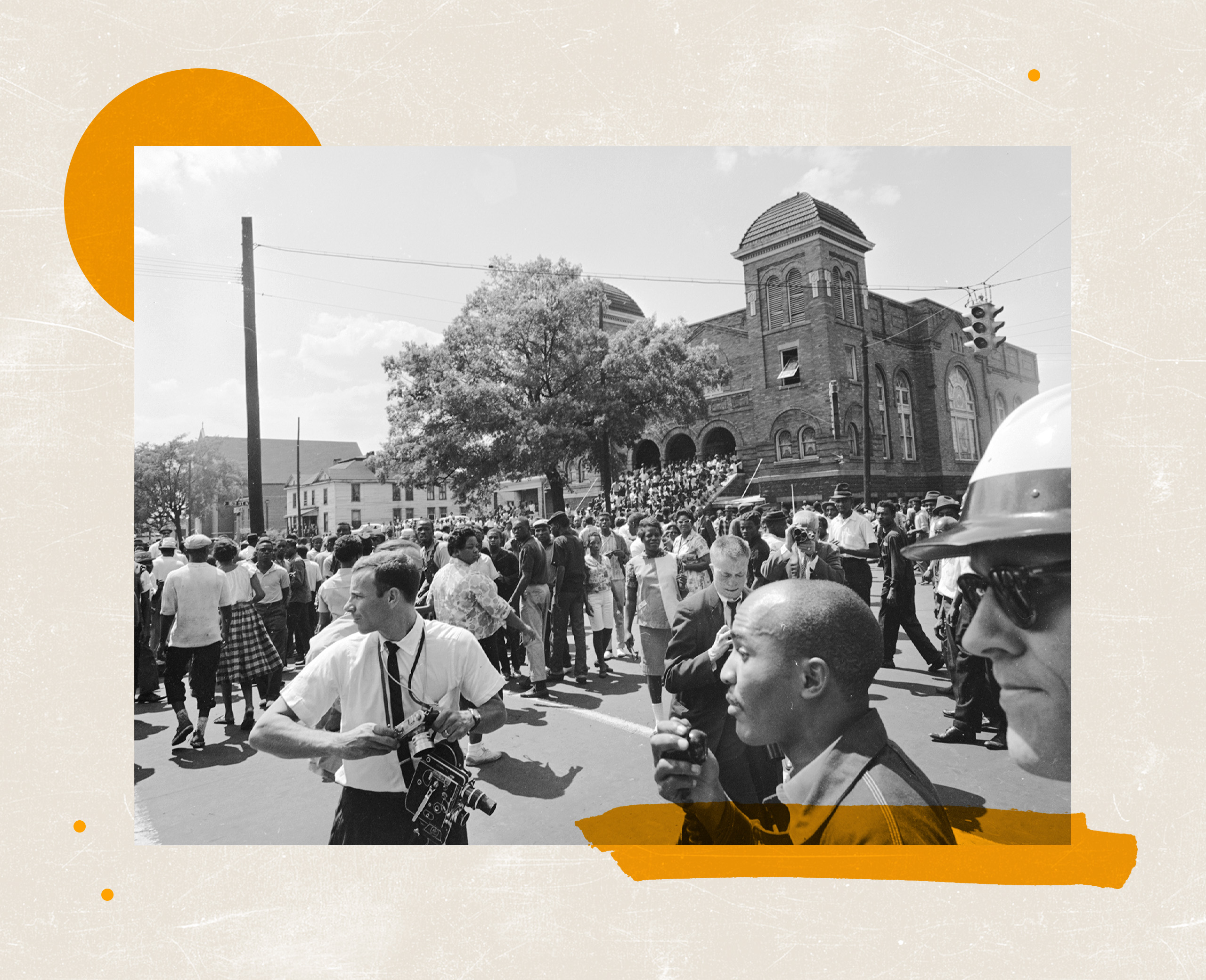
In 1967, President Lyndon B. Johnson established the Kerner Commission in response to widespread demonstrations over the treatment of Black Americans. The following year, the panel released a report, outlining systemic white racism across society—and sharply criticizing the press’s failure to cover the subject of race. “Along with the country as a whole, the press has too long basked in a white world looking out of it, if at all, with white men’s eyes and white perspective,” the report concluded, calling on newsrooms to hire and promote more Black journalists. A decade later, the American Society of News Editors (ASNE) started a recurring survey to track the news industry’s progress toward inclusion, setting an ambitious goal: that the demographics of newsrooms would mirror those of the broader US population by the year 2000. The survey, which for years served as one of the industry’s primary benchmarks for tracking newsroom representation, was last conducted in 2019. ASNE, later known as the News Leaders Association (NLA), disbanded in 2024.
It’s hard to imagine a more apt metaphor for the state of Black representation in media today. At a time when the Trump administration is aggressively dismantling diversity, equity, and inclusion (DEI) initiatives and targeting communities of color, many newsrooms have all but abandoned promises they made during the Black Lives Matter protests of 2020 to increase racial diversity in coverage and staffing. As CJR reported last month, 76 percent of journalists identified as white in a 2022 Pew Research Center survey, compared with roughly 58 percent of Americans who identified as white in the most recent census. “You saw the industry making all these promises, but we are in a moment where we’ve got this backlash that is really exposing which of those promises were values and which ones were window dressing or branding,” Errin Haines, the president of the National Association of Black Journalists and editor at large of The 19th, told me.
In the past year, NBC News has shut down all of its teams dedicated to reporting on Black, Latino, queer, and other underrepresented groups. CBS eliminated its Race and Culture team. Bloomberg and Politico wound down their newsletters about race, according to Nieman Lab. In February, the Washington Post laid off 45 percent of unionized Black staffers amid widespread reductions, but journalists at the Post told my colleague Riddhi Setty that leadership had given up on diverse coverage long before that.
These are a few suggestive examples—but what we know about the bigger picture of representation in journalism is largely anecdotal. There is no comprehensive or current data on reductions of race coverage or diverse staffing across the industry. In 2025, the American Press Institute (API) announced that it had “acquired the survey” from the NLA so that it could relaunch and expand that research. Robyn Tomlin, the executive director of API, told me in an email that they “are working to identify potential funding to support it in the future.” For now, only historical survey data is available on the institute’s website.
“We’re absolutely in a moment now where Black journalists are being disproportionately affected by choices around whose beats get cut and what kind of teams get dismantled,” Haines said. “And frankly, whose expertise is valued versus whose expertise is considered expendable and whose communities and what kind of audiences are just optional.”
It is particularly troubling to see newsrooms cowed by the administration’s cynical efforts to reframe DEI as discrimination, because these are the institutions on which we rely to tell that story. “The press, tasked with protecting American democracy, is best secured by reflecting the American people,” Jelani Cobb, the dean of Columbia Journalism School and this magazine’s publisher, wrote for CJR in 2018. Six years later, many news organizations are still failing to tell the full American story. “You can’t say democracy is under threat and then just eliminate the journalists that are best positioned to explain how that threat is landing in Black communities,” Haines said. “If we get pushed out, America literally knows less about itself at the very moment that it needs to know the truth about itself.”

In The Souls of Black Folk, W.E.B. Du Bois introduced the concept of “second sight” and the ability it gives Black Americans to see the country as it truly is rather than the ideal it is often claimed to be. In A Second Sight: How the Wonder and Vision of Black Mediamakers Push America Toward Freedom, Sarah J. Jackson, an associate professor at the Annenberg School for Communication, explores how that double consciousness is both a burden and a privilege for Black storytellers, giving them “a profound insight: the ability to see through the veil, to understand the contradictions of American life with a clarity often unavailable to those at the center of power. Second sight is a vision, a tool, a gift.”
The book, out this week, is an alternative history of media in America, an insightful and invaluable examination of how Black journalists, photographers, filmmakers, radio hosts, and podcasters have shaped the nation, even while their contributions have too often been excluded from the official record. Jackson combines deep historical analysis with interviews of contemporary Black media-makers conducted over four years to trace the stories of those “who have used the tools of their time—pen, press, lens, mic—to critique the nation and imagine it otherwise.”
By structuring the book around the founding principles of life, liberty, and the pursuit of happiness, Jackson shows how figures such as Du Bois, Frederick Douglass, Ida B. Wells, and Mary McLeod Bethune fundamentally reframed our understanding of these concepts. She draws a direct line between their work and journalists of today who continue to interrogate the idea of the American project—including Cobb and Haines, as well as Ta-Nehisi Coates, Nikole Hannah-Jones, Gene Demby, Gabriella Angotti-Jones, and Chenjerai Kumanyika. These journalists, Jackson writes, continue to give us “a more nuanced, evocative, and honest story about our nation. Their belief that the public can hold—and act on—this story is itself an extraordinary act of faith.”
In the book’s coda, Jackson reminds us that, as the country prepares to mark the 250th anniversary of the adoption of the Declaration of Independence, “one measure of the integrity” of the flood of expected media coverage will be how it treats the stories of Americans on the margins. “Are the stories and contributions to democracy of countless unnamed Americans—whose lives and futures are tied to these histories—considered worthy of remembrance and celebration?” Jackson asks. “Whose freedom is celebrated? Whose life and liberty? Whose happiness protected? What futures imagined?”
One morning in the fall of 2022, Juliana Pache was solving the New York Times’ “Mini” crossword, as she did every day, when she came across something that stumped her. “I don’t remember the clues from that day, but there was something about one of the clues in particular from that Mini that I was like, ‘This feels like a white person would know this and I probably wouldn’t,’” Pache recalled.
The experience prompted Pache, a first-generation Afro-Caribbean American, to look for puzzles centered on Black history and culture. When she couldn’t find what she was looking for, she decided to make it herself. “That day, I bought a bunch of domain names, because I wasn’t sure what to name it yet. And I had never made a crossword puzzle before. I was like, ‘How hard could it be?’” She laughed. “It turns out it’s way harder than it looks.”
Pache taught herself how to construct puzzles by watching YouTube videos and found support on a Discord channel. Three months later, she debuted Black Crossword with her first mini. She has published a new puzzle every day since. The site’s tagline: “If you know, you know.” Clues this week included “‘There’s Always This ___: On Basketball and Ascension’ (2024 book by Hanif Abdurraqib),” “Radical Puerto Rican civil rights organization, The Young ___,” and “Dancer and choreographer ___ Ninja.” (The answers: Year, Lords, Willi.)
For Pache, it’s important that Black Crossword not present Black culture as a monolith. “A really big part of my goal is to connect people across the diaspora culturally,” she told me. “Language is such a huge part of how black folks across the diaspora communicate with each other. We have these kinds of shared languages.”
She has also published two puzzle books: Black Crossword: 100 Mini Puzzles Celebrating the African Diaspora in 2024 and Black Crossword: 100 Midi Puzzles Connecting the African Diaspora last year. She is currently brainstorming for her third book, which will include a wider variety of puzzles, including word searches and logic games. “There are so many ways to challenge hatred and systemic erasure,” she told me. With Black Crossword, she has found a way to do that by centering Black culture. “My primary feeling,” she said, “was this would be a joy to have.”
If you have a suggestion for this column, please send it to laurelsanddarts@cjr.org. We can’t acknowledge all submissions, but we will mention you if we use your idea. For more on Laurels and Darts, please click here. To receive this and other CJR newsletters in your inbox, please click here.
Has America ever needed a media defender more than now? Help us by joining CJR today.