Sign up for the daily CJR newsletter.
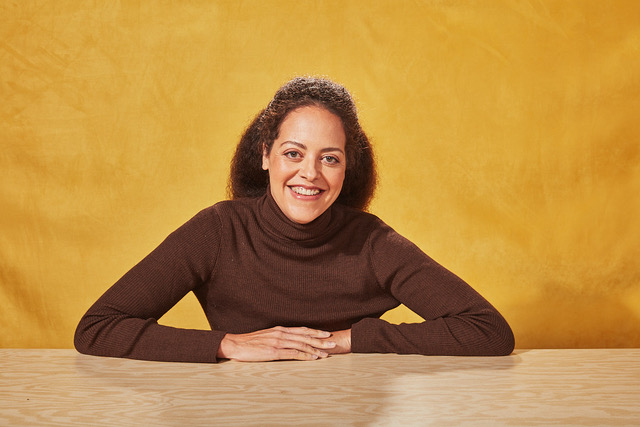
In 2015, Anna Holmes was asked to give the commencement address at Emma Willard, an all-girls boarding school in Troy, New York. After some deliberation, she decided to center her speech on the word “no” and all the ways in which women and girls are expected to be obliging. She hoped that by encouraging the students to say no more often, she could “complicate” how they “interact with the world.”
Holmes—who founded the unapologetically feminist Jezebel, in 2007; is now a contributing writer at The Atlantic; and has been a friend for years—has since remained engaged with the word. She still struggles, she told me, with anxieties about when and how to say no. That became the topic of her new book, The Power of No, out this week from Crown. Holmes describes it as a “subtle manifesto.”
“No,” Holmes writes, is “an essential tool for self-preservation, autonomy and emotional health. For asserting who we are…and who we want to be.” In a series of meditations and vignettes, the book explores the cultural and personal implications of refusal. Holmes draws on an eclectic group of experts—sociologists, social psychologists, linguists, astrologists, a sex coach—and literary sources from Harriet the Spy to Jane Austen. I talked to Holmes about the difficulty of writing this book, what journalists should say no to, and how, lately, she can’t stop saying yes. Our conversation has been edited for length and clarity.
SB: I don’t think of you as someone who would have trouble saying no. I’ve always admired what I’ve experienced as your moral clarity. So how did you end up writing on this topic?
AH: The time in my life when I felt the most self-realized and confident and self-possessed enough to say no was when I was really young, like six, seven, eight, nine years old, and then something happens and girls start losing themselves as they enter preadolescence and adolescence. The way I always put it is that I kind of collapsed into myself with insecurity and trepidation. And I felt like that didn’t just end when I turned eighteen, but that the rest of my life has been an attempt to claw myself back to the place where I was spunky and unbothered.
I was asked to give a commencement speech, and I was terrified because I’d never done that before. I was like, “What would I say to them?” They’re privileged enough to be going to this school where they’re encouraged all the time, and they’ve probably heard all their lives that you can be whatever you want to be, so they’ve been encouraged to say yes. What if I encouraged them to embrace the idea of saying no, which we have all been socialized, as females, not to do? I thought maybe this would be a way for me to explore the issue, not just to tell them something, but to be in it with them.
So I gave the commencement speech, and then I thought about it over the years, and I just kept being fascinated by the problem of saying no. I wrote a piece for The Atlantic in 2021 as a kind of test case to see if there was a book there, and then I sold the book, but it took me a long time to write it. I felt like the book that I wanted to do was a big, ambitious survey of a variety of things, like how “no” plays out scientifically, how it plays out psychologically; I had all these big ideas. But when I started working on it, I just couldn’t figure out how to do it. I was really suffering about it. I had great conversations with academics and sociologists and social psychologists and people who study the acquisition and negation in language among children. I get excited when I’m doing reporting and I find someone who has such a specialization that I can’t believe that it exists, and they’re the perfect person to talk to, but I couldn’t figure out how to write it. And I became full of self-loathing, because I was like, There’s something wrong with me that I can’t figure out how to do this book. And the self-loathing was really demoralizing because I wondered whether I had forgotten how to write.
Then last year, my editor had a come-to-Jesus moment, because I was sending her material and it just wasn’t working, or I was getting too deep in the weeds. I did this whole chapter that was a write-up of the history of women’s self-defense, and I got so swept away in the reporting that I ended up writing twenty thousand words. And my editor had seen the chapter, and was probably a little concerned because I’d gone off on this reporting tangent, for lack of a better word.
How did you finally crack it?
She and I had a discussion, and then she talked to a colleague. Another mistake I made is that I hid the fact that I was struggling for a long time. If I had not hidden that, because I was ashamed, then maybe I would have cracked it earlier. Because the colleague said, “What if she does a much truncated version of the book?” And I was like, “Oh! I can see that. I can do that because I have all this reporting.” So writing the version of the book that you have in your hands probably took me about two months, because I had all this stuff I could draw from already. And the relief I felt at the prospect of having cracked it allowed me to write a book proposal for another book. My creative energy, which I was worried had disappeared for good, came roaring back, and I was so fucking relieved that I could still summon the excitement and energy and vision for something that could work.
So that’s the whole story of the No book. I don’t know if it’s fair to say it almost didn’t come about, but it was very grim.
So you’re writing the other book now. It’s a memoir?
It’s a sex memoir. That’s the easiest way to describe it. It’s about my midlife sexual Rumspringa after a divorce and the death of my ex-husband. I’ve been working on that, and it’s due in a couple of months.
You’ve had a lot of different roles in journalism. You’ve been a writer, you’ve been an editor, you’ve been an executive, and now you’re an independent journalist. How has working independently required you to think differently about when and how you say no?
My initial reaction to that question is that it makes saying no harder, because I feel more beholden. I get paid if I write. I still have some trepidation about the idea of being difficult. I don’t want any editors to ever think I’m difficult, because I rely on them so much for making money.
But I also just don’t care as much anymore, because the older I get, the less I give a shit as to whether someone deems me difficult. My problem is not that I’m being asked for things that I have to say no to in any major way. It’s that I keep saying yes, and then I get overwhelmed. I both want to do the work and I need any freelance check I can get.
It sounds like part of what you’re struggling with is how to say no to yourself.
Yes. Because I have these ideas and then I get excited about them and then I want to pitch them places, and then I do and sometimes they get accepted. I can’t say no to myself. It’s a function of my interest in whatever the piece is that I want to do, and it’s self-inflicted. And what I’m able to do, luckily, is when I get stuck on one thing, I can just pivot to the next thing on any given day. So even though I may not have edited down the sex book as much as I wanted to that day, I don’t have a complete feeling of failure, because I pivoted to something else that is in the pipeline. And so I end the day feeling like Okay, I got some things accomplished.
The thing is, even today, I don’t know how much of my capacity to say no is gendered. I don’t know how much of it is racial. I don’t know how much of it is economic or class-based. For example, I didn’t grow up with very much money, and I am often afraid that if I say no, I’m going to be punished for it, or I’m going to lose out on an opportunity that’ll never come again. I guess what I would say is that I still find it difficult to say no for a lot of economic reasons, and I hope that I make that clear in the book, that it’s easy to say “Say no more often,” but it’s not actually easy to do it.
The thing you do offer in the book is some context, some research, some sort of thinking around how one might say no, even in cases where it’s not easy.
There are ways to be self-confident and self-realized and communicate “no” so that you own it and the other person can’t necessarily disagree with you, because that’s a tactic people use: they either don’t hear the “no” or they try to talk you out of it. One of the steps in saying no is realizing that you have the right to do it in the first place. Trusting my intuition, which is related to this, is something that took me a long time to learn how to do.
You founded Jezebel, which was groundbreaking in its feminist point of view, and it led to more feminist perspectives in mainstream publications. When you look at the current landscape, do you see that progress, or do you think there’s been a retreat in the same way we’ve seen a retreat on coverage of race?
I think there was a generation of women who took a lot of the messages, analysis, and spirit of Jezebel and other feminist media entities to heart, and it isn’t like it has been erased from them. I do see those conversations happening, but sometimes they’re happening on social media, not necessarily in—and I hate using this phrase—the mainstream media.
I feel despairing in some ways because of the political climate we’re in. It’s not just the dismissal of women, it’s active hostility toward feminism and racial justice. Things have changed in the past fifteen years, which is how long it’s been since I left Jezebel. It felt like there was much more momentum around these sorts of discussions then, and it felt exciting, but I don’t feel as demoralized when I engage with social media, where there are unapologetic voices around race and gender that I think are heartening, and that I feel come from the DNA of some of those sites, whether directly or because it was passed down.
What do you think journalism and journalists should be saying no to more often?
They should say no to what their editors or their parent companies are doing to kowtow to the Trump administration and to gloss over the utterly unprecedented nature of the assault on journalism and journalists that is happening. I think people should be screaming from the hills. Some people are, but the sheer number of outrageous things that are done make people numb—it’s the shock and awe. I think journalists should try their hardest not to succumb to the shock and awe.
Has America ever needed a media defender more than now? Help us by joining CJR today.