Sign up for the daily CJR newsletter.
As Abdul El-Sayed’s star rose, Michigan ascended as a national story about the future of the Democratic Party. His win in the state’s Senate primary—against Haley Stevens, the establishment candidate—became the latest example of voters’ willingness to lean left. Across the country, major newsrooms have been trying to read the signs in anticipation of November’s midterms.
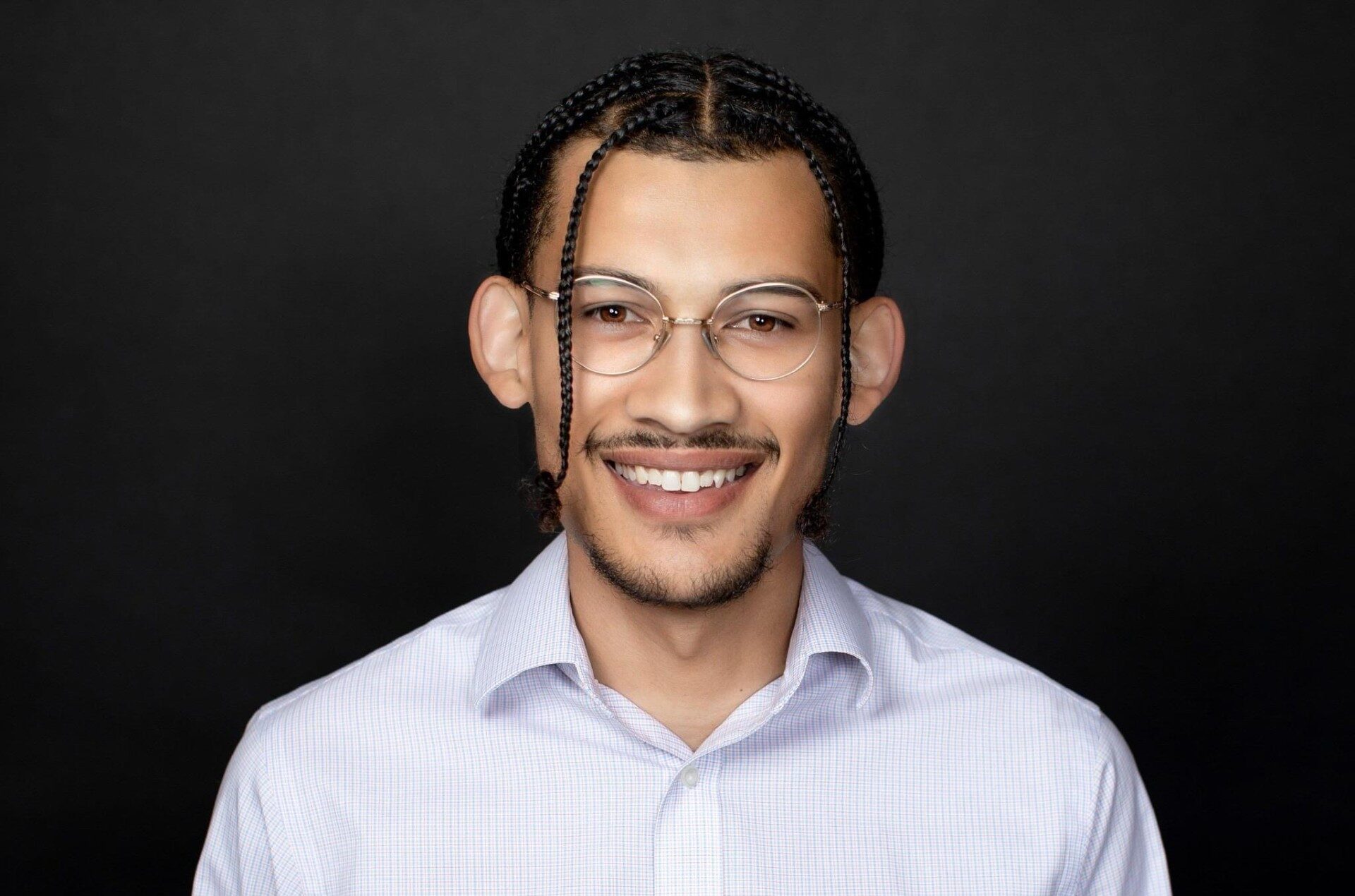
Sam Robinson, a twenty-nine-year-old Detroit-based reporter for the Michigan Chronicle, the state’s oldest Black newspaper, has had a view from the front lines of local coverage. His approach is less pundit, more personal. Lately, his videos of voters have gone viral on social media: He tees people up and says little, letting them speak their minds with refreshing candor. “She’s one that is on my speed dial, one that I can talk about racism,” a Stevens supporter says. “He’s somebody different. We need changes and shit, you know what I mean?” an El-Sayed voter tells Robinson.
“To me, the people are more important than the lawmakers,” Robinson told me. “A random janitor, a Kroger employee, or an auto mechanic—what they say is always going to be more interesting.” As his focus shifts from blue cities to rural red regions ahead of the general election, he intends to keep the conversations going. Our interview has been edited for length and clarity.
ILN: How was this primary season different to cover in Michigan from previous ones? What stood out the most to you?
SR: The primary cycle involved people who were previously not activated or motivated—people who sat out 2024 because they were upset with the direction of the Democratic Party, either with the handling of the war in Gaza or with Kamala Harris. People under thirty-five didn’t vote for her. Black voters weren’t that excited to vote for her either. Now a lot of those young people who were disengaged or disenchanted have begun to participate.
You’re talking to voters on the street with a camera. How has that been received by interview subjects?
It takes some skill and having to prove yourself. Being at the Michigan Chronicle helps, because it’s a community newspaper that’s been around for a hundred years. So everybody knows its history of capturing the biggest stories within Michigan’s urban Black community.
But a lot of people are hesitant. I’d say the ratio of people who don’t want to talk on camera compared to those who do is ten-to-one. Ten years ago it was easier to be like, “Hey, can I record you?” because people weren’t worried about going viral. But now anyone on my Twitter can end up on Hasan Piker’s stream.
How has race been a factor during this election cycle?
The discourse wades into a broader xenophobia conversation—the white-supremacist construct we all exist in. Blue Dog Democrats are worried about having a guy named Abdul El-Sayed running statewide in Michigan, especially in areas where people might be “more sensitive” to names. And by sensitive, I mean racist.
There’s also a disconnect between Arab and Black communities. There’s a scarcity mindset that there are only so many resources and Arabs are somehow taking Black people’s share. It’s also part of the larger anti-Muslim sentiment. Jake Lang, the racist provocateur, recently visited the church of Lorenzo Sewell, a Black pastor who also hosted Donald Trump in the 2024 election cycle. Lang compared Detroit’s urban neighborhoods to that of Dearborn, saying, “Look what they’re taking from you.” I don’t know what that means, because they’ve taken nothing from anyone. But people are afraid of things that they don’t know, and they start to form conspiracy theories.
Writing for the Michigan Chronicle, what are the things you cover and focus on that other outlets may not?
I’m part of a community, whereas others just parachute into mine. The guy that cuts my hair in the barbershop also cuts Lieutenant Governor Garlin Gilchrist’s hair. I go out and see my city council members at the same venues. We’re people in a world together, while the national reporter flying in for the weekend has no relationship with them.
National reporters paint us all with a broad brush. Black voters are going to do this, Jewish voters are going to do that, Muslim voters are going to do this. But these are not monolithic groups. I know more Jewish people who voted for El-Sayed than Stevens, and so did my barber, a sixty-five-year-old Black man—who should’ve “normally” been a Stevens voter.
What are the differences in covering the main race compared with the primaries?
Now I get to go all over the state. I’ll get to see Trump’s influence on Michigan. A lot of people that I talk to who once were very supportive of Trump are no longer, and this time his name is not on the ballot, which is when Republicans usually struggle. There’s no world in which El-Sayed is not the front-runner—if he loses, it will be because of the fault lines of the Democratic Party.
How do you approach MAGA voters?
People don’t expect me to be in their space at a Republican event. They’re like, “Oh, wow. Who’s this kid?” I’m not a kid anymore, but I still look young, and I grew up in a conservative area. I guess I just have that charm. So I approach everybody the same way—I’m just myself.
People want to talk, man. Even though a lot of them are skeptical at first, ranting and raving about politics is like therapy to them. All I’m doing is putting my phone in front of somebody’s face and saying, “What do you think about the election? What are the issues that motivate you?” But you always have to have a conversation with them first, and a lot of people don’t do that; they just go up and start talking about politics. Just be a real person first. Reporters forget to do that.
But at the height of the fake-news era, Republicans still love talking to me. They’re like, “Are you the fake news?” To which I say: “Maybe I am. Let’s find out after I do my story.”
Has America ever needed a media defender more than now? Help us by joining CJR today.