Sign up for the daily CJR newsletter.
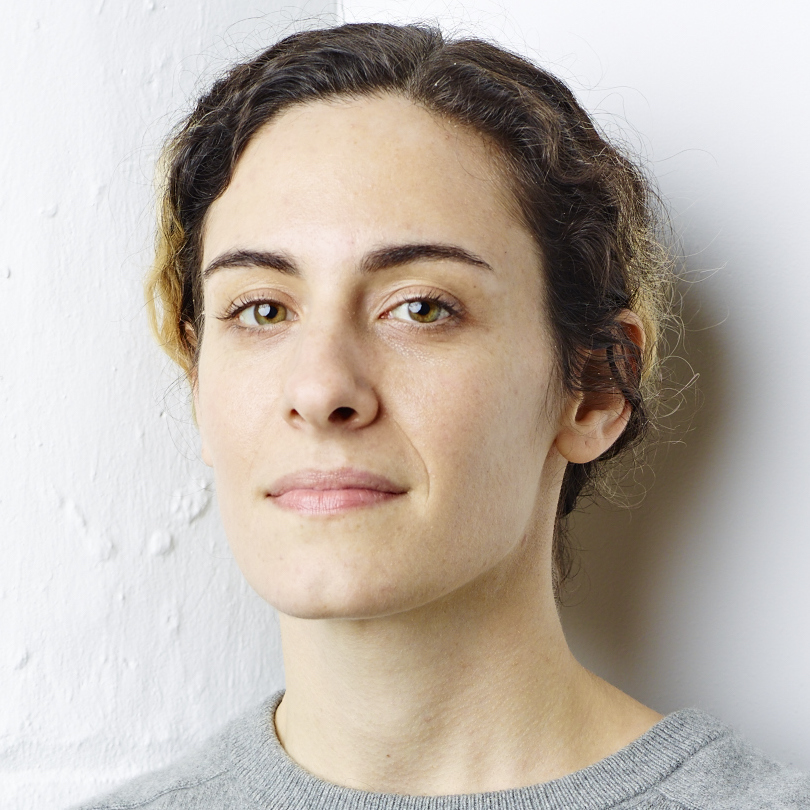
Last spring, Sarah Leonard, the editor in chief of Lux, a socialist magazine covering politics and culture, hit the road with a handful of colleagues to talk to college students. The group wanted to discuss the most strident attacks on campus speech, so they headed for Florida. Part of their goal was to generate conversations that would be the opposite of the famous campus “debates” led by Charlie Kirk, the right-wing influencer who cofounded Turning Point USA and was shot and killed at Utah Valley University almost exactly a year ago. The Lux team wanted to welcome students who felt vulnerable in the current political environment.
The tour kicked off in February at the University of Central Florida, and continued to Florida International University, New College in Sarasota, the University of Iowa, and Duke and Vanderbilt Universities. Leonard and other Lux staffers met students who described how changes in university DEI policies and the elimination of gender studies programs were interfering with their educational goals. As the fall semester begins, Lux is mapping its next stops.
Leonard and the Lux team plan to visit campuses in Texas and Indiana this fall, along with others across the country based on student requests. Also in the works is a fall college issue, which Leonard hopes will provide a “definitive picture and analysis of where the attack on higher ed is right now.” Our conversation has been edited for length and clarity.
RS: What inspired you to start Lux?
SL: I wanted a publication that built in a feminist, queer, anti-racist analysis from the jump. Sometimes that sort of analysis felt a little bit tacked-on at other publications. And I wanted a magazine that was really exciting to read and get in the mail, that looked good, that read as well as any commercial magazine, but would be independent and dedicated to culture and politics from a feminist perspective. So, if you look at the print version of Lux, you can definitely see that I read glossy magazines growing up. They were this bridge to other worlds, whether I was reading The Nation or Vote; they create a sense of a larger universe that you can participate in. And I was having the feeling that, in a way, we’re most needed in places that are not New York, that do not have a lefty ecosystem or a dense infrastructure for supporting intellectual work and the discussion of ideas, but that we might be more needed in places where those things are actively under attack, and especially for people who are young and who are finding their voice and figuring out their place in the political world, trying to figure out how they represent their own interests, how they think about their own identities. And the fastest way to find those folks was to go to colleges.
It’s important to cite the PEN America report that came out last year—I think the numbers are higher now, but at the time, they wrote that twenty-three states had enacted laws or policies censoring higher ed, and over half of college students in the US are enrolled in a state that has enacted at least one law or policy censoring higher ed. More recently, the University of Alabama shut down magazines that focused on Black and women students. So the ability to talk about the sorts of ideas that we work on is being systematically attacked across the country, and we felt it was our job as a magazine to work against that. Everyone deserves access to these ideas, and to talk about ideas.
What gave you the idea to start hosting discussions at college campuses?
So much controversy was going on on campuses, and I wanted to engage more with students around those topics. And then we saw the attacks by the Trump administration and by state leaders like Ron DeSantis on higher ed and on students. Students and young people are systematically being pushed out of public life. We spent a lot of time in Florida, and Florida has some of these big, sprawling commuter campuses. If you know you’re going to be under threat as a trans student for using the bathroom that’s right for you, and if you can’t find a bathroom anywhere but your dorm, you’re in real trouble when it comes to participating in university life.
Students can’t necessarily get good reproductive healthcare where they are. That is another way of making them unsafe and less free and pushing them out of public life. So our sense was that this was pretty outrageous, and that students belong in public life and should be able to talk about the issues that concern them. And if universities are going to make that hard, we’re going to go there and try to make it easy.
To what extent was this initiative meant to be an antithesis to Charlie Kirk and Turning Point USA’s campus tours?
We were thinking more about the conversations we want to have with students. But of course, that format was in the back of my mind as something I did not want to do, that left a bad taste in my mouth, and struck me as the product of someone who saw students as people to dominate and co-opt instead of equals to have serious conversations with.
I’ve seen plenty of Charlie Kirk videos, and one thing that really distressed me was this cloaking of badgering and trolling students as some sort of exercise in enlightened free speech. If you watch those videos, Kirk is not engaging in a dialogue with students in good faith. He’s using a sort of high-school-debate-team overtalking mode to dominate them. And in fact, if you look at the videos of Kirk, they’re usually called something like “Conservative debater dominates progressive students, makes them cry.” To pretend that’s some sort of serious public debate or effort at discourse across the political spectrum is absolutely ridiculous, and it’s insulting to students. If you have a desire to dominate students, you are the last person who should be anywhere near a college campus. One of the things we want to create when we travel is a space where people can actually talk about the issues that concern them, actually discuss them in depth, and have a real dialogue, a real conversation.
Can you share a little about what you’ve learned on the tour so far?
I think that students’ most immediate concerns are not always what we expected. At New College, for example, their biggest and most immediate concerns were about being able to finish their degrees. They thought that their actual day-to-day education was being destroyed by what DeSantis had done to the university, so they weren’t going directly to explicitly political questions. They were immediately concerned about the quality of their education, and that made total sense to me. But that’s not exactly what’s in the news. And I think when we went to FIU, I was maybe unprepared for this palpable sense of fear and anger produced by ICE on campus. It was on everybody’s mind. Everybody had something to say about it. What students told us there was that ICE has designated four campus police officers as ICE agents, but the university wouldn’t tell them which campus officers these were, and those people have access to dorms. So people were terrified.
It was really upsetting to see the position that these students have been put in, but I was very moved by what they were doing, which was forming a broad coalition on campus to confront the threat and to talk about it. And when they came to that event, they were all able to meet each other, because a lot of these students belong to different groups on campus, and they were exchanging information. They stayed, like, an hour and a half past the end of the event to talk to each other and to talk to us. It’s hard to overstate the bravery of these students in going to school and having to do normal things while being afraid their friends and loved ones are going to be deported, possibly on that very campus.
What are you keeping in mind as you start the tour back up?
There’s a really profound way in which the university is being hollowed out, both made less tenable as a benefit to your future work and career, but also less tenable as a place of intellectual exploration. We’re really trying to give more structural analysis to that crisis. And we can definitely see on tour that that weighs very, very heavily on students. They’re going into debt. They’re worried about their futures, and they’re also just directly oppressed on campus. They can’t talk about all the things they would like to talk about. They can’t take the classes that they signed up to take.
Can you tell me about your upcoming college issue?
We have an amazing issue coming out in early November that includes student voices, that touches on the past and future of gender studies, on the role of AI in universities right now, on the role of protest, the position of student demonstrations in the wake of the crackdown on Gaza protests and what that means for student power. So we’re covering a lot of different issues, partly inspired by the tour, and then we’ll take that issue back out on the road and bring it to students directly.
Has America ever needed a media defender more than now? Help us by joining CJR today.