Sign up for the daily CJR newsletter.
View our interactive of the research here.
When Hurricane Helene battered North Carolina, in September of 2024, communities needed information they could find, trust, and use—fast. They needed to know where to seek shelter, which roads were open, and, eventually, how to navigate complicated insurance and relief systems. They turned to a variety of sources, including local news outlets, as well as communications from schools, libraries, houses of worship, trusted nonprofits, and others.
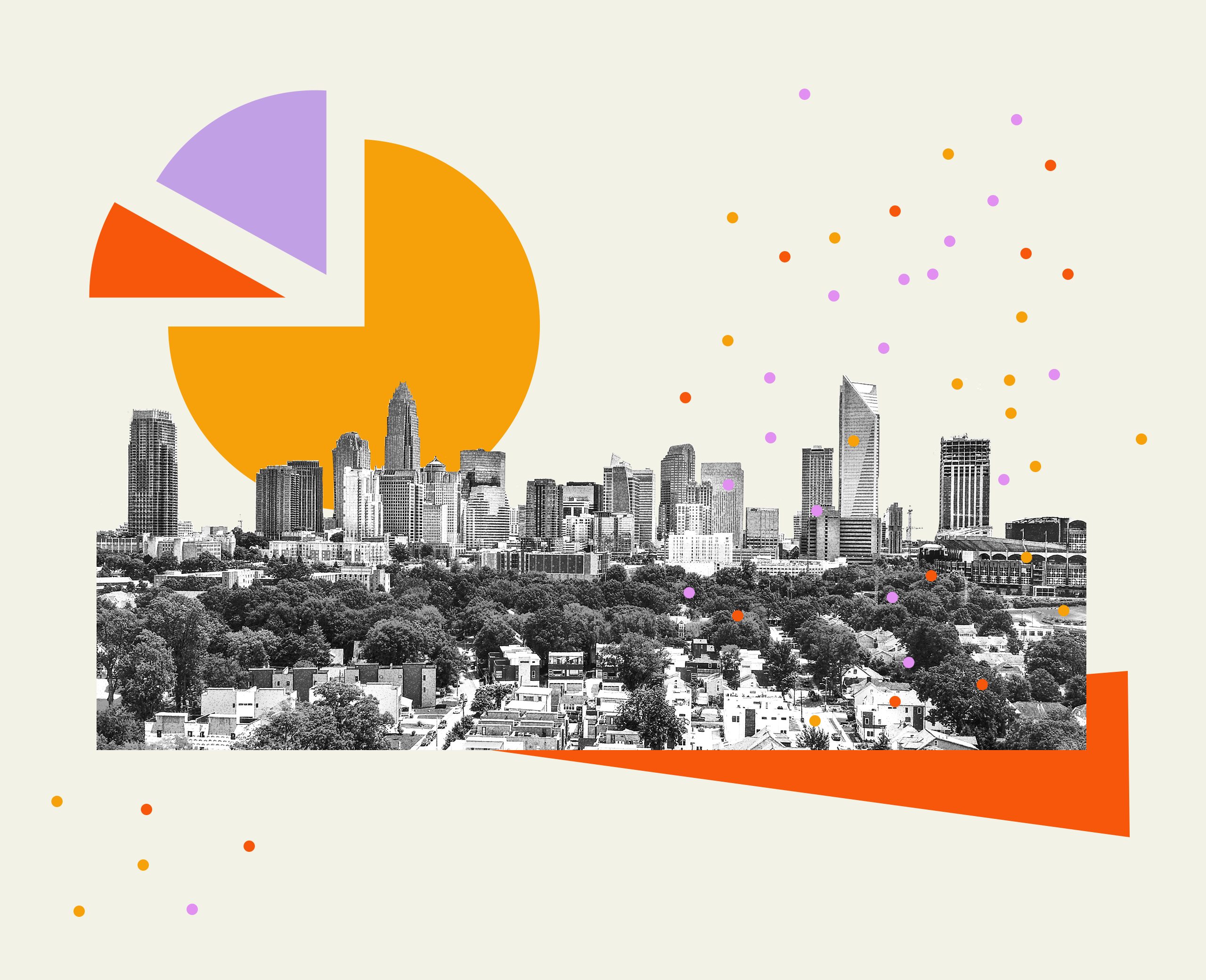
That crisis exemplified how local news works now, and how trusted channels have changed over the years. I’ve been researching and writing about changes to local news, using Charlotte, North Carolina, as a lens through which to look at the landscape writ large. In a new report, funded by and in partnership with the North Carolina Local News Lab Fund, my team and I used a new methodology to gain unprecedented visibility into who is providing vital local news and information, the topics they’re writing about, and the neighborhoods they’re covering—and not covering.
We sought to map the news and information landscape at ground level, to find as many sources of trusted local news and information as we could. We were able to identify sixty-six local news providers, including thirty-two that we called “local journalism originators”—outlets that both employ staff who identify as journalists and perform a watchdog function. The others include church newspapers, sports blogs, and local food newsletters—outlets that might not be included in most mapping studies because they don’t produce “hard news,” but which are important and popular sources of local information nonetheless. We also catalogued 526 Charlotte-serving civil society organizations (CSOs), such as libraries, schools, and houses of worship like the ones residents in the area turned to in the aftermath of Hurricane Helene.
The advent of AI and advanced computational tools have allowed local news mapping to make giant leaps forward. After we scraped content from more than fifty Charlotte-serving news providers and CSOs, each article was run through an AI system to produce a topic map and a coverage map. The topic map is a visual representation of which topics those organizations are covering; the coverage map identifies locations discussed in the articles. Both allow for comparisons across outlets—for instance, filtering to show only Spanish-language outlets, or only CSOs—and include a longitudinal function to show how coverage changes over time.
The results show a bustling landscape of local news and civic information—a city of Instagram creators, Substack writers, podcasters, Facebook groups, and more. It’s also a place where some neighborhoods—especially those with a higher percentage of Black residents—face a deficit of coverage.
From my research team’s perspective, this opportunity to map the civic information landscape of Charlotte provided proof of concept for a method that aligns with both the current mediascape and the needs of communities and funders. We have striven to be as inclusive as possible of the many voices and viewpoints that constitute Charlotte. Crucially, our funder now has an accurate and actionable road map going forward, one that reflects the range of organizations and community assets that have a part to play in sustaining and building Charlotte’s vibrant civic life.
We’ve also confirmed a notion I suggested early on, that many communities—even those without a local newspaper—might be best described not as news deserts, but as information oceans. This framing reflects the many ways people now share and receive local news and information and acknowledges that they feel awash in unvetted, unverified information. In this framing, journalists can act as lifeboats and beacons, lifting people above rumor, misinformation, and pink slime and pointing them toward fact-based news and information. We believe this approach invites problem-solving among connected systems, while others artificially restrict imagination to market solutions that amplify existing inequities.
With this research we join colleagues elsewhere with similar goals, like Listening Post Collective, who have just concluded research in central Virginia; Journalism + Design Lab, who have thought deeply about the many crucial roles journalists and non-journalists alike play in a healthy communication ecosystem; and the Minderoo Centre for Technology & Democracy, who are working to ensure an equitable and fact-based public sphere in the UK.
Join us on May 4 for an in-person lunch presentation and panel at the Columbia Journalism School.
Has America ever needed a media defender more than now? Help us by joining CJR today.