Sign up for the daily CJR newsletter.
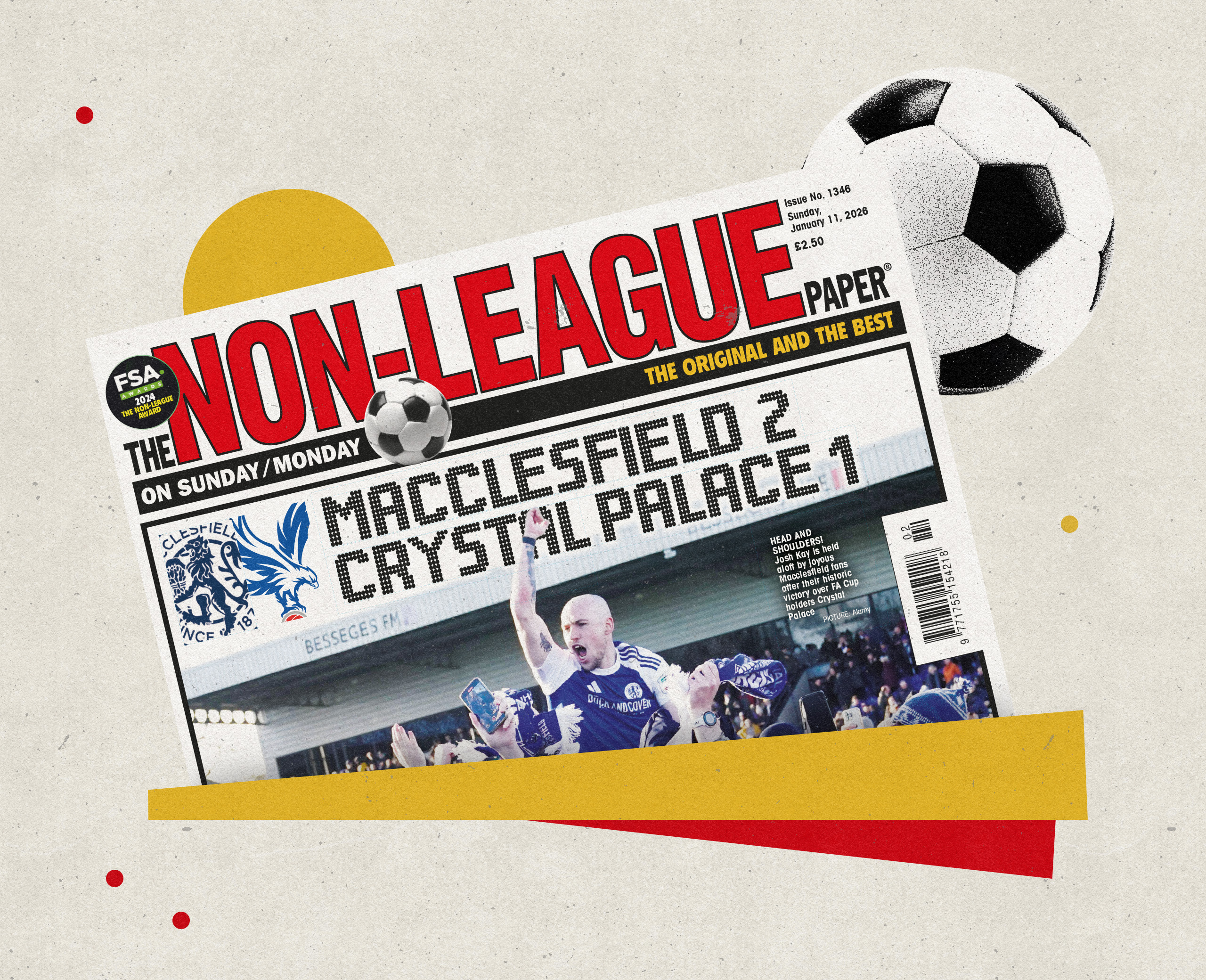
In January of 2026, just seconds into an FA Cup match between Macclesfield FC and Crystal Palace, Paul Dawson, a Macclesfield midfielder, collided with an opposing player and started bleeding from the head. Macclesfield was the undisputed underdog: The team plays in English soccer’s sixth tier. Palace was not only in the first tier—the Premier League, the richest league in the world—but also the reigning FA Cup champion. In other words, this was the biggest game of Dawson’s life. He patched up with a cartoonishly large bandage on his head and dutifully trotted back out. Then, just before halftime, he headed in a goal. The Macclesfield supporters went nuts. When Dawson’s team held on to actually beat Palace, 2-1, the crowd rushed the field in bewildered, head-spinning joy. In the locker room, half-dressed Macclesfield players and staffers huddled to scream-sing Adele’s “Someone Like You.” The Non-League Paper, which is dedicated to covering tiny teams like Macclesfield, reported from the scene.
“You get amazing stories like that almost every year,” Matt Badcock, the editor at large of the Non-League Paper, told me recently. “There’s just so much that can be happening at all times.” English soccer teams are organized into a pyramid of more than ten tiers; the three below the Premier League are collectively known as the English Football League. Everything below that, colloquially known as “non-league,” constitutes the paper’s beat. Based on newsstand sales, the paper boasts, it’s the highest-selling print publication dedicated specifically to soccer in the United Kingdom. Counting subscriptions—the paper is delivered throughout most of England—it sells roughly eight hundred thousand copies a year. This non-league season, which kicked off at the end of July, marks the paper’s twenty-seventh anniversary. Its tagline: “The Original and the Best.”
The paper is published every Sunday, year-round, filled with a regular drumbeat of news and profiles. (One recent item of note: Sheffield FC, officially the world’s oldest soccer club, has signed a sponsorship deal with one of the Spice Girls—Sporty Spice—which means this season, the women’s team will wear a jersey that reads “Melanie C” across the front.) But the bread and butter is match reports. When non-league soccer is in season, roughly nine months out of the calendar year, the paper reports on every game played between the fifth and eighth tiers of the pyramid, along with more general roundups of results further down. “That’s well over a hundred games every week,” Badcock said.
By 6:30pm on a typical Saturday, an army of freelancers and local enthusiasts positioned throughout England and Wales file their missives. Then Badcock and the staff “crash it all” into shape, with just over three hours to hit their print deadline. The reports, which Badcock said are all handled with the “same respect and importance,” top out at four hundred words. One of the challenges unique to this work is that, with some of the smaller teams, the only person available to write a report is often a team volunteer, who may choose to celebrate their own club no matter the result. “Sometimes a team might lose four-nil, but the goalkeeper”—the guy who let in the four goals—“gets awarded ‘Man of the Match’” by an unwincingly biased correspondent. “It’s part of the charm,” Badcock said.
Recent years have been full of challenges, above all the pandemic, which shut down most of the non-league for a season and a half. Still, the paper survived: “We have such a loyal readership that they rallied behind us and we kept going,” Badcock said. That readership is “slightly older,” Badcock told me, and the paper has been focused on building out a robust, paywalled website. The print edition, however, remains “the core heartbeat of what we do,” Badcock said.
The Non-League Paper’s parent company, Greenways Publishing, is family-owned and publishes a handful of other small sports publications (including a spin-off, the Football League Paper). There are eleven full-time Greenways staffers, with only Badcock and three others focused specifically on soccer. It’s a “small team, a close-knit company,” Badcock said. “I’ve been here seventeen years, and I’m not the longest-serving person. A lot of us have grown up together through our adult lives, our marriages, our families growing.”
As for Badcock, he’s been a non-league devotee since he was a child: His father worked as an administrator in the Eastern Counties league, tier five on the pyramid, and used to bring him along on his work outings to games. Badcock is a fan of Farnborough, tier six on the pyramid, and would support them both at home, at a venue called Cherrywood Road, and away, to teeny stadiums all around the region. “I grew up my whole life going to these random towns and grounds,” Badcock said. “These weird and wonderful places you might never find yourself on a Saturday otherwise. I thought it was normal.”
At non-league games, Badcock said, “you feel a part of something. You pay ten pounds at the gate, that money is going to a football club that really needs it. You can stand in the bar afterwards and talk to the players. And you see how passionate people are for their local club.” Badcock is a fan of the flash and the bombast in the higher tiers and the Premier League, too, he said. “But I’ve always loved it at the bottom.”
Has America ever needed a media defender more than now? Help us by joining CJR today.