Sign up for the daily CJR newsletter.
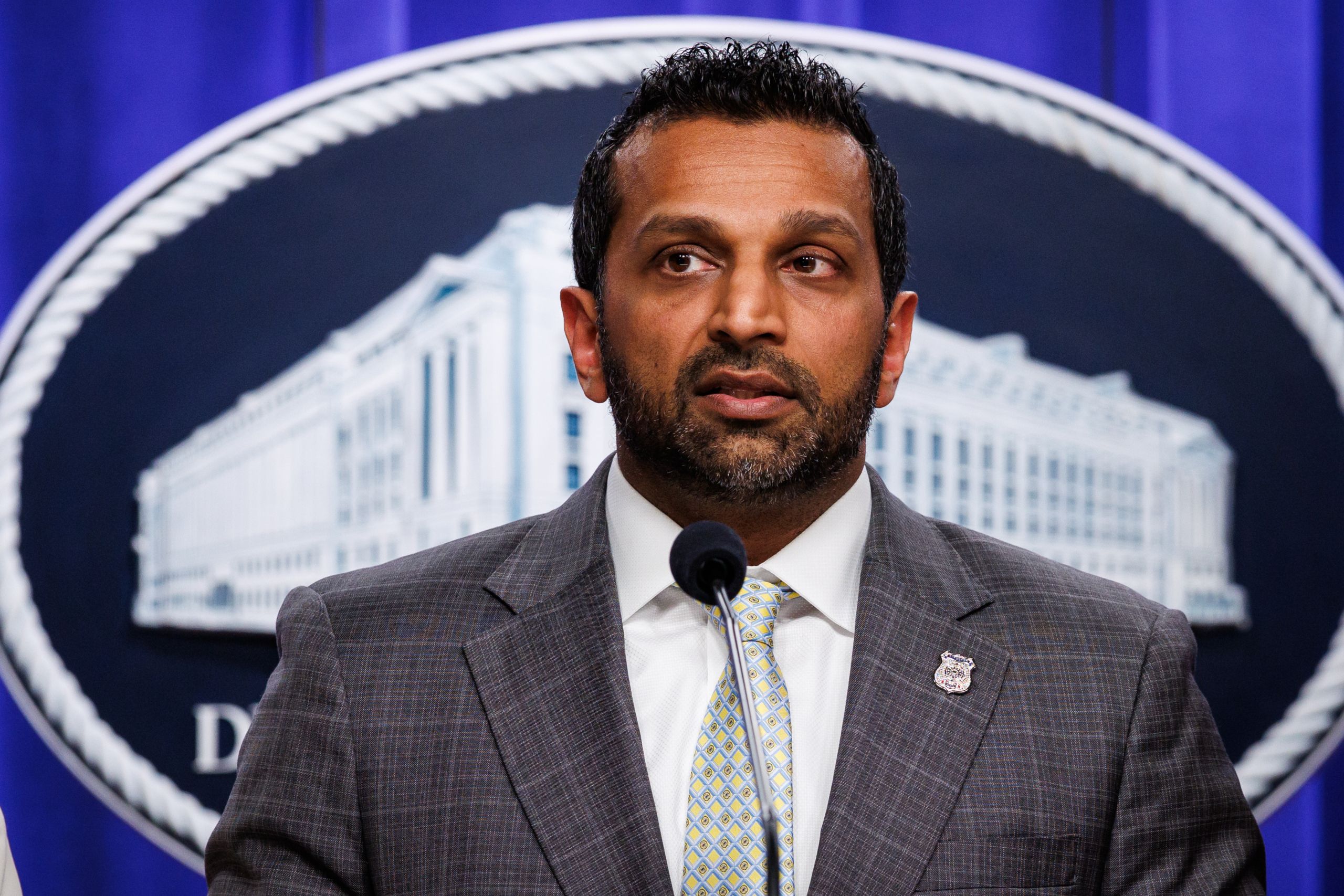
On Sunday, April 20, Kash Patel, the director of the Federal Bureau of Investigation, appeared on Fox News for an interview with Maria Bartiromo. They spoke about an unflattering article in The Atlantic detailing his alleged “conspicuous inebriation and unexplained absences.” Drawing on interviews with more than two dozen bureau insiders, the April 17 report by Sarah Fitzpatrick claimed, among other things, that Patel’s security detail had trouble waking him up “because he was seemingly intoxicated,” and that an unhappy Donald Trump had called up to express his displeasure following his beer-chugging antics with the US men’s Olympic hockey team. Sources told Fitzpatrick that Patel was “a national-security vulnerability.”
The article also published allegations about the politicized nature of the FBI under his tenure. At Patel’s direction, employees have been subjected to polygraph tests to help root out leakers and been asked whether they had “ever said anything disparaging about the director or the president,” according to The Atlantic. “Maria, I’m happy to announce on your show that we’re not gonna take this laying down,” Patel told Bartiromo. “You wanna attack my character? Come at me? Bring it on, I’ll see you in court.” The next day, Patel’s lawyers filed a defamation lawsuit, in the US District Court for the District of Columbia, seeking damages from The Atlantic, as well as naming Fitzpatrick in the suit. (It has been dismaying, although not surprising, to see Fox News carrying water for the FBI’s aggressive crackdown on routine newsgathering. While Bartiromo has been described as a member of the wider “Trumpian court,” surely the network grasps that a blitz on journalistic freedoms will affect it, too?)
Following the lawsuit came a report from MS Now, on Wednesday this week, claiming the FBI had begun a criminal leak probe—known as an “insider threat investigation”—focusing on Fitzpatrick, citing “two people familiar with the matter.” The sources told MS Now this was “highly unusual because it did not stem from a disclosure of classified information and because it is focused on leaks to a reporter.” An investigation would mark a stunning new low for US press freedom; it could be used to obtain Fitzpatrick’s phone records and social media contacts. But Ben Williamson, an FBI spokesperson, denied any such probe was taking place, calling it “completely false. No such investigation like this exists, and the reporter you mention is not being investigated at all.” Jeffrey Goldberg, the editor in chief of The Atlantic, told MS Now that, “if true, this would be an outrageous, illegal, and dangerous attack on the free press and the First Amendment.”
Whether the FBI has probed a reporter for The Atlantic or not, the content of Patel’s lawsuit is dystopian enough. Following a twelve-item list of his supposed accomplishments at the FBI—a section written seemingly with one reader in mind, Trump, rumored to be “fed up” with the distractions at the FBI and close to firing the director, per Politico—the suit takes aim at two core tenets of standard newsgathering in efforts to prove “actual malice” from The Atlantic.
One is the use of anonymous sources. Trump has long been hostile to the practice, last year threatening lawsuits against authors who deploy unnamed sources, and musing on Truth Social about introducing legislation to curb them. Patel, a Trump loyalist who has pledged to pursue MAGA’s enemies, has followed his example. In her article, Fitzpatrick explains that The Atlantic spoke to “current and former FBI officials, staff at law-enforcement and intelligence agencies, hospitality-industry workers, members of Congress, political operatives, lobbyists, and former advisers,” all of whom talked “on the condition of anonymity to discuss sensitive information and private conversations.” One of the criteria by which Patel’s lawsuit argues the article is a “deliberate and malicious smear” is its “complete and total reliance on these anonymous sources.”
The other journalistic norm Patel’s lawsuit tries to erode is what is known as the right-of-reply process. All responsible news organizations seek a response from those criticized in the course of their reporting, providing accusations in detail and offering them the chance to reply—and including their perspective even if they decline that offer. The Atlantic did exactly that, sending “a detailed list of 19 questions” to Karoline Leavitt, the White House press secretary; Todd Blanche, the acting attorney general; and the FBI. All of the contacted parties replied, and responses from them appear in the article. (The response from the FBI, attributed to Patel: “Print it, all false, I’ll see you in court—bring your checkbook.”) Patel’s lawsuit gets particularly confused here: It attacks the magazine, alleging it allowed “less than two hours” for a response to “complex issues.” At the same time, the suit admits that two responses—a comment from the FBI’s Office of Public Affairs and a prepublication letter from Jesse Binnall, Patel’s attorney—were sent to The Atlantic denying the allegations before the article was published. Patel’s denial was featured in the report.
Luckily for The Atlantic and other publishers, lawsuits that pile up the words “malice” and “malicious” like spoonfuls at an all-you-can-eat buffet—they appear nine times in the lawsuit’s nineteen pages—do not prove a defamation case. It has been encouraging to see the magazine come out swinging, attacking what it calls a “meritless lawsuit”—because it has a good chance of succeeding.
As I wrote for CJR last month, a string of recent court decisions have gone against Donald Trump and his administration in their efforts to shut down critical reporting. Just last month, Judge George Hanks Jr., of the Southern District of Texas, threw out a separate defamation suit brought by Patel against Frank Figliuzzi, a former MSNBC contributor. (Hanks ruled that an on-air comment by Figliuzzi, that Patel had been “visible at nightclubs far more than he has been on the seventh floor of the Hoover building,” had represented a “sarcastic, hyperbolic remark” and was therefore protected from defamation liability.) Patel may find his case against The Atlantic similarly fruitless. As a public official, he has a higher bar to clear than an ordinary citizen for proving defamation, and the suit was described in a CNN report by Clayton Weimers, North America director for Reporters Without Borders, as “flimsy.”
If Patel’s FBI has looked into Fitzpatrick in retaliation for her reporting, it wouldn’t be the first time. On April 22, the New York Times’ Michael S. Schmidt wrote—citing “a person briefed on the matter”—that the bureau had begun investigating Elizabeth Williamson, a Times reporter, after she reported that Patel’s girlfriend had received an FBI SWAT team escort, at taxpayers’ expense, while running errands and attending events. For that story, Schmidt writes, Williamson contacted Patel’s girlfriend and reached out to people who knew or had worked with her—normal journalistic practice—which led to her feeling “harassed.” The FBI told the Times it was “concerned about how the aggressive reporting techniques crossed lines of stalking,” while adding that “no further action regarding Williamson or the reporting was ever pursued by the FBI.” As Joseph Kahn, the Times’ executive editor, put it in a staff email at the time, this should be understood as “an attempt to criminalize routine newsgathering.” “It’s alarming. It’s unconstitutional. And it’s wrong,” Kahn told Schmidt.
According to Patel’s paranoid, berserk definitions of journalism, shielding the identity of whistleblowers is “advocacy.” Including responses to a comment request is “malicious.” Reporting on the use of public funds is “harassment” or potentially “stalking.” And reporters who try to hold public figures to account are fair game for law enforcement probes. The FBI has lined up the core tenets of newsgathering, like glass bottles on a wall, and is taking aim at them for target practice.
Has America ever needed a media defender more than now? Help us by joining CJR today.