Sign up for the daily CJR newsletter.
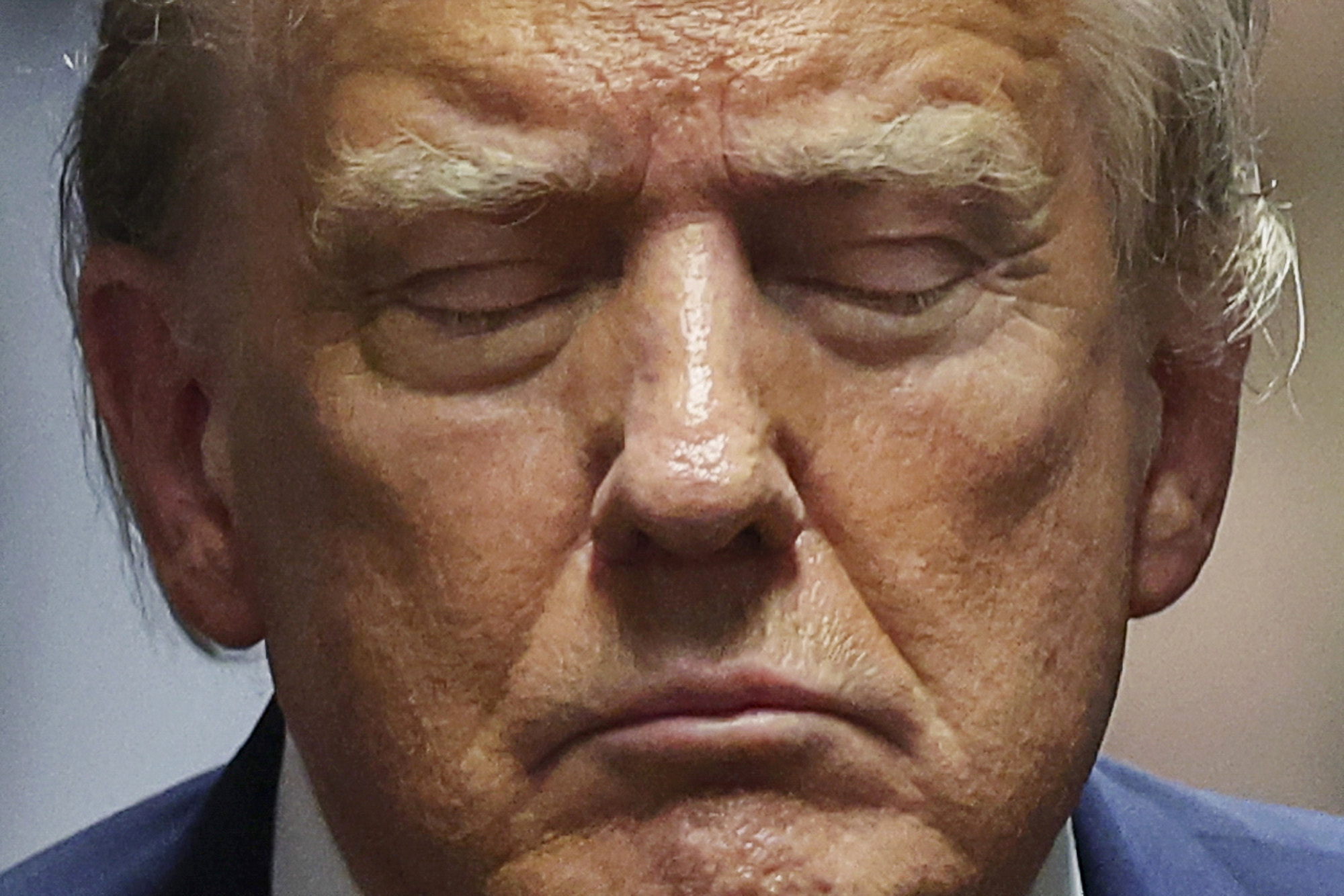
Donald Trump has seemed extremely sleepy lately. He appeared to doze in a cabinet meeting, caught forty winks during a meeting in the Oval Office, nodded off at a Memorial Day event, and fell into a light snooze during the NBA finals. Sections of the press have been quick to pounce on these instances; you’ve probably seen the footage from a June 4 event on what is being called “beautiful, clean coal,” as Trump’s posture slumps, his eyelids droop, and he raises his eyebrows in what seems like a strained attempt to stay awake and pay attention. The tone of some coverage has been mocking. (“Sleepy Donald?” asked France 24. “There is a general societal expectation that you look awake during the workday—especially when you’re the president of the United States! Sorry, I don’t make the rules,” wrote Margaret Hartmann of New York.) Other articles about Trump’s health have deployed a grave tone. As Dan Diamond of the Washington Post put it last month, Trump “now receives some of the same questions that dogged” his predecessor, Joe Biden: “namely, whether he is mentally and physically fit to perform the duties of commander in chief.”
It’s worth noting that Trump, who celebrated his eightieth birthday yesterday, and is the oldest president to be inaugurated in the history of the republic, strongly denies allegations that he’s been having a hard time staying awake. Trump has boasted about his supposed physical prowess and mental acuity for years. When called up by the Wall Street Journal a few months ago, he denied sleeping in meetings, and said, in reference to his eyes, “I’ll just close. It’s very relaxing to me.” The White House claimed he was “blinking” earlier this month—for thirty-seven seconds, the footage showed—and has lashed out at news organizations asking broader questions about Trump’s health. Administration officials have described journalists at the Daily Beast as “lightweight” and “glue-sniffing,” and said “the Radical Left revealed the true sickness rotting their souls” when false rumors spread online in April that Trump had been rushed to a hospital. The discourse around Trump’s health was further fueled, this month, by the release of View from the East Wing, Jill Biden’s memoir, which has been criticized for failing to grapple with Joe Biden’s declining health while he was in office; in her New Yorker review, Amy Davidson Sorkin described it as “a puzzle from which several pieces are missing.”
With Trump, we’re not quite at the level of age-fixation reached under Biden, when “each fall and gaffe expands into an accordion of articles,” as Lucy Schiller observed for CJR at the time. (Although, as Jake Tapper and Alex Thompson wrote in Original Sin: President Biden’s Decline, Its Cover-Up, and His Disastrous Choice to Run Again, there were “aggressive efforts” by the White House to hide Biden’s “cognitive diminishment,” which reporters may have missed, at least until Biden’s disastrous debate performance.) But it has become common to see news articles quoting medical professionals remotely diagnosing Trump, or running comments from his political opponents—the likes of Rep. Jamie Raskin, on the left, and former congresswoman Marjorie Taylor Greene on the right—often pegged to questions about invoking the Twenty-Fifth Amendment, which allows a majority of the cabinet, or a two-thirds majority of Congress, to declare a president incapable of discharging their duties and transfers their powers to the vice president. “Experts have repeatedly warned that the President has been exhibiting signs consistent with dementia and cognitive decline,” Raskin wrote to the White House physician in April, demanding a comprehensive assessment, which the White House dismissed, adding that Trump is “as sharp as ever.”
What exactly are the concerns? In late May, before Trump attended a scheduled checkup at Walter Reed National Military Medical Center, Diamond, of the Post, helpfully itemized the health questions circling Trump: He had made more visits to Walter Reed for checks than other presidents. He appeared to have swollen legs last summer, which the White House said was a mild but chronic illness called venous insufficiency. His hands have been noticeably bruised, which officials have explained as being caused by his constant hand-shaking and daily aspirin intake. Topping that list, though—none of the other items would come close to disqualifying someone for even an entry-level job, let alone for the presidency—were questions about Trump’s “mental fitness,” which the Post said Democrats had linked to “his sometimes shocking statements, including his recent threat to end Iran’s ‘civilization.’” Or, as MS Now put it, “some critics have questioned his mental acuity, given his erratic governing style.”
This is what I find unhelpful about some of the presidential health coverage. Trump’s swollen legs and bruised hands are not abnormal signs of aging, which is what bodies do. “Even when trying to get the story right, a journalist can easily tilt toward ageism and ableism,” Schiller wrote. Under the surface, what many critics seem to be fixating on as evidence of Trump’s supposed deterioration—behavior that is impulsive, self-obsessed, and thoughtless—is really just an extension of Trump’s lifelong impulsiveness, self-obsession, and thoughtlessness. You can say that Trump is unfit for the world’s highest office—has always been unfit for that office—without grounding the argument in his age.
Age, after all, is often a proxy for other things. When questions are raised about the president’s health, the subtext is: How did someone this erratic and narcissistic gain so much power? (Trump is “a man who is clearly insane,” Ty Cobb, a White House lawyer during Trump’s first term, said earlier this year.) When arguments are made about dismantling the supposed “gerontocracy,” the underlying problem is the unequal distribution of wealth and power. The answer does not lie in pushing older Americans out of public life. “We don’t live in a gerontocracy but an oligarchy, and a focus on age can only distract from that more existential threat,” James G. Chappel wrote in the Boston Review this month. As Schiller put it: “Perhaps any serious thinker’s work is not to accept ‘oldness’ for the easy meaning it is typically assigned in this country, but to interrogate how it is built, how it is used, and the variations inside it.” To me, Peter Baker, of the New York Times, got the framing better recently, with a piece headlined “Trump’s Erratic Behavior and Extreme Comments Revive Mental Health Debate.” Trump’s recent actions, Baker wrote, “have left many with the impression of a deranged autocrat mad with power.” Not insane because he’s older. Just older, and still acting insane.
All of this is playing out, of course, amid the backdrop of a deeply irresponsible war with Iran. In recent days, the ceasefire of April 8 has seemed practically dead, alive again, collapsing, or to be getting extended. Over the weekend, the US and Iran reached a peace deal set to be signed on Friday. Meanwhile, US inflation ticks upward, punishing Americans. Whatever the outcome of the administration’s misguided war, it seems that Washington’s early aims will be unrealized and the Iranian regime will emerge stronger. That is not down to Trump’s age, but to his career-long aversion to facts and his long-standing, childlike belief in his ability to bend any situation to his will.
“Of course, I’m not a senior; I’m far younger than a senior, it’s true,” Trump said during a White House event in May. “I feel the same as I felt fifty years ago.” For the rest of us, that may be the heart of the problem.
Other Notable Stories…
- On Friday, the $111 billion takeover of Warner Bros. Discovery by Paramount Skydance cleared antitrust approval, with the Trump administration’s Justice Department saying the merger was unlikely to result in harm to “competition or American consumers.” It brings a significant expansion of the Ellison family’s media empire one step closer, with rumors circulating that Bari Weiss, editor in chief at CBS News, may gain editorial control of CNN, too. (The deal still needs to clear other regulatory hurdles.) I wrote last month for CJR about how an Ellison-owned CNN might actually look.
- Lesley Stahl, a correspondent at 60 Minutes—who decided to stay and fight “to repair and preserve our reputation,” despite the firing of her colleagues—told the Times that she had spoken to David Ellison, the Paramount chief executive, who promised to respect the show’s editorial independence. As I wrote in this newsletter last week, Scott Pelley, one of the fired correspondents, accused Weiss of “putting a thumb on the scale on behalf of the administration.” Stahl informed colleagues of the call with Ellison at a “champagne toast she held at the 60 Minutes offices in Midtown Manhattan on Monday in an attempt to shore up morale at the program,” the Times reported.
- Maggie Haberman and Jonathan Swan, White House correspondents at the Times, have reportedly caused a stir within the administration with their forthcoming book—Regime Change: Inside the Imperial Presidency of Donald Trump—according to Axios. Excerpts from the book have featured apparently verbatim accounts of White House conversations about the Iran war and the Epstein files, which Axios notes that officials have not disputed; those officials fear audio recordings were leaked from the Situation Room, representing “a shocking breach of one of the most secure settings on Earth.” Haberman and Swan, who said they conducted more than a thousand interviews, refused to comment but, as Axios pointed out, they would not necessarily have needed tapes if they could reliably reconstruct the conversations from interviews.
- Zeteo, the progressive media organization founded by Mehdi Hasan, announced last week that it is expanding to the UK, with contributors including Sangita Myska, Owen Jones, Grace Blakeley, Afua Hirsch, Peter Oborne, and Shehab Khan. “For far too long, however, mainstream media in the UK has failed the public. It has downplayed the rise of the far right at home while helping manufacture consent for genocide abroad,” Hasan wrote in his announcement. Yona TR Golding wrote for CJR about the proliferation of independent outlets, including Zeteo, in December of last year.
- In The Guardian, Margaret Sullivan urged the press to stop tolerating Trump’s “next-level hatred” of women journalists, “especially those with a regular on-air presence.” The president has insulted women journalists with impunity: “Quiet, piggy,” to Bloomberg’s Catherine Lucey; “Hatred in her eyes,” to CNN’s Kaitlan Collins; and “You’re either crooked or stupid,” last weekend, to Kristen Welker of NBC’s Meet the Press. As Sullivan pointed out, White House reporters “rarely stick up for each other in a show of journalistic solidarity.” (Last year, Sullivan wrote a series for CJR on updating journalism ethics for our contemporary media industry.)
- And Dang Van Phuoc—a Vietnamese-born photographer for the Associated Press, who covered the US war in his country and “depicted scenes of bravery and terror, and who lost his right eye in a grenade explosion,” according to the Times—died on May 23 in California, at the age of ninety. Dang captured, among many others, a particularly haunting image of a Vietnamese woman carrying the lifeless body of her infant son. “Among his colleagues, Phuoc was the man,” David Hume Kennerly, a Pulitzer-winning photographer, told the Times.
Has America ever needed a media defender more than now? Help us by joining CJR today.