Sign up for the daily CJR newsletter.
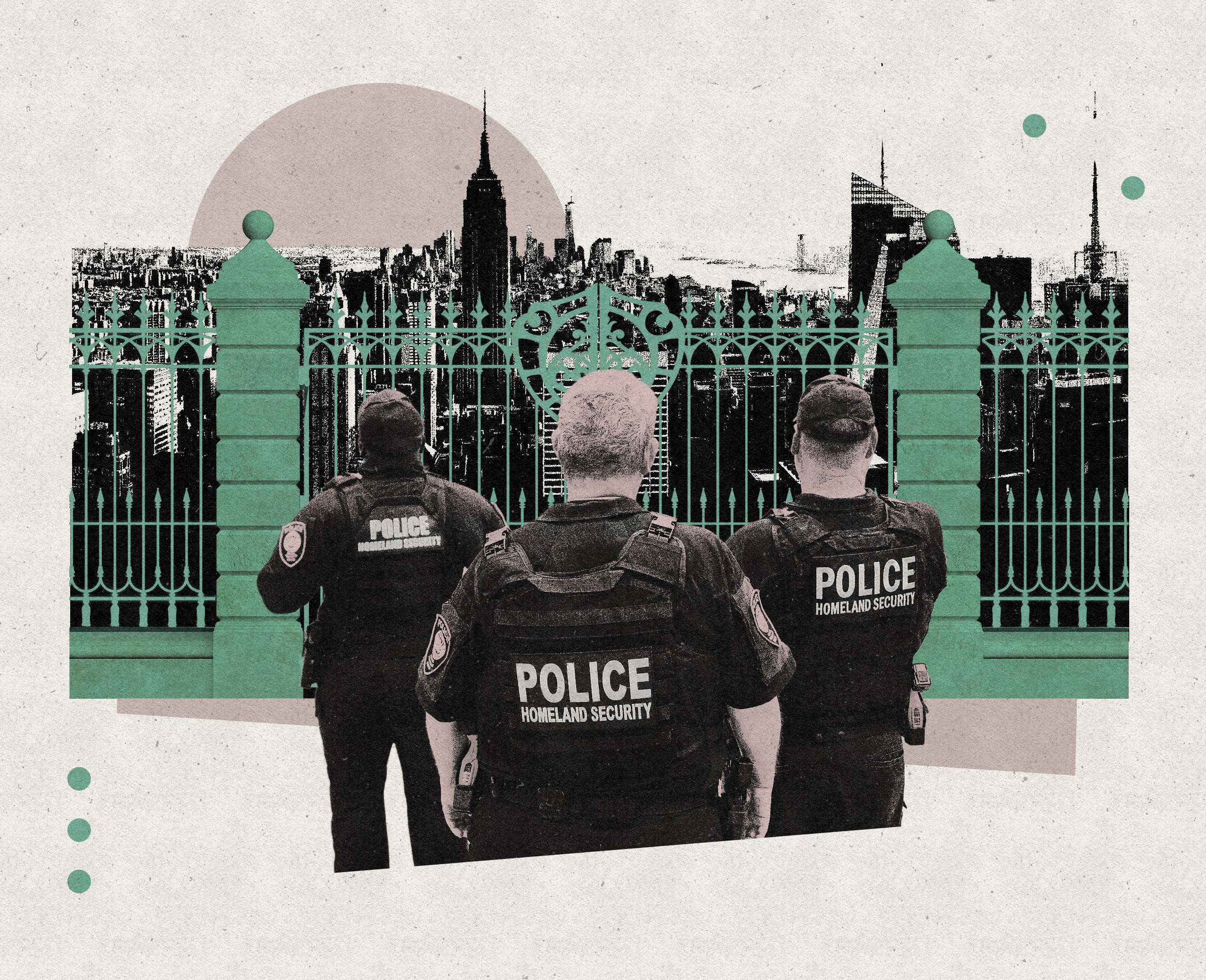
Last month Carroll Bogert, the newly named chief executive of The City, a nonprofit digital news site that covers New York, sent a letter to the local field directors of Immigration and Customs Enforcement and Customs and Border Protection. “We seek to discuss establishing clear, well-recognized best practices for law-enforcement interactions with journalists during fast-moving or sensitive operations,” she wrote. Bogert raised concerns about how journalists had been treated across the country, as “agents and journalists have recently ended up in conflicts that risk both the safety and work of your agents and our journalists”—consider the scenes in Chicago, Los Angeles, and elsewhere. She proposed a meeting to clarify federal policies, in the likely event that Donald Trump deployed more federal officers to New York. The letter was cosigned by eight news organizations, including the New York Times, New York magazine, and Documented, a media nonprofit that covers the immigrant community.
Mickey Osterreicher, the general counsel for the National Press Photographers Association, also signed on. “We’re trying to be proactive,” he said. “We’re not trying to point blame. We’re just trying to say, ‘Hey, we’re here, and we’d like to engage with you and talk about how we can avoid having incidents.’” Tensions have been high in New York for a while now, as dozens of journalists have covered dramatic scenes at 26 Federal Plaza, where ICE agents have been arresting immigrants attending court hearings. In September, federal agents shoved several journalists, including a Turkish reporter named L. Vural Elibol, who was injured and had to be carried away on a stretcher. In late November, city police shoved Avery Craig, an independent journalist and documentarian, and then arrested him. According to an account published on the US Press Freedom Tracker, a comprehensive database operated by the Freedom of the Press Foundation, Craig had been covering protests against immigration enforcement—and police responded with pepper spray and arrests. When Craig identified himself as a journalist, the arresting officer said, “We don’t give a shit.” (The NYPD did not respond to a request for comment.)
Osterreicher told me that the confrontation with Craig was particularly troubling because the NYPD is bound by a sweeping September 2023 settlement that bars the police from impeding the work of the press or arresting journalists while they are reporting. “The whole reason for having the settlement is to have these guidelines, policies, protocols that the officers are supposed to follow,” he said.
No such agreement exists with federal law enforcement. Still, the actions of federal authorities should in theory align with newly created Justice Department guidelines on police–media interactions, which outline a series of measures that law enforcement should take to ensure that the First Amendment rights of journalists are protected. Officers should determine who is a journalist based not only on credentials but also on “function and behavior.” They should provide pre-event briefings to the media and allow journalists to identify themselves when making an arrest.
These protocols have not been followed consistently. Adam Rose, a press freedom advocate based in Los Angeles, has compiled a spreadsheet that catalogues dozens of incidents throughout the past year involving threats, obstruction, or arrests on the part of the Department of Homeland Security everywhere from Portland to Charlotte, Chicago to Minneapolis. (Though the deployment of the National Guard in Los Angeles and other cities has raised deep concerns, Rose told me that the recorded press freedom incidents involve DHS agencies and local police departments.) Rose, who has been defending journalists in LA for a decade, recently took on a new role with the Freedom of the Press Foundation, helping to strengthen local advocacy across the country. His advice: journalists who experience press freedom abuses should speak out and document the incidents on social media, in their publications, and via the Press Freedom Tracker. “We take it for granted,” Rose told me, “and not that journalists should never make a story about them, but if their rights are violated, they are the story.”
Rose believes that mainstream reporters should take an expansive view of what constitutes journalism—and be generous in sharing safety information and building relationships with other people documenting action in the streets. Traditional media organizations are often reluctant to file lawsuits against the police—even if their rights are violated—because they want to avoid an intrusive discovery process and prevent complications with ongoing coverage. That means when First Amendment lawsuits are filed, “the plaintiffs have tended to be people from smaller upstart outlets, or they’re individuals,” Rose said—so the legal advocacy of freelancers and livestreamers can end up defining the protections all journalists enjoy.
Across the United States, the streets are the front lines in the battle to preserve press freedom. Of course, legal claims to maintain access to the Pentagon and the White House briefing room are critical, as are the efforts to defend against spurious libel suits. But the streets are where journalists interact most directly with the public—where their mutual rights, codified in the First Amendment, intersect. It is also the place where journalists perform one of their most essential accountability functions: monitoring and publicizing the activities of law enforcement. “What we’re seeing is not a one-off problem or a New York problem,” Osterriecher said. “It’s a repeating federal enforcement pattern that we’re seeing across the country.” Back in October, the Reporters Committee for Freedom of the Press sent a letter of concern to Kristi Noem, the Secretary of Homeland Security. Now the expected deployment of greater federal law enforcement in New York City may well spur demonstrations—and journalists will need to be out there, free to cover events as they unfold.
The letter from Carroll Bogert and The City is an important step in ensuring that New York’s media stand together to defend their rights. (To date, it has received no response.) “Media in this town are historically very competitive,” she told me. “But on some things, we need to collaborate.”
Has America ever needed a media defender more than now? Help us by joining CJR today.