Sign up for the daily CJR newsletter.
In early 2002, the Spotlight team at the Boston Globe published the first part of their investigation into the Roman Catholic Church. The reporters spoke with several people who attested to sexual abuse, as well as attorneys and survivor advocates. They sifted through court records. But when they reached out to the cardinal of Boston, he not only wouldn’t meet with Spotlight but said that he wasn’t interested in seeing the reporters’ questions if they were faxed over to him. “Investigative journalism has almost nothing to do with access journalism,” Michael Rezendes—a member of the team, now an investigative reporter at the Associated Press—told me recently. In December of that year, following public pressure, the Cardinal resigned. Rezendes and his colleagues received a Pulitzer Prize.
At this moment, as reporters have been forced out of the Pentagon and consistently get shut out by public officials across government, the sense of tightening restrictions may elicit resentment, or outrage. But it does not need to put a stop to impactful coverage. For investigative journalists, chasing the powerful for quotes has never been worth much compared with digging for information that those figures would rather not talk about. And for reporters like Dana Priest, of the Washington Post, it’s less about getting access to the top than the quality of your sources wherever she can find them. Over the nearly two years she spent on her “Top Secret America” series—on the proliferation of top-secret counterterrorism units, published in 2010—she made her way through relationships she had built in the field. “Even though these things were classified top-secret, there was a lot of frustration within the government that this had happened because there was so much wasted money,” Priest said. “And people showed me what they meant by letting me see things inside buildings and sometimes getting around the security in a building so no one would know I’d ever been there.”
More recently, we have seen government employees share information with reporters digitally: the Post’s Hannah Natanson has received so many tips this way that she became known to a colleague, she wrote, as the “federal government whisperer.” (In January, her devices were seized in an FBI raid of her home, but her work continues and, last month, she and other WaPo colleagues were honored with a Pulitzer Prize in public service reporting.) For Jesse Eisinger, the assistant managing editor of ProPublica, being a go-to for whistleblowers has brought trade-offs in terms of reaching high-level officials. “They assume that either no good can come of responding or, incorrectly, that we have our minds made up,” he said. “Often, however, when you present subjects with a rigorously acquired and undeniable set of facts, they will respond to give you some context, their point of view, or to correct anything we have wrong.”
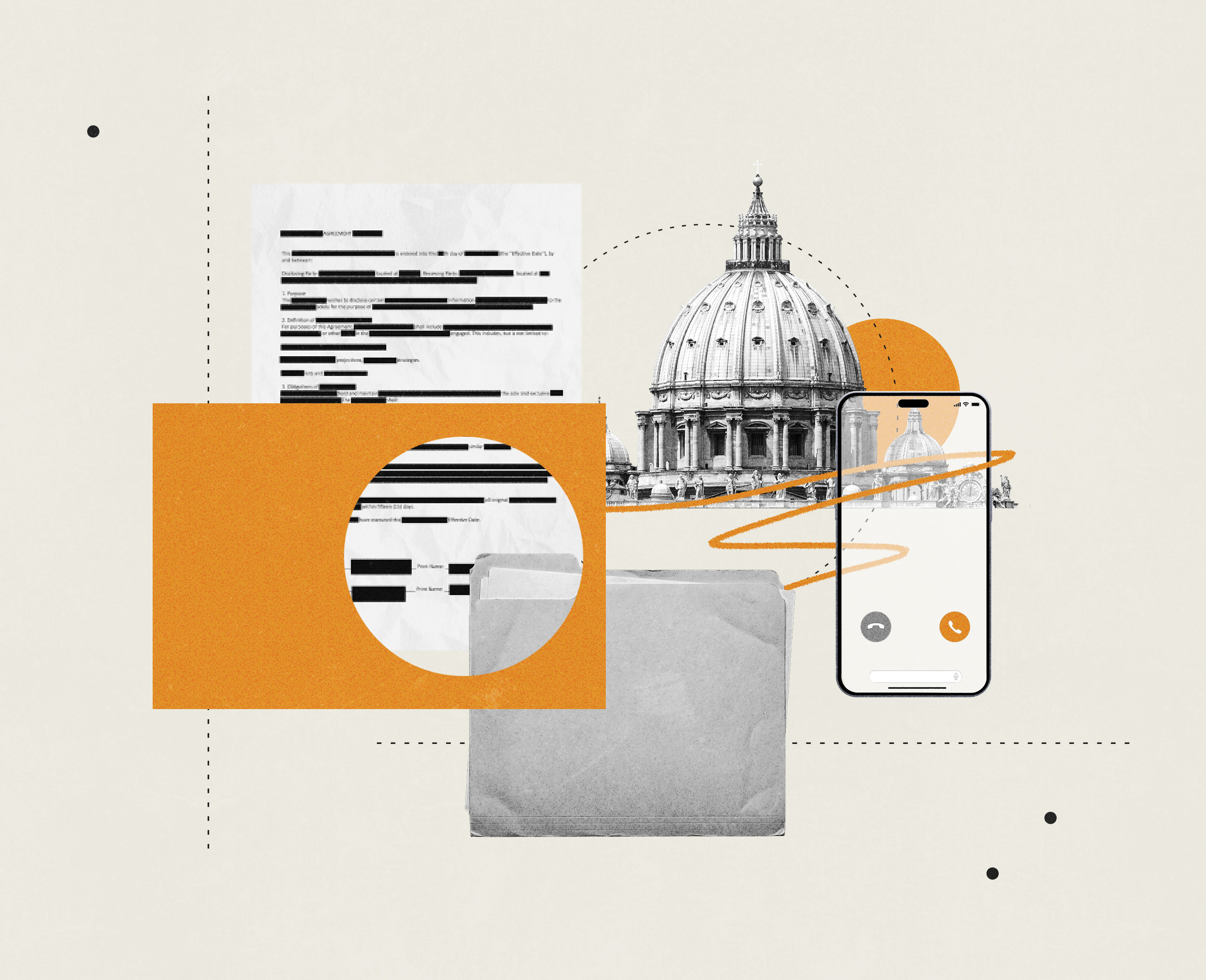
Jason Leopold, at Bloomberg, has found it best to return to the well: “For me, access means access to documents,” he said. That has become more complicated over the past twenty-five years, however, as even material that should be available under the Freedom of Information Act is becoming more difficult to obtain. After September 11, 2001, John Ashcroft, who was then the attorney general, issued a memo to all federal agencies: “Any discretionary decision by your agency to disclose information protected under the FOIA should be made only after full and deliberate consideration of the institutional, commercial, and personal privacy interests that could be implicated by disclosure of the information,” he wrote. The Obama administration touted itself as the most transparent in history, but release of records remained restricted.
“With the Trump administration, they too call themselves the most transparent in history, and where access to records under the Freedom of Information Act has shifted, it’s shifted in the sense that now it’s even much harder to gain access to records,” Leopold told me. This is both because an increase of requests has coincided with a significant reduction in the number of FOIA officers and because the process of obtaining records has been politicized—for instance, when Immigration and Customs Enforcement refuses to release information to reporters about its activity.
This throttling of access to records is visible at all levels of government. “Years ago, at the Mississippi Health Department, reporters could walk in, and they would just let us look through the files, for inspections and different things like that,” Jerry Mitchell, an investigative reporter at Mississippi Today, who has been reporting for roughly forty years, told me. “Nowadays, between lack of access and cost, they now require lawyers to go through these files.”
Even so, the most important—and difficult—barrier to access may be the public’s attention. In a 2025 report by the Collier Prize for State Government Accountability, journalists cited access to records and sources as most crucial—but nearly 60 percent noted public indifference was a hurdle. “As newsroom budgets shrink and hostility toward journalists grows, these challenges threaten accountability reporting,” the report said.
But if the press comes across as confrontational, it’s all in the service of accountability—a worthy end in itself. “Given the roadblocks that have been put up,” Leopold told me, “it just means that we’re working harder to access all types of information in many different ways.”
Has America ever needed a media defender more than now? Help us by joining CJR today.