Sign up for the daily CJR newsletter.
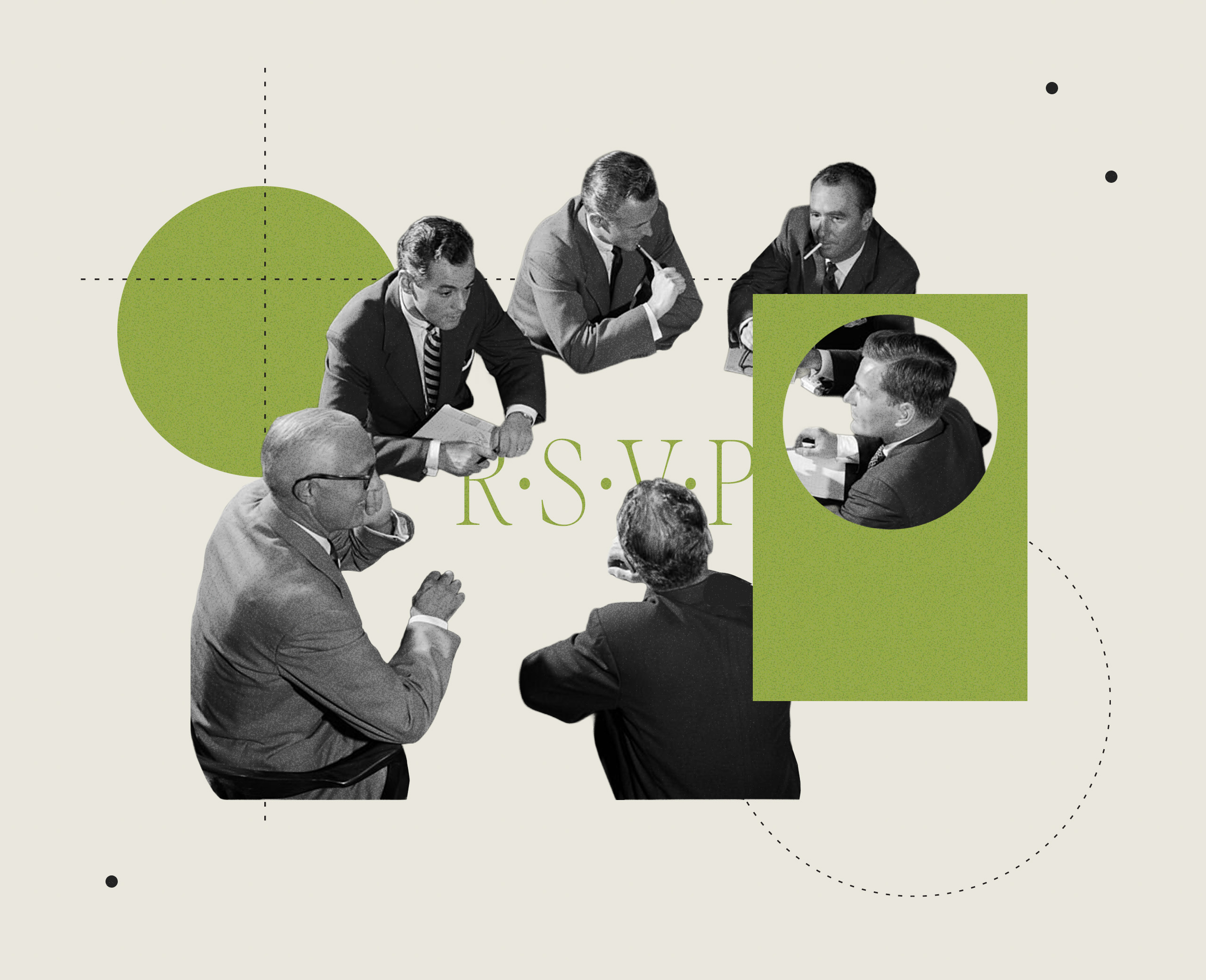
Last October, Pete Hegseth, known as the secretary of war, attempted to ban all reporters credentialed to the Pentagon who would not sign a pledge to write exactly what the Trump administration wanted. Around forty reporters walked out in protest rather than sign; their access to the building is now the subject of a prolonged legal dispute. Across the administration, we’ve seen officials blatantly play favorites in giving access to sources and information. While the flagrancy is new, controlled access has a history. The idea of certain reporters having privileged access has persisted since World War II, when an informal system of invitation-only information sessions became commonplace in United States military and diplomatic journalism. These meetings were chummy events over dinner, where information shared by officials was either off the record or not for attribution. Reporters at these dinners—all white, all men, all from mainstream news outlets—then got to set the boundaries of what they would (and would not) report to the public in their newspapers.
Invitation-only reporting based around private dinners became one of the most important journalistic conventions of mid-twentieth-century Washington, one that forged an uneasy alliance between reporters and the subjects they covered. As one reporter and attendee recalled decades later, of the dinners, “This was then really a new technique, but naturally we bent to it because we couldn’t escape it.”
The dinners began in a systematic way in November of 1942, in the Franklin Roosevelt administration. There were rumors that top men in the Army and Navy were not getting along, bringing bad publicity to the commanders. A well-connected civilian friend of Admiral Ernest J. King, chief of naval operations, invited several reporters to his home in Alexandria, Virginia, for dinner and conversation. Reporters warmed to King after seeing him in this more relaxed social setting. A columnist for the Scripps-Howard newspaper chain wrote in his diary that week, “Contrary to previous impression and what I have read, King was not taciturn or difficult but very friendly and appeared to thoroughly enjoy evening.” About a week later, the New York Herald Tribune had a front-page story, written by another of the dinner attendees, that claimed the Army and Navy were getting along just fine. Nothing to see here.
Officials began having even more invitation-only background sessions in both the White House and the newly built Pentagon. Reporters began to tolerate a private conversation about the war happening within Washington and a different, public-facing conversation being written in the newspapers. When reporters were included in top-secret briefings and exclusive social gatherings, they gained status in their papers. Editors and publishers who ran newspapers all over the US liked getting confidential memos labeled “top secret” from their Washington-based reporters, which helped them feel like insiders.
Washington was already such a clubby town—white men of the press enjoyed the National Press Club, the Gridiron Club, and the White House Correspondents’ Association (which allowed women, but not at the annual dinner), among many others—that these semiofficial dinner groups would have seemed like a natural extension. However, from the beginning, some reporters complained to one another and to editors about stories based on information from the dinners being “plants,” with officials using them to get favorable publicity.
The dinners became part of a larger pattern of increased secrecy around sensitive wartime information. At the time, some of the biggest names in the press, including the syndicated columnist Walter Lippmann and the New York Times’ Washington bureau chief, Arthur Krock, fretted over the ethics of what they called “pipeline journalism”—certain sources having direct pipelines to certain journalists. Krock, for one, was livid after being excluded from a private briefing. “One hardly can attend them, receive inside information or background, not given to others, and write critically or detachedly of the man who gives the background and who is the host,” he wrote to Lippmann. “The whole business is repugnant to me, as I am sure it is to you. I think it is degrading to permit oneself to be so transparently used,” Krock continued, in his typical caustic tone. Still they could not risk being the only reporters to miss out on potentially newsworthy information.
Quickly Lippmann—and later Krock—got himself invited to the private dinners with King, which the journalists eventually took over hosting. Once the war had ended, these men threw a celebratory dinner for King at the Statler Hotel. The men came from newspapers, magazines, and radio, including the New York Sun, the Washington Post, Newsweek, the St. Louis Post-Dispatch, ABC, and CBS. Everyone enjoyed a fancy meal—lamb chops featuring pineapple slices and béarnaise sauce—on their publisher’s dime. They called themselves the “Surviving Veterans of the Battle of Virginia.”
After World War II, these “dope” sessions, as some reporters called them, became routine for all sensitive reporting, especially military and diplomatic, with reporters hosting the guests of honor (sources) at hotels and splitting the bill between their employers. The background rule—under which the information that officials shared was either off the record (couldn’t be used at all) or not for attribution (couldn’t be traced back to the source)—became known as the Lindley Rule, named after one of the regular organizers, Ernest Lindley, a writer for Newsweek. Newsmen policed each other. The chief correspondent for the St. Louis Post-Dispatch reassured his editor back home that confidential information was safe: “In our own little group which has off-the-record sessions with top officials we drop from the list any person who approaches the breaking of a confidence.”
These dinners (and sometimes lunches) continued on through the most high-stakes moments of the Cold War era. On April 6, 1953, in the middle of US involvement in the Korean War, John Foster Dulles, Eisenhower’s secretary of state, met with about twenty diplomatic reporters in a private dining room at the Carlton Hotel in Washington, DC.
The newsmen, all from major mainstream outlets, chatted informally during preliminary drinks and ate a dinner of steak and strawberry ice cream at one long table. They then took turns asking Dulles questions on background. The first: What did Dulles think of the new Russian “peace offensive”? Soviet premier Joseph Stalin had died one month earlier, and his successor, Nikita Khrushchev, had launched an effort to ease tensions with the US. Dulles answered that it was probably a “trick or a tactic.” But by the end of the long evening, he had changed his position, saying he felt there was “new Russian friendliness” for which the two-month-old Eisenhower administration should get “90 percent” credit.
In the middle of the meandering, hours-long conversation, while talking about NATO, Dulles mentioned almost off-handedly that if the Soviet Union really wanted to take over Europe, there was probably nothing that could stop it. This was potentially explosive, and as one of the newspaper reporters wrote afterward in his personal notes, it was “agreed informally afterwards among the newspaper men present” that they shouldn’t “rush into print with much of this stuff.” A New York Times reporter wrote to his editor that, “out of a sense of responsibility for national security,” they decided not to publish the bit about an unstoppable Soviet Union “when so much peace talk was in the air.”
By handpicking the “responsible reporters,” white male journalists cut off access to anyone believed to be untrustworthy, in particular women reporters, Black reporters of any sex, and those outside the political mainstream (e.g., communists and socialists).
Many reporters worked outside the private sessions, by choice or by circumstance, which allowed them to be more critical of the US and the Cold War. Some, like Sarah McClendon, who ran her own news service in the Southwest, and Ethel Payne, who worked for the Chicago Defender, simply were not invited on the basis of sex, race, or both. The leftist I.F. Stone opted out entirely, writing for his own I.F. Stone’s Weekly and relying on public documents, such as transcripts of congressional hearings, to support his trenchant critiques.
Detachment is not necessarily a virtue in journalism, but it is in political reporting, where the primary goal is to hold the government to account. Journalists who prioritize source relationships above all else have incentive not to stray too far from dominant narratives.
At times, the controversy over the dinners did spill out into public view. In one episode in 1955, reporters mistakenly reported that the Eisenhower administration believed war with China was imminent. These reports came from dinner with the hawkish Admiral Robert Carney, the chief of naval operations, but because of the Lindley Rule, reporters could not attribute the information directly to him. Instead, the vagueness made it seem as if everyone in the administration shared Carney’s beliefs. The White House had to deny it. After the incident, Eisenhower gave Carney what a reporter in the New Republic called a “public spanking” for having said anything so controversial. Reporters, editors, and publishers sent a flurry of memos to one another trying to figure out where the background system could have gone wrong.
A reporter from the New York Daily News, who had not been invited, enraged Eisenhower at a press briefing by asking: “Mr. President, are we going to have to invite your aides out to lunch or dinner in order to get the news?”
The Carney incident had been so public that reporters then had to be publicly self-critical. But they also knew that the status quo would be hard to change. Robert Riggs, the Washington bureau chief for the Louisville Courier-Journal, concluded in an April 1955 New Republic article: “Despite the fate that overtook Admiral Carney, nothing so mutually advantageous as the Washington ‘private briefing’ will be allowed to die.” He was right, and invitation-only briefings continue to this day.
During the Cold War, the overall effect was pro-administration reporting on the most important issues of the day, including that the war in what was then referred to as Indochina, for example, was going well. That the US was the leader of the “Free World,” and the communists were enslaved. That the US must spread democracy.
Reporters were cautious about not upsetting norms that the Americans were the “good guys” and that capitalism was the only acceptable system. To this day, we speak of a Cold War consensus when, as I show in City of Newsmen: Public Lies and Professional Secrets in Cold War Washington, there was never more than an appearance of consensus. “The inclination to err on the side of the administration is ever present,” one reporter wrote in a 1953 letter to a historian. He admitted that he could never write exactly what he thought, or he wouldn’t have an audience: “The events as I, and I think most of my colleagues see them, sometimes run counter to the current of American folklore.”
Over the years, journalists at private dinners decided among themselves the most responsible way to report everything from the 1954 CIA-backed coup in Guatemala to the early US involvement in Vietnam. One of the most critical stories about the US to come out of the Vietnam War was by Seymour Hersh, a freelancer at the time he investigated the My Lai massacre; initially, the only outlet to publish his work was an anti-war newswire.
The holes in American folklore grew more obvious in the Vietnam era. But pressure to support the dominant, government-led narrative never truly abated. Too many journalists accepted the administration’s claims in the lead-up to the 2003 Iraq War. As Hersh told Jared Malsin in a 2015 interview in this journal, the problem when “it’s all about access” is that “in effect—not everybody, but too many reporters—they could trade, I could almost argue, their integrity for the access. Their curiosity, let’s put it in an easier way.”
Journalists working together do have some control over what kind of information economy they want to exist in. In October of 2025, when those dozens of journalists walked out of the Pentagon, they chose integrity over access in an important and public way. They left together—as a group—and their news outlets supported them. (In March of 2026, a federal judge ruled that the Defense Department had violated the First and Fifth Amendments.) Reporters built the system from which there seemed to be no escape. Maybe they can unbuild it.
Has America ever needed a media defender more than now? Help us by joining CJR today.