Sign up for the daily CJR newsletter.
On September 4, 2024, in Nashville, Lauren Chen awoke to the sound of someone pounding on her front door. She and her husband, Liam Donovan, ran downstairs, where they were confronted by some thirty FBI agents. The agents presented the couple with a warrant to seize and search their electronics and, for four hours, proceeded to rummage through their house. They seized Chen’s and Donovan’s devices and froze their bank accounts. Later that day, in a rare public appearance, Merrick Garland, who was then the attorney general, made a televised announcement: Russia had secretly been running a company that an indictment revealed to be Tenet Media, a news operation led by Chen and Donovan, a young couple from Canada, that prosecutors alleged sought to sow discontent in the lead-up to the 2024 elections. “The American people are entitled to know when a foreign power is attempting to exploit our country’s free exchange of ideas,” Garland told reporters at the Justice Department’s headquarters, in Washington, DC. “We will be relentlessly aggressive in countering attempts by Russia and China and any other foreign actor to interfere in our elections and undermine our democracy.” The press, on the left and the right, descended on the family like hyenas. Chen and Donovan lost their right to work in the United States and had to leave the country.
Up until that point, Chen had been on an upward trajectory, vying to become a wholesome, tradwife version of a viral right-wing influencer, one who would garner tons of followers by denouncing liberal institutions and claiming, among other things, that Donald Trump wasn’t “hard enough on journalists,” American racism is a myth, and feminism ruined women. Chen started making videos in 2016, shortly after she graduated from college. She made a name for herself platforming shock-factor celebrities of the alt-right, including with a three-part interview featuring Richard Spencer, the white supremacist, in 2017. She went on to become a star commentator on The Blaze’s TV channel and a contributor to Turning Point USA, which promoted Chen at an event with her line: “I don’t trust people that trust the government.”
By 2022, the year Chen and Donovan rolled out Tenet Media, she was everywhere: Fox News, Breitbart, the Daily Wire, Rebel Media. She was also a frequent contributor to Russia Today, the state-sponsored network, until Russia’s invasion of Ukraine led to its removal from major Western broadcasting services. She started a YouTube channel, “Roaming Millennial,” that eventually pivoted, unironically, to “Pseudo-Intellectual.” In 2024, she traveled to Hungary for a forum hosted by the Mathias Corvinus Collegium, a conservative-nationalist campus that became a powerhouse for anti-liberal influencers around the world and was funded by Viktor Orbán’s administration.
The Tenet Media website described the venture as a “network of heterodox commentators that focus on Western political and cultural issues.” Chen was the public face; Donovan stayed mostly behind the scenes. The other contributors were an assemblage of brash pundits with millions of followers, united by a common cause: taking down liberal elites and institutions. Programming was brought to you by right-wing conspiracy theorists such as Lauren Southern, Benny Johnson, and Tim Pool; Dave Rubin, a libertarian commentator; Matt Christiansen, a Christian conservative; and the lesser-known Tayler Hansen. Collectively, the group amassed more than seven million followers. Tenet’s first promotional video, which came out just before the start of the 2024 election cycle, blasted upbeat techno music and voice-overs. Images of the Capitol flashed alongside the creators’ faces. “Antiestablishment or right-wing or dissident media: they’re slurs slung at the people who are trying to do news correctly,” Johnson declared. Added Pool: “I worked for several massive corporate news organizations. What did I learn? They lie.”
For a year, Tenet Media whipped out nearly two thousand videos that received more than sixteen million views on YouTube alone. Chen and Donovan shared them across every social platform. The content was no different from what many of these commentators were already saying, which was mostly no different from the words coming out of Trump’s mouth: relentless attacks on Kamala Harris, plus harping on “illegal immigration,” bewailing “racism” against white people, and evincing an obsession with traditional gender roles. In one video, Ted Cruz appeared as a special guest to talk about “How Wokeness DESTROYED Our Capitol.” The videos were also stylistically Trumpian, with teasers such as: “Trans Widows Are a Thing and It’s Getting OUT OF HAND.” They were particularly focused on culture-war topics like gender and race. The big-name influencers were being paid roughly a hundred thousand dollars per week.
But after the FBI raid on Chen’s house, the Department of Justice unsealed an indictment that blew the lid off the entire operation. The indictment alleged that two Russian nationals—Elena Afanasyeva and Kostiantyn Kalashnikov—had violated the Foreign Agents Registration Act (FARA), which mandates that agents of foreign entities must disclose their identity when working with American companies. The most significant charge was conspiracy to commit money laundering—the total reached nearly ten million dollars—by using Tenet Media to run a covert scheme that would “weaken opposition to Government of Russia objectives.”
Neither Chen nor Donovan was directly charged with a crime. Even so, they were effectively canceled as public figures. Following the indictment, YouTube announced it would be terminating the Tenet Media channel and four others associated with Chen “as part of our ongoing efforts to combat coordinated influence operations.” Chen’s right-leaning followers were outraged with Tenet, and went into full conspiratorial witch hunt mode—in this case, with legitimate evidence. “Chen, the alleged Russian agent receiving millions for propaganda (allegedly), has actively been discouraging votes for Trump and dividing the right,” Ashley St. Clair, Elon Musk’s former partner, tweeted. “Lauren Chen has become increasingly sketchy over the years,” someone replied. “Chen sounds like a Chinese Communist agent,” wrote another.
Some of the commentators Chen had recruited to work for Tenet turned on her. They claimed they were the true victims of the scandal—a position backed up by the indictment, which said the influencers had been duped. “Putin is a scumbag, Russia sucks donkey balls,” Pool tweeted. Rubin wrote, “I knew absolutely nothing about any of this fraudulent activity. Period.” Johnson issued a vaguely threatening statement: should anyone have any questions about his involvement in this “alleged scheme,” they could talk to his lawyers. (None of them responded to my requests to talk.) Chen was dropped from Turning Point USA and Blaze TV. “I don’t have good feelings about this Lauren Chen,” Megyn Kelly said on her show. “And I was right.” The internet had made Chen; now it was destroying her.
By the end of 2024, it seemed like the strange saga had come to an end. Tenet Media was all but wiped from the internet, except for some debris still available on Rumble, the right-wing video site. Chen and Donovan left the United States. In the age of online attention spans that last the life cycle of a mayfly, the right quickly moved on to other subjects. The Tenet story, everyone thought, was over.
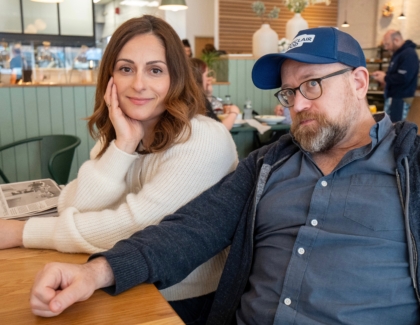
But on Christmas Day in 2025, Chen suddenly popped up online. She posted a photo on Instagram with Donovan, the two of them smiling together under a bed of lights in Nashville. “Merry Christmas, everyone! As we celebrate the birth of Christ, there is nowhere else I’d rather be than back here in Nashville,” she wrote. “Utmost gratitude to CBP, the new leadership at the FBI, and the administration for their help making this possible, and for everything they do to keep America safe.” She was back.
The specter of foreign interference, particularly from Russia, has loomed over American elections since at least the beginning of the Cold War. But Trump’s political rise has corresponded with a new, ramped-up era. In 2016, as Robert Mueller wrote in his extensive report on election interference, the Russian government was alleged to have meddled in a “sweeping and systematic fashion.” The tactics varied. Since at least 2014, the Russian government secretly operated “Project Lakhta”—a disinformation campaign intended to reach directly into the social media accounts of millions of American voters. During the operation, according to US intelligence reports, Russians ran a “troll farm,” where thousands of social media accounts wreaked havoc on the perceived nerve center of the most polarizing topics in America. Across social media, fake accounts published pictures of Confederate flags promoting “heritage not hate,” images depicting Hillary Clinton in a fistfight with Jesus, ads claiming Black Lives Matter was killing police officers. It turns out Americans weren’t all that hard to manipulate. By November, sixteen thousand had signed up on Facebook to attend an anti-Trump protest in New York City—utterly unaware that the event had been organized by Russia.
The meddling grew more blatant. In mid-2016, Russians hacked into the Democratic National Committee. The email account of John Podesta, a former White House chief of staff and the chair of Hillary Clinton’s presidential campaign, was leaked by a Russian cyberspying group. The emails, which shed light on the inner workings of Clinton’s election bid, led to a cascade of conspiracy theories, including Pizzagate, a wild pro-Trump fever dream that imagined high-ranking members of the Democratic Party were involved in a pedophilic sex ring in the basement of a DC pizzeria—which led to a man with a rifle storming the restaurant to “investigate.”
During the 2020 elections, according to a declassified intelligence briefing, there was strong evidence that Vladimir Putin, the president of Russia, had interfered in favor of Trump. But the goal was essentially less about advancing the fortunes of any one candidate and more about fragmenting and polarizing the American electorate. “From Putin’s perspective, any discord in the United States is good. That’s what he wants,” a former national security prosecutor at the DOJ told me. “He wants us divided, and the world coming apart at the seams, and the end of the international order that we built after World War II, and the United States appearing to be a failing democracy where we fight amongst ourselves and are incapable of accomplishing anything.”
To the extent that Russia’s 2016 operation was successful, that can be attributed in large part to its exploitation of a media landscape that had, increasingly, become a Wild West of alt-news sites such as the Daily Caller, Breitbart, Project Veritas, Newsmax, and Blaze TV. These would eventually reach audiences that had grown disillusioned with legacy media; at the same time, they created new vulnerabilities in an increasingly chaotic information ecosystem. “I think that the movement away from mainstream media enhances the opportunities for foreign power infiltration, because the idea of brick-and-mortar networks and newspapers with standards and legal departments and editors has been taken for granted by the American people as an established vetting process of the news we’re getting,” Frank Figliuzzi, the former assistant director of counterintelligence at the FBI, told me. “Nobody’s ever said with a straight face that NBC News is a Russian platform. That would be an incredibly difficult intelligence operation to pull off.” An operation as bold as the Tenet case “would’ve landed directly on the desk of Vladimir Putin himself,” Figliuzzi told me. “Putin’s thinking, ‘Let’s use trusted American voices, using some people some Americans trust.’ You could look at it as brazen, bold, and risky, or you could look at it as a logical evolution: they’ve been burned; it’s easier than creating a company on Russian soil with oligarchs.”
The case of Tenet Media shows how hard it often was during that time to disentangle direct Russian interference from the already propagandistic function of many MAGA sites. The operation was based on paying Tenet’s influencers exorbitant sums to produce the same content they were already generating. Still, there was some direct coaxing. In one video, Benny Johnson peddled a Russian claim that Ukraine was behind the 2024 concert hall attack outside Moscow that killed at least a hundred and forty-nine people. Russia, according to the indictment, was enthusiastic about this, telling Chen to drive that narrative with Tenet’s influencers. “I think we can focus on the Ukraine/US angle,” one of the Russians messaged Chen. They also pushed Tenet to feature a video of Tucker Carlson as he giddily went grocery shopping in a Russian supermarket, marveling at the apparent profusion of options like a kid in a candy store. When a Tenet producer questioned whether the video “just feels like overt shilling,” Chen and Donovan directed the producer to post it anyway. (Chen, Donovan, and their lawyers did not respond to multiple requests to be interviewed for this story.)
The details of the Tenet Media case leave open as many questions as they answer. Several former federal prosecutors told me it was strange that neither Chen nor Donovan was charged. It was possible, a few speculated, that the government didn’t have enough evidence to prosecute them: that, perhaps, they too were innocent and unaware of what they were getting involved in. This struck me as unlikely, since the indictment revealed Discord chats between Chen and Donovan in which they repeatedly referred to being paid by “the Russians.” The case remains open but in paralysis. (When reached with questions, a spokesperson for the US District Court for the Southern District of New York, which issued the indictment, said, “Sorry, I cannot provide any guidance on these.”)
A prosecutor suggested to me that it was possible Chen was a foreign agent who provided information to the US government unrelated to Tenet in exchange for immunity. Or perhaps, another guessed, the US government was playing the long game in this ongoing psychological war with Putin: avoid the mire of political litigation, charge the Russians (who will never show up to court), and turn the entire debacle into a glorified press release that unites the left and right against a foreign adversary. What nobody in the former administration could have expected, though, was that not only would Chen not be charged for running a Russian-backed media enterprise, she would be rewarded.
Within days of returning to the US, Chen began her comeback tour, appearing on as many right-wing and alt-right podcasts as would have her. She painted herself as an unwitting victim in a scheme concocted by Joe Biden’s DOJ to banish enemies. “Maybe I’ve reached a level of infamy now where I can say I’m the Lauren Chen,” she said, smiling, earbud in, as she appeared on Dr. Drew Pinsky’s conservative YouTube channel for an interview in January. “Basically, I’ve been in the political sphere doing commentary, doing videos for, gosh, almost ten years now. It’s been a while.” Weeks later, she sat down with James O’Keefe—the founder of Project Veritas, now the godfather of right-wing instigator-influencers—to commiserate over both having their homes raided by the FBI. “What that was all about depends on who you ask,” she said, and laughed. “I think it’s safe to say that it was politicized.”
Chen’s side of the story goes like this: in September of 2024, she was four months pregnant, living at home in Nashville with Donovan and their two-year-old toddler, running a legitimate media company, when the FBI unexpectedly showed up. “The Biden DOJ painted myself, my husband, and our company, TENET, as Russian propagandists intent on sowing division and interfering in American elections,” she said in a statement on a GiveSendGo page she created for personal fundraising. “Of course, those allegations were untrue. The FBI and DOJ may not appreciate the conservative and right-wing social media content we published but it was solely the product of our creators’ sincerely held beliefs.” She claimed the FBI and DOJ “inflicted a huge amount of damage to our lives,” including major legal fees. The FBI froze the bank accounts containing her and her husband’s life savings, she said, and then, from a separate account, the couple had to pay their employees tens of thousands of dollars out of pocket. The GiveSendGo requested a hundred and fifty thousand dollars. For months, I watched as the numbers slowly crawled up to above twenty-seven thousand.
Responding to Chen’s self-portrait as a victim of partisan attacks on right-wing influencers, a number of loyal supporters began to amass again, angrily parking themselves in YouTube’s comments section. The conspiratorial undertones to Chen’s story also spurred Pool, until recently a disgruntled ex-employee, to defend her. “This was a scam the whole time,” Pool said in a YouTube video. “They made it up because they wanted to smear antiestablishment voices, people who were supporting Trump right before the election.… Lying psychotic evil authoritarian Democrats.” None of the right-wing podcasters I heard interview Chen asked what seemed like the elephant-in-the-room question: Did it really never occur to you that this might have been a Russian government–run scheme? According to the indictment, the cover story had been that the venture was being funded by a fictitious person named Eduard Grigoriann, represented by a stock photo of “an accomplished finance professional” in a black blazer gazing wistfully out the window of his private jet.
To the right, what mattered was less who was behind Tenet than that Chen has continued to advocate for their side. Some have called the FBI investigation a “malicious prosecution” and demanded that Garland be jailed. “This is not democracy. This is lawfare,” a supporter wrote in an extensive blog post for a site called Wolfshead Online. Chen seemed to see the fury as an opportunity. “It would be harder for them to go after me again,” she said, cryptically, during her interview with O’Keefe. “This administration is definitely more friendly,” she told Dr. Drew. “We are no longer being treated like we’re active criminals.”
Indeed, Trump’s White House not only gives unprecedented access to right-wing podcasters and influencers, it also gives them positions in the administration. Dan Bongino, a former conservative commentator, was appointed the deputy director of the FBI. Pete Hegseth, a former cohost of Fox & Friends, runs what is now called the Department of War. And a key figure in bringing Chen back to the US, Joe Rittenhouse, is now a senior adviser at the State Department. “This Christmas I’m so happy to help correct the wrongs of the past administration,” Rittenhouse tweeted when Chen returned to the US. “Being able to bring Lauren and her family back for Christmas would not be possible without new Leadership at the Whitehouse, FBI, CBP, and State Department.”
It is unclear how Rittenhouse, previously a stage actor in Pittsburgh who worked on a few Republican campaigns in Pennsylvania, and who appears to have had no prior experience working in government, was appointed as a senior adviser in the Bureau of Consular Affairs. (The State Department had no comment for this story; Rittenhouse did not respond to requests.) A former prosecutor I spoke with said that the Trump administration’s closeness with right-wing podcasters is consistent with a grander political strategy to disrupt the existing world order. “It wouldn’t surprise me if he got Chen’s visa case reopened, particularly given how politicized these folks have made the entire process,” the prosecutor said. To give right-wing podcasters a direct line to Trump’s White House is a win-win for the right: the podcaster gets access to key figures in the White House, which generates an audience, and the White House gets an unfiltered, uninterrogated message out to that audience.
Chen, for her part, has softened her image slightly, recasting herself as a sort of Phyllis Schlafly in the world of MAGA glossies. She has contributed to Evie, a magazine that positions itself as the “conservative Cosmo,” and she posts frequently about gender roles, natalism, and feminism. “If women had to hold a baby and smell their head as a requirement to graduate high school, the fertility crisis would be solved within 5 years,” she tweeted. She has the relatability of a content creator who’s about to tell you her nightly face-washing ritual. But beauty influencer she is not. She is more than likely to bemoan the “Woke Oscars,” defend Nick Fuentes, and claim that women such as Renee Good, who was killed by ICE agents in Minneapolis, are “almost wholly responsible for the decline of Western civilization.” As with many influencers, part of her popularity hinges on being cruel, mocking people for their size or skin color or how they look. Her presence has steadily grown; she now has more than 632,000 followers on X. When she recently posted a random thought on X about how Robin Hood is not a socialist hero but, in reality, an anti-socialist one, who “stole back the taxes that a cruel leader unjustly levied against the population,” Elon Musk retweeted it to his fleet of followers, writing: “True.” Her X bio reads, “Rabble-rouser.”
The months of Chen’s rebranding as the victim of an evil Biden DOJ seem to have landed her a front-row seat to Trump’s show. In early April, she posted a photo of herself and Donovan, smiling in a selfie in front of the White House. “Happy Easter!” she wrote. “It was an amazing privilege to attend the White House Easter Egg Roll. A beautiful day at such a beautiful place.” A week later, she announced that she was debuting a new show called Anathema, whose tagline reads: “something reviled, loathed, and violently shunned.”
Three days a week, sitting alone in front of her computer in the red glow of a fake rose tree, a Rumble placard positioned in the background, Chen delivers her latest screed—no more original than what’s already being discussed across right-wing alternative news platforms. She complains about the traditional media—“the government and the corporate press attempting to ruin my life”—and goes off on miscellaneous MAGA rants, such as blaming schools for teaching students too much about the civil rights movement. “Now, obviously Black history is part of American history, but there is something really strange happening in American education where they’re focusing almost entirely on Black history,” she says in one episode. “When I was a kid it wasn’t like that.” She continues, “There’s an entire generation of kids where they view American history through the lens of a Black activist.” She loves American history, she insists, but “this is done obviously as a grievance against white people—it’s to chip away at the foundation of America. It’s to delegitimize America’s founding.” In a one-woman show, of course, there’s no such thing as pushback.
In February of 2025, when Pam Bondi started her first day of what would become about a yearlong tenure as Trump’s attorney general, she moved to dissolve the Foreign Agents Registration Act, a law that requires individuals doing PR, political work, or lobbying on behalf of foreign governments to register their activities with the Department of Justice. “It turned out that FARA really matters when you have foreign influence in the United States in a profound way,” the former federal prosecutor told me. To dissolve FARA, he warned, is “an invitation to increased corruption and foreign meddling.”
FARA was just the first domino to fall. In the first three weeks of Trump’s second term, his appointees dismantled the Public Corruption Unit, which oversaw election-related offenses for the FBI. They shut down the FBI’s Foreign Influence Task Force, which was established in 2017 to identify malign foreign operations that targeted the election process. They shut down the election security division of the Cybersecurity and Infrastructure Security Agency (CISA), at the Department of Homeland Security, which focused largely on cybersecurity threats. Trump forced out leaders who oversaw whistleblower complaints; he fired the head of the Office of Special Counsel, which protects the federal workforce from retaliation for whistleblowing.
“There is a gaping kind of vacuum of federal resources in the election security space,” John Keller, a former prosecutor who oversaw the Election Threats Task Force for the Department of Justice, told me. “And I think that’s intentional.” The White House, for its part, grants access to the media not on the basis of accuracy, competence, or independence, but simply on what an outlet or individual says to their audience—and whether it serves Trump’s interests. “The message it sends is basically: The gate is down,” the former prosecutor added. “It’s open season on the American public.” (The White House didn’t respond to requests to comment.)
This leaves an opening for many more Tenet Medias to appear in time for the midterm elections. The thinning journalism landscape, which is sucking audiences away from credible, reported sources and directing them toward influencers like Lauren Chen, has only made it easier for more operations such as Tenet—perhaps on an even larger scale than before. “Not only does Putin feel emboldened, but the latest development suggests that the grounds are more favorable now than they once were for these kinds of interventions,” Kathleen Jamieson, the director of the Annenberg Public Policy Center at the University of Pennsylvania, told me. “At the point in which we need more journalistic capacity, we have less.”
This piece was produced with support from the Craig Newmark Center for Journalism Ethics and Security.
Has America ever needed a media defender more than now? Help us by joining CJR today.