Sign up for the daily CJR newsletter.
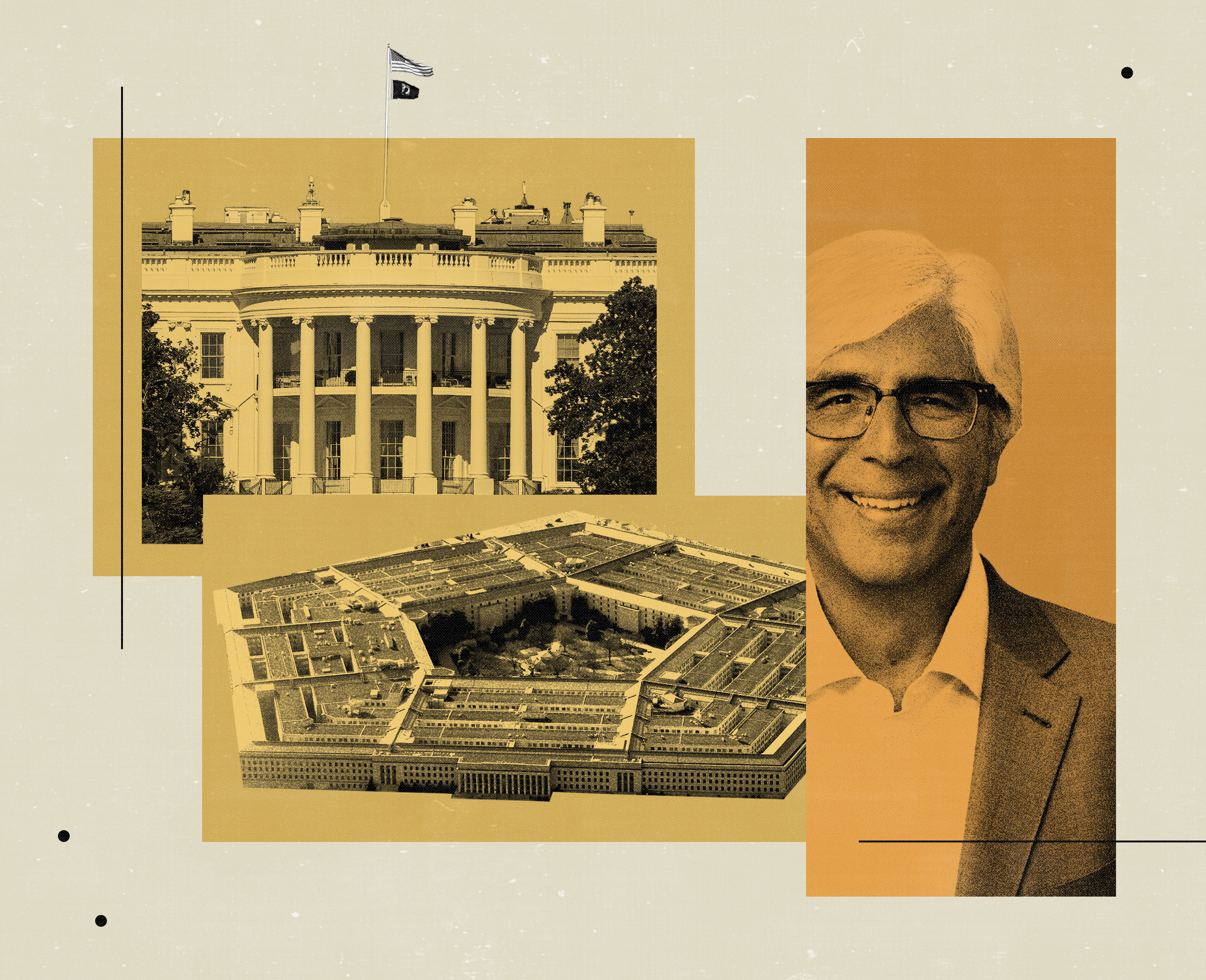
On September 18, Theodore Boutrous Jr., a prominent appellate and media lawyer, was preparing to take a vacation. Boutrous, a partner at the firm of Gibson Dunn, had been busy representing the New York Times in its lawsuit over access to the Pentagon. Now his phone rang: David Vigilante, the head of legal for CNN, needed to talk. Via Truth Social diktat, Donald Trump had just banished CNN, MS Now, and Politico from the White House. In minutes, Boutrous mapped out the structure of a complaint. “It was just a matter of expanding it, fleshing it out and getting all the evidence together,” he told me.
Three days later, on September 21, Boutrous and his team filed a lawsuit alleging that the Trump administration had violated the reporters’ due process and First Amendment rights. Following a hearing on September 24, Judge Timothy Kelly, of the United States District Court for the District of Columbia, granted a two-week restraining order, allowing seventy-eight journalists from the three outlets to return to the White House. In court filings, lawyers for the White House have claimed that booting reporters from the grounds is within the bounds of presidential authority, arguing that “access to the White House is a privilege, not a right.” And Trump has not backed down. On September 26, the administration kicked CNN out of a trip to Tennessee, which it was supposed to cover as part of its duties in the pool of TV networks that also includes ABC, CBS, Fox, and NBC; on September 30, the administration removed CNN from pool coverage of a trip to Texas and Oklahoma. On October 5, the administration blocked Politico, meant to be on print pool duty, from Air Force One.
The restraining order will expire tomorrow, and the parties will return to court. Trump has already vowed to appeal any ruling against him. “It’s a war of attrition,” Boutrous said, of the administration. “When their actions are struck down by the courts, they then look for some other maneuver to try to achieve the same objective, which is squelching independent, fact-based journalism.”
Boutrous attributes his status as Washington’s go-to press access lawyer to “a series of lucky breaks.” After completing law school at the University of San Diego, he was mentored by Theodore Olson, who later served as solicitor general. Boutrous helped defend Newsday’s Timothy Phelps, who, alongside NPR’s Nina Totenberg, broke the story of Anita Hill’s sexual harassment accusations against Clarence Thomas before he became a Supreme Court justice. Boutrous went on to represent outlets including the Los Angeles Times and the Wall Street Journal. But in the 2010s, his First Amendment practice slowed down. “News organizations would go to smaller firms, and the law seemed pretty well settled,” he told me—so he focused on his corporate law practice instead.
Trump’s first term revived Boutrous’s First Amendment practice—and his second term supercharged it. “As opposed to two or three big cases a year, it’s more like two or three big cases a month now,” Boutrous said. In 2018, when the White House revoked Jim Acosta’s credentials, Boutrous was brought on the case—and won, arguing that banishing Acosta violated the First and Fifth Amendments and constituted viewpoint discrimination. And in 2020, Boutrous successfully represented Brian Karem, a correspondent for Playboy, when the White House revoked his pass over a verbal altercation with Sebastian Gorka, a top Trump aide. Both suits expanded on similar precedent set by a 1977 case in which Robert Sherrill, a Washington correspondent for The Nation, was denied a press pass without due process.
Trump’s second term brought the case of the Associated Press, which refused to call the Gulf of Mexico the “Gulf of America” as per an executive order; Boutrous filed an amicus brief in the DC Circuit for a group of historians. That case is still ongoing, but the effect has been that the AP and other wire services have lost access to a rotating pool slot. In the Pentagon case, which will bring parties for a hearing at the Court of Appeals for the DC Circuit in November, reporters, unwilling to sign on to a policy that would effectively prevent them from doing routine journalism, were forced out of the building. Even in the face of repeated legal setbacks for the Pentagon—“the problem was that the things they ultimately adopted were completely contrary to basic First Amendment principles in journalism,” as Boutrous put it—the government has managed to keep the press away. By the time of the hearing, the Pentagon will have had no press corps for more than a year.
Despite Boutrous’s experience, Trump’s rant against CNN, MS Now, and Politico shocked him. Though similar cases in Trump’s first term stemmed from disagreements with journalists, this new ban was unprompted and targeted explicitly at news outlets for their views, calling their reporting “fiction” and “lies.” Boutrous told me: “In the Pentagon case, there was a process for creating a policy. It wasn’t a revocation of particular hard passes. They took input from journalists and journalistic organizations. So on its face, it looked like a pretty rational process. In the White House case, it’s targeting certain news organizations and taking away the credentials as a punishment. But it’s the same theory: if we don’t like what you report, you are bad; you are a national security risk or you’re not entitled to report from the White House.”
So far, the courts have sided with the press—partly because the government’s attacks against journalists made it difficult for its lawyers to defend its moves on procedural grounds. But Boutrous said that despite the fiery communication from the White House and the Pentagon, their legal teams have been “very collegial and cooperative” in the process. “They do their best with what they have, but when their client keeps telling the world the real reason for the press ban, it just makes their job extremely difficult—and it makes our job easier.”
Has America ever needed a media defender more than now? Help us by joining CJR today.