Sign up for the daily CJR newsletter.
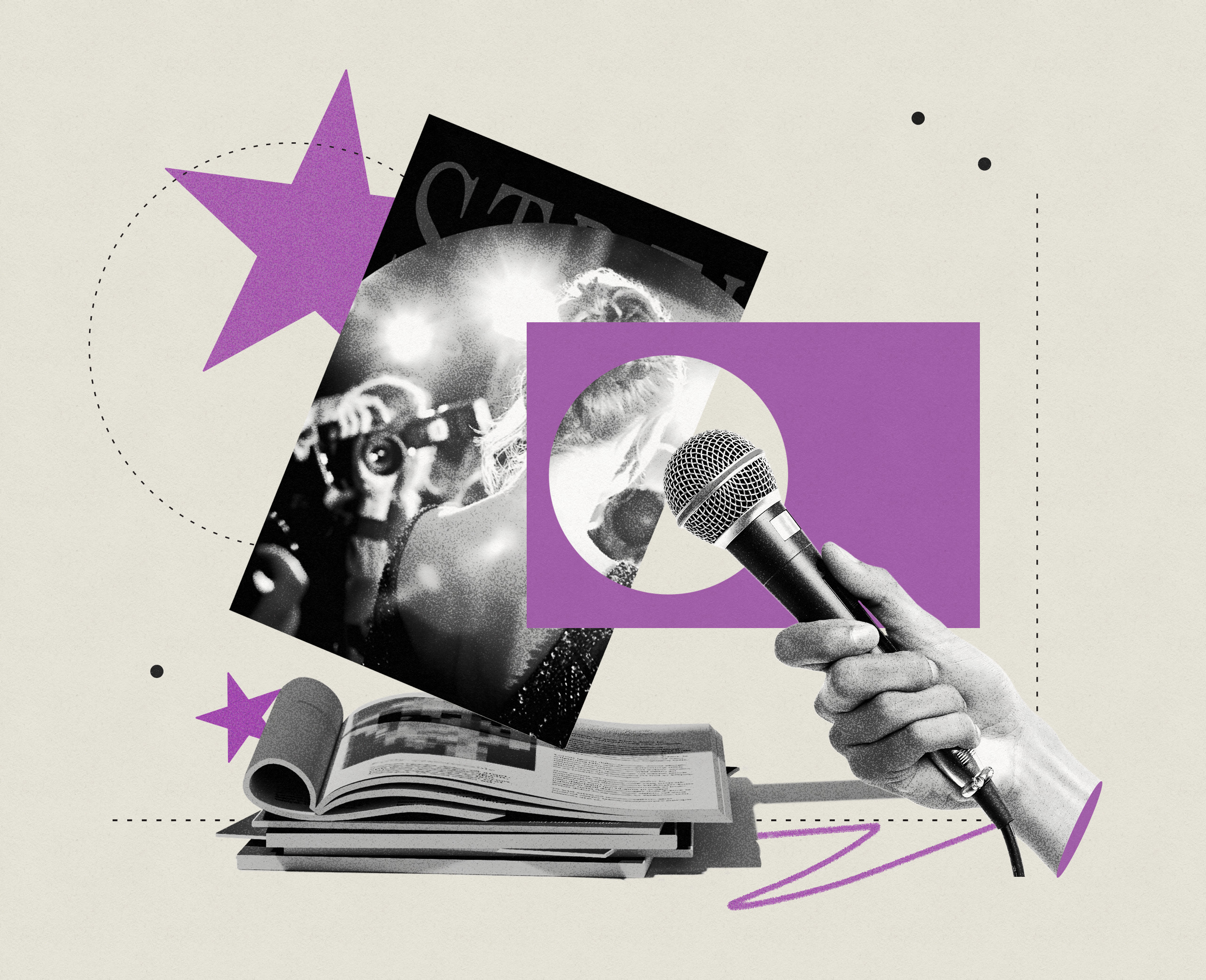
A celebrity is, by definition, considered one either because they have a disposition toward media coverage, or because they get media coverage as a consequence of their known work or behavior. A magazine provides proof of status—still—at a certain stratosphere of fame, and in turn exhibits its own relevance by bestowing attention. The phrase “symbiotic relationship” doesn’t even begin to cover it. This is textbook codependency.
There are some assumptions I’ve encountered, and occasionally held myself, as I’ve worked on celebrity profiles over the years. One is the idea that the magazine profile is hollow, without much substance or urgency. Most people are familiar with the concept of media training, and anyone paying attention to pop culture can see that there are certain rules a celebrity is expected to follow that often amount to tepid or tightly controlled writing about them. (Celebrity profiles “cannot be the search for information, since there is little information in them,” as Elizabeth Hardwick wrote in 1986. “To know the sanitized items, in almost infinite repetition, about the famous indicates an overwhelming appetite.”) Zach Baron—the senior special-projects editor at GQ, who has written dozens of cover stories since joining, in 2013—described “a kind of baseline adversarial idea, which is that celebrities are not fundamentally serious.” When he was starting out, he recalled, “you’d go and talk to someone and come back, and your editor would almost be like, Who won?”
Another assumption is routineness: celebrities show their homes in shelter magazines, their makeup routines in beauty magazines; they visit a suitably chic and conveniently located restaurant to talk over lunch. Sometimes there’s a little gimmick—maybe going to an amusement park, or a ceramics class, or a bar with a ghost story. The pressure to accommodate a celebrity of a certain level of fame or influence in exchange for access can encourage compromise. An editor told me that if a certain pop star offered to sneeze on their publication’s Instagram account, they would accept. Which leads to another assumption: that any value a magazine profile might have once had as the sole source of access to a celebrity has plummeted now that they’re all posting on social media themselves. Baron feels differently. “I’m interested in the empathy of this work,” he told me. “How people think, how they see the world and figure out what their art is. They’re just a human in the world, doing their thing.”
At Condé Nast, there’s a centralized team, referred to as “the talent group,” that is exclusively dedicated to the task of coordinating celebrity-profile logistics across the company. Publicists will talk to the talent group with the expectation that all possible publications relevant to their client will be approached, rather than one magazine in particular; in turn, the publications selected will suggest how their title would uniquely feature the celebrity. (“I personally don’t love that format,” an editor at Condé Nast told me. “I think it puts way too much power in the publicist’s hands to decide how they want to position their talent. I think the bookers are so careful with these relationships, and are always good cop. I play bad cop a little bit, like, I’m not going to send questions ahead of time.”) There can also be aftershocks: a few years ago, GQ (a Condé outlet) published a piece critical of David Zaslav, the chief executive of Warner Bros. Discovery; WBD quickly raised objections and, within hours, the story was removed from the internet.
Similar arrangements exist elsewhere, and lead to ethical quandaries. An editor who has experience assigning profiles of celebrities by writers, as well as interviews between celebrities, told me that he estimates that publicists request to have certain topics stay off-limits before the interview, or for an on-the-record answer to be removed after the interview, maybe 70 percent of the time. A couple of situations have involved signing a nondisclosure agreement. Sometimes, for an on-record response that this editor would consider a conversation highlight, he would just tell them that, with apologies, there is no change he can make on their behalf. Other times, it is something so uninteresting, the publicist’s attention to it comes as a surprise.
One particularly intriguing conundrum happened during last year’s Hollywood awards season. A celebrity was talking candidly about her four children, and no one blinked. After the interview, a publicist called an editor to say that only two of those children are publicly known, and asked for the answer to be updated to be about the celebrity and her two children. “It’s strange, because you wonder about the celebrity’s motivation for keeping two of their four children secret,” the editor told me. “But it’s also like, if that’s going to do damage to you, then it’s truly not advantageous to us to publish it. So, sure, we can leave that out.”
In another recent instance, Vanity Fair produced a video featuring Chloe Fineman, the Saturday Night Live cast member, and, upon hearing the objection of an SNL publicist, cut some distasteful details about the time she was working as a camp counselor and, as she said, “pantsed a boy”—specifically, that the child was six and his “little ding-a-ling was out.” (A spokesperson for SNL didn’t respond to requests for comment; Vanity Fair had nothing to add.)
An editor at a lifestyle magazine told me that she’ll often find herself pitched celebrity stories that are, in fact, ways for a celebrity to promote a brand that they either own or have a sponsorship deal with. A publicist will say the celebrity will only answer questions about x product, and the editor will then need to reply, explaining that journalism is not the same as branded content.
Supplementary interviews may be common in celebrity profiles, but they come with their own form of negotiation. Baron told me that his approach varies quite a bit, and he’ll even occasionally do an entire profile without including one. While Baron was reporting a piece on James Cameron, the film director, Cameron told him that he had dived a submarine into the deepest part of the ocean. “He sort of dismissively mentioned that this other guy claims that he went deeper, but he couldn’t have,” Baron recalled. “So I called the other guy. It’s not really what you do in celebrity profiles, but I was just like, ‘Hey man, James Cameron says that he’s been deeper in the ocean than you have.’” And this guy was like, ’Well, I disagree with James Cameron, but I really liked Titanic.’”
I know a freelance writer for whom celebrity profiles and cover stories provide a major part of her income. She is in a position to accept assignments from a wide range of culture, fashion, and lifestyle magazine, and the list of names in her portfolio is decidedly A-list. The pressure to maintain a good relationship with celebrity publicists is as much strategic as it is basic etiquette. “It’s usually two or three of the same companies,” she told me. The consolidation seen in media, publishing, and film, among other industries, happens with publicists too; there are a few agencies that have the dominant market share of celebrity clients, and so a certain amount of repetition is perhaps to be expected in all aspects of this coverage.
For that reason, she is as polite as possible but maintains strict boundaries: “Anything that has to do with editorial, I’m like, ‘I answer to the editor.’” Sometimes a publicist will, subtly or otherwise, do their best to determine the direction of the story. “What they love to do is call you the day of the interview, or text literally hours before, like, Hey, can we hop on a call? Without saying what it is. But I already know from experience. I can imagine that a young journalist would be like, Oh, I guess I have to speak to this publicist, but I’ll say: anything to do with the interview, they need to speak to the editor.” Others will attempt to sidestep unpleasant questions that may not relate directly to their client—such as when news breaks about a former collaborator being in trouble, or rumors that the client has been removed from a job.
“I understand that it’s easier, probably, for them to just try to hit up the writer and say, Hey, please don’t talk about this. I try to find some way of saying, ’I’m asking the questions people want to know, and the person can always decline to answer.’ Why are they trying to control me, the journalist, and what I do? Why not tell their client?”
Even once the interview ends and seems to have gone well, there’s a chance of esprit de l’escalier. After interviewing a particular celebrity, the freelancer felt they had a totally reasonable conversation about the limits of what the celebrity could and couldn’t say on the record, neither pushing to comment nor ignoring a necessary question. Days later, the publicist called the editor to say that her client found the interview “personal” and was “upset,” trying to make sure that the story didn’t include whatever might have been embarrassing. “I think the publicist was trying to influence me, in some way, and they were basically able to read the story before it was published, which I’ve never dealt with. It’s a salty taste.”
I have experienced some of this in my own work as an editor or writer for different fashion and culture or lifestyle magazines. There are things I know that can’t be printed, only hinted at: I know which famous man has a fear of an animal species usually considered cute. I knew when a supposedly single famous woman got secretly married to another celebrity. I have sometimes suspected that I have lost access to assignments because I lacked a certain profile, or because I exhibited certain political opinions. Most publicists use vague terms, such as telling the editor that they don’t believe I’m a good culture fit. Only one publicist has ever said I couldn’t interview their client because of my views on Israel’s genocide on Palestine—and then emailed back a week later to say that, on second thought, I could take the assignment, as long as I promised not to mention Palestine.
I do care very much about the ethics of writing, and believe that our standards must stay so high that they never risk slipping too low, but when it comes to celebrity profiles, the people we are interviewing don’t hold the nuclear codes. I spoke with an editor in chief at a culture magazine who comes from a news and politics background, and who has found, in his current job, a new form of engagement with subjects as “the talent.” He is expected to direct and lead celebrity covers as well as manage coverage encompassing pop culture, politics, and news; he is also responsible for making sure that the stories featured in the magazine circulate digitally and socially, often requiring video as well as photography. “We’re paying for a stylist and hair and makeup; we’re asking them to be on location for a certain amount of time,” he said. ”It’s more demanding than just calling to ask a few questions and get a quote.”
Some editors told me that they’re given either an implied or explicit directive to work with certain celebrities, but the real metric of success is, still and for the foreseeable future, the elusive “click.” What will make someone open the link? “Celebrity stories get more clicks,” the editor from the lifestyle magazine told me. “With all the changes to Google and general struggles in social media, we’re all looking for a way to break through. The celebrity profile is still a pretty surefire way.”
“I think it’s harder to make ’moments’ in modern culture, when everyone has Instagram,” Baron said. “There is something different about the cover of GQ or the cover of Vanity Fair that compels people to look. And also, a lot of very talented, artistic people work on this—incredible photographers, stylists, hopefully paired with a great journalist. There is a quality and expertise brought to this stuff that even very famous people can’t do on their own. Beyoncé has to employ a lot, a lot, a lot of people to do her own state-run media.”
“I always say that I think everyone is a magazine now,” an editor for a pop culture– and news-driven magazine told me. “Everyone on Instagram feels like they are their own magazine, and they at least think they know how to do what we’re doing. So if you’re going to ask for people to invest in you as a publication, and you’re going to ask them to respect you more than a TikTok account, you have to offer them something greater.”
Has America ever needed a media defender more than now? Help us by joining CJR today.