

Sign up for the daily CJR newsletter.
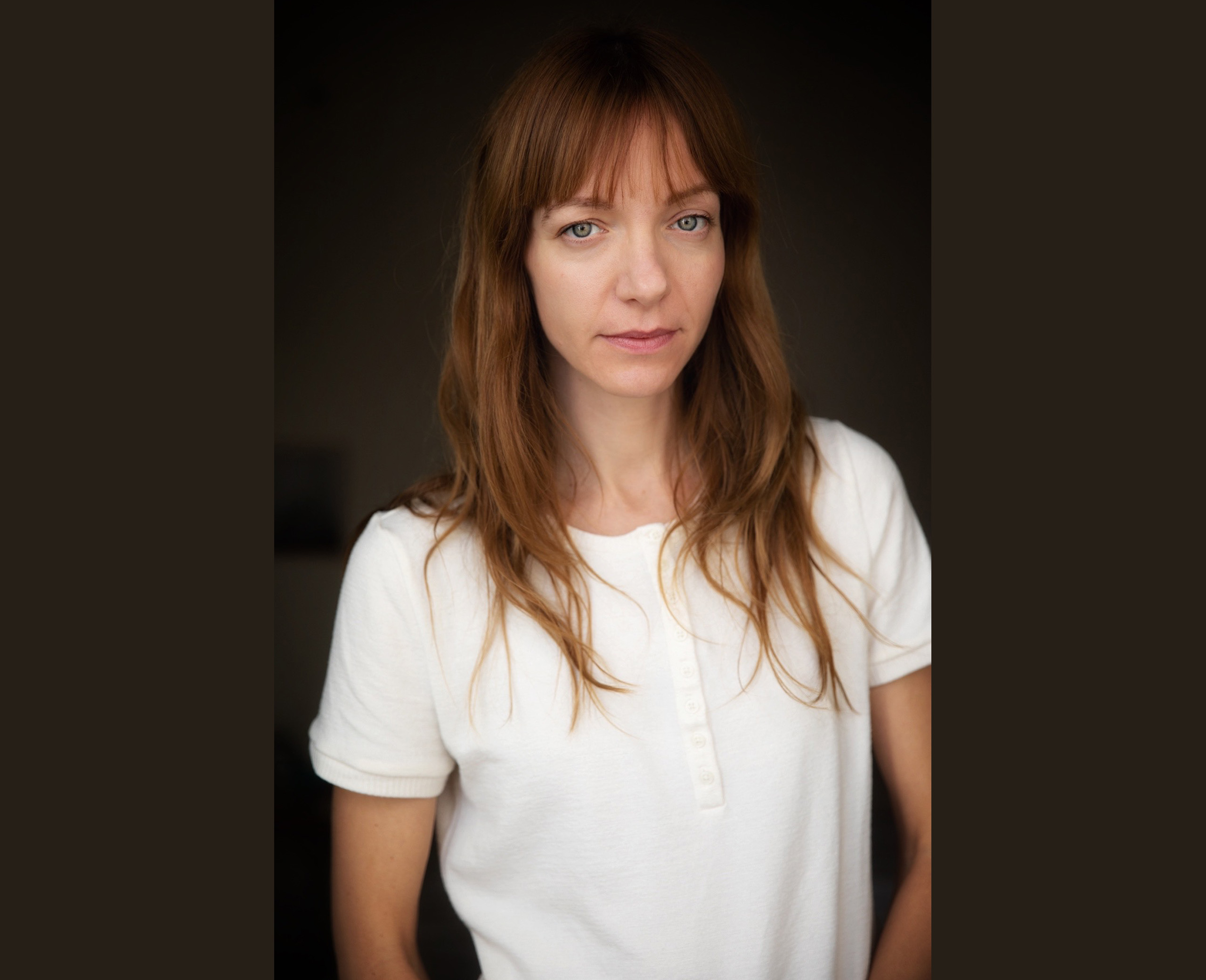
Ruth Margalit, a contributing writer at the New York Times magazine, specializes in profiles of prominent Israelis. Her new book, In the Belly of the Whale: Portraits from a Fractured Israel, which was published in September, collects ten of her pieces, including about members of the country’s right-wing vanguard such as Itamar Ben-Gvir, the minister of national security, and Yinon Magal, a star anchor for Channel 14, a network that virulently backs Prime Minister Benjamin Netanyahu. The pieces are organized chronologically, and it’s striking how much the book’s tone shifts over time. As the mania of life in Israel post–October 7, 2023, crescendoes, the right-wing voices profiled six or seven years before (including Miri Regev, who was then the culture minister) sound almost quaint.
Margalit lives in Tel Aviv, was born and raised in Jerusalem, and spent nine years studying and working in New York City before returning to Israel, in 2019. When it comes to presenting a full, nuanced look at Israel today to those outside the country, she is uniquely capable. (She has also written for CJR about, among other things, press freedom in Israel.) She spoke with me about how Israel’s culture, politics, and press have changed since the Hamas attack three years ago, and how this month’s parliamentary election—in which Netanyahu is fending off an opposition bloc led by Gadi Eisenkot, a former army general—might affect the country’s future. Since the events of that October 7, “for large sectors of the country, there was a sense of vengeance, of wanting reprisal, and that can never be satisfied,” Margalit told me. “It’s just something that, as a society, we have to live with now.” Our conversation has been edited for length and clarity.
AB: The profiles in the book take place more or less over the past decade. Looking back ten years, did you have some sense then of where the country was heading?
RM: It’s funny: when I wrote the earliest profiles, I thought that things were pretty much as bad as they could get. Netanyahu had been reelected, and he had sworn in what was then called the most-right wing government in Israel’s history. Of course, it’s nothing compared to now. He had Avigdor Lieberman, Naftali Bennett—figures who are now part of the opposition. There was no sense that things were going to get so much worse. But in putting the book together, I saw the trajectory—this intensification of nationalism, the rightward creep of it all—and that became interesting. You have a sense of a narrative arc.
The point where I did realize that there was a shift, and that we were about to see things really changing for the worse, was after October 7. People say that Israeli society has become more racist, more afraid about its own security. All of that is true, but there is also a deep desire among many people I’ve interviewed—they want to unleash.
When it comes to consuming the news, what does that look like now in Israel?
Inside Israel, there was just a real vacuum with regard to everything coming out of Gaza. The footage wasn’t watched inside Israel. All we got was footage seen through the lens of IDF soldiers. The actual footage we got was either from reporters embedded with the IDF or directly from the military spokesperson unit. GoPro cameras mounted on the soldiers, that sort of thing. Of course, you can say, “Well, Israelis are on the internet, they can get it, it’s a willful blindness,” and I think there is truth to that. There was also a sense that the country was at war, and they did not want to engage with what they considered the enemy’s point of view. People were not willing to accept a different story. Whatever camp you were in, you viewed stories coming from the other side as either propaganda or doctored somehow. There was a parsing of language, as if it’s not even a real-life event anymore, but an attempt to figure out which camp the journalist was in, and if he or she was in your camp then you would gladly read the story, and if they weren’t, then you were able to put it aside and not think about it anymore.
There was just an unwillingness to sit with the facts of what was actually happening. To watch the mental games that people are able to play—that was deeply concerning for me as a journalist and as someone who lives in Israel.
Hostility toward journalists is nothing new in Israel, but the response to NAZA, a new documentary about the IDF’s death toll in Gaza, has been very intense. Does it feel different to you?
It does feel unprecedented: the level of backlash and vitriol, the fact that you have a culture minister threatening to revoke the filmmakers’ citizenship. That is something I have never before heard being voiced. We also have to remember that everything that’s happening is accelerated by the upcoming election. All of this is being used to turn out voters and whip up anger, and just to bring the volume to a maximum. In the book, there is a profile of Miri Regev, who, at the time, was the culture minister. She floated the idea of pulling government funding from films that were critical of the Israel Defense Forces. So this has been going on for more than a decade—but the trajectory is getting worse and worse.
In the book you write about the “poison machine,” a term used to describe the network of right-wing outlets and media figures who routinely go on the warpath for Netanyahu. How have they responded to NAZA?
Obviously, you have Channel 14, the pro-Netanyahu TV network, where a film like NAZA helps get their ratings up. They have these shows where they talk endlessly about these things with panels where everyone is in agreement, so it’s a little boring in that sense. They are very big on this idea of revoking citizenship, of not allowing the filmmakers to return to Israel. But to me, what was interesting is the way the NAZA reaction seeped into more mainstream outlets. The sense, almost, of betrayal that people have, even mainstream journalists. “How can our colleagues do this to us?” This time, it’s not even a sense of bad hasbara, bad propaganda: there’s a real sense that this is the worst thing that could have happened from within Israel in the wake of the war.
You write that when you first reached out to Yinon Magal—the Channel 14 anchor who is one of Netanyahu’s most prominent media defenders—he texted back, “Are you with me or against me?” and a winking emoji, and then he invited you over. People like him may rail against anti-Israel bias in the media, but they still seem to let you right into their homes.
In that sense, reporting in Israel is a gem. People respond immediately. I think people in the United States assume that, as a reporter for the New York Times and these other publications that get vitriol, I would get people shutting the door in my face. It’s the opposite. They criticize these publications—and they want to talk to their journalists, to set the record straight.
The second layer of it is that everyone is on WhatsApp. You don’t have to email. You get them on the phone. It’s, like, a seasoned Mossad director, and you immediately see his profile photo with his family and his dog. They’re constantly available. You can talk to them at eleven at night. There’s a level of familiarity that’s sort of innate. It’s a small country, so I can go and sit with the people I report on. Part of what I love about Israeli society, not just as a journalist but as a person who lives there, is this immediacy. There’s no sense of people being guarded. Everything is pretty authentic.
Itamar Ben-Gvir has become the face of right-wing Israeli extremism. You highlight his media literacy.
His knowledge of how to work the media is a hundred percent related to his political ascent. He was able to monopolize media attention by being this radical fringe boy from Jerusalem who would say the most shocking things. If you wanted the most radical example of something, he would always be ready with a quote, he would always pick up the phone. It started out as him playing; it was very performative. He wanted to get those headlines as the fringe boy, and now he wants to get the headlines as a legitimate player. In a way, that makes him even scarier: he was able to ingratiate himself with these journalists and get media time by being this sort of jokey figure. And then he turned very, very real very, very quickly.
Trump is always getting credit for his ability to play the media, too. Do you see parallels between the two?
I don’t. Ben-Gvir is much more calculated. He won’t have fits on social media. It’s all planned to suit a narrative.
In the book, you look back ten years. I hate to ask you to predict anything, but if you were to do another book like this—
Oh, God.
—in five or ten years, what might it look like?
For me, everything hinges on this election. Obviously, society has its own strains and trajectories, and there are other elections, but I think this one is truly pivotal. Right now, there is no sense where it will go. Every poll shows something different. Israeli society has very much moved to the right since October 7, but if anything, we’ve seen that nothing is predetermined. I know people say, “How much can Eisenkot really change?” But I think there will be some baseline of immediate change that will be very palpable in the West Bank. There will be less free rein to settler terrorism in the West Bank. That would be huge. That would be a start. That makes me hopeful.
Has America ever needed a media defender more than now? Help us by joining CJR today.