Sign up for the daily CJR newsletter.
Stepping up to the podium to make the case for war, the president of the United States claimed there was “a direct threat to this country.” He spoke of the enemy’s “long history of reckless aggression and terrible crimes.” He said he would “not wait to see what terrorists or terrorist states could do with weapons of mass destruction.” And he promised that once the enemy autocrat was removed, the US would “help that nation to build a just government after decades of brutal dictatorship.”
That was George W. Bush, speaking a couple of weeks before the US invasion of Iraq in March of 2003. In the haze of compulsory patriotism that followed the 9/11 attacks, the American press is widely regarded as having failed to hold the Bush administration accountable as it raced toward regime change in the Middle East. “Overall and in the main, there’s no question that we didn’t do a good job,” Dan Rather, the former CBS anchor, told Bill Moyers in a 2007 PBS documentary, Buying the War.
Many people will have heard an echo of Bush’s justification—talk of a “direct threat,” nuclear weapons, regime change—in Donald Trump’s announcement, twenty-three years later on February 28, that the US and Israel had decided to attack Iran. Last week, Washington and Tehran cosigned a memorandum of understanding for the “immediate and permanent termination of military operations on all fronts.” The agreement—which has seemingly benefited Iran—still appears shaky at the time of writing, but it clears the way for, among other things, reopening the Strait of Hormuz. Trump, unable to bend reality to his will, sued for peace.
The conflicts in Iraq and Iran are, of course, different in as many ways as they are similar. Iran has not been a boots-on-the-ground situation, and we live in a very different political and media reality now. The Trump administration barely felt the need to propagandize its case for war to the American public; a largely friendly, right-wing media sphere is ready to parrot whatever narrative the president favors on any given day. (Influential parts of the Murdoch empire also supported Trump’s war, as I wrote in March.)
But I’ve been thinking recently: How will historians evaluate the press’s performance on the Iran war? Under Trump, a president whose daily pronouncements are full of lies that range from the baffling to the despicable, the mainstream press has seemed to do a better job of questioning administration officials’ motivations for the Iran war than it did in the run-up to Iraq. Major outlets highlighted how officials constantly changed their stories, as well as Trump’s shifting aims for the conflict. In April, an article in the New York Times by Jonathan Swan and Maggie Haberman claimed to chart the behind-the-scenes events that led to Trump’s decision to bomb Iran, detailing the role of Benjamin Netanyahu, the Israeli prime minister, in pushing for war. (That information, a Times spokesperson told me over the weekend, was unearthed by Haberman and Swan while on book leave—for Regime Change, which will be released this week—but was shared with Times editors so it could be “published as soon as the information was confirmed and within six weeks of the war beginning.”)
There has also been a good amount of attention paid to the war’s consequences at home, including how it has fractured Trump’s MAGA base, as well as the costs to the American economy—although I always want more coverage that humanizes economic distress. But Trump’s assertion, made without evidence, that Iran posed a “direct threat” to Americans was often forgotten once the war was underway. And there was pretty minimal scrutiny of the legality of the president striking Iran without first seeking congressional approval, which Bush received before using force against Iraq.
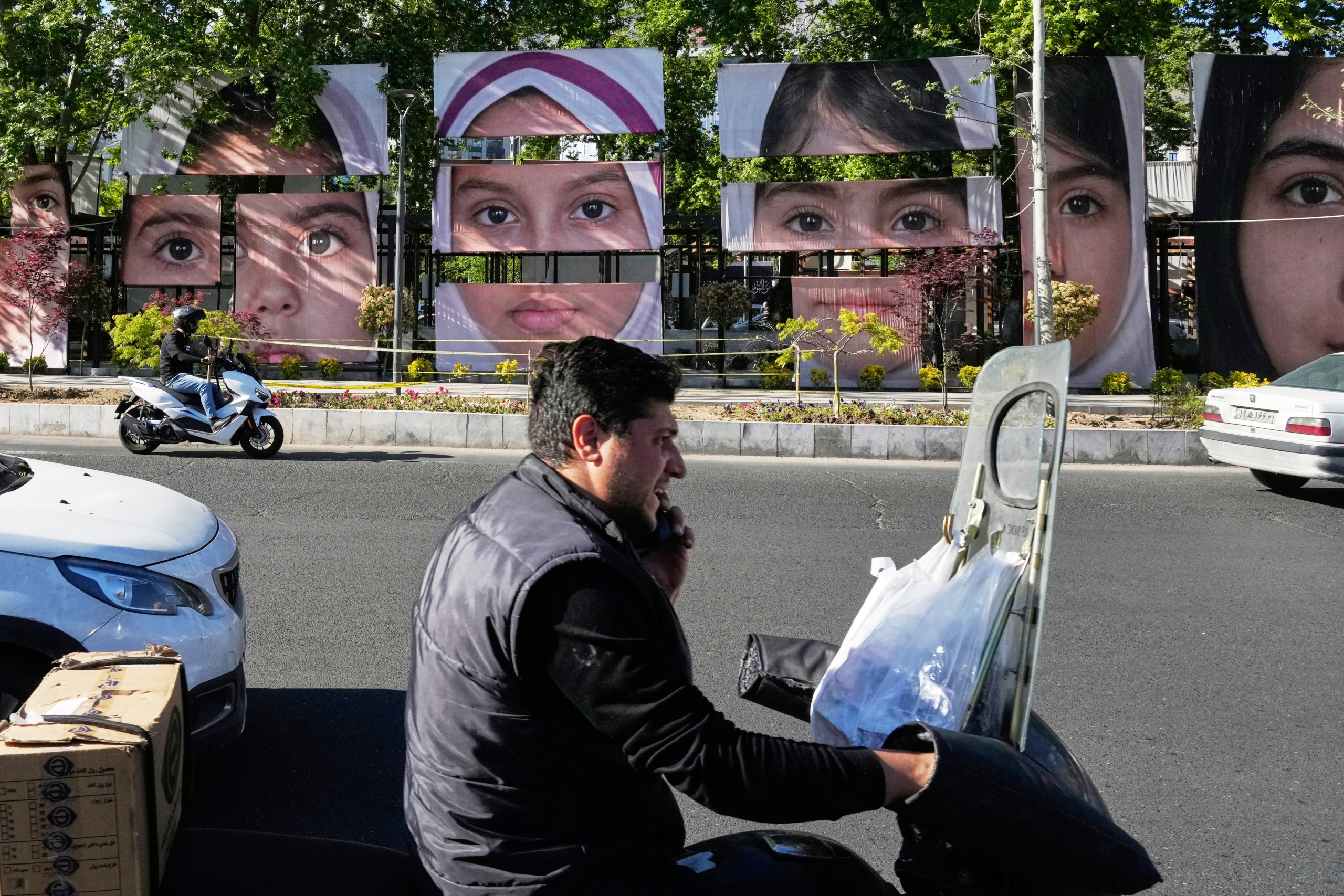
What about the humanitarian fallout in the region? We’ve seen some outstanding investigative work, led by the Times, into the US Tomahawk missile strike on an elementary school in Minab that is believed to have killed at least a hundred and seventy-five people, most of them children. I suspect this incident—and the reporting around it—will be remembered as one of the defining moments of the war. But the administration has still not accepted responsibility for the strike, which perhaps indicates that White House correspondents have not pushed hard enough for answers and accountability. In southern Lebanon, where the war spread, there has been some affecting reporting on the ground. Christina Goldbaum, also of the Times, was on the scene when mourners buried their dead during a brief lull in Israeli bombing in April, in a graveyard strewn with “rebar and chunks of concrete.” (Zahra Hankir wrote about the press in Lebanon for CJR.) According to Lebanese health officials, about four thousand people have been killed by Israeli strikes since the conflict began. With notable exceptions, most US newsrooms don’t seem to have paid close enough attention to their deaths—or the legacies they leave behind.
One complication for international outlets has been the difficulty of reporting with genuine freedom from inside Iran. As Sebastian Walker, a filmmaker, told my colleague Susie Banikarim, journalists reporting in the country must accept that Iranian authorities “ultimately make the final decision on what you can do.” This has undoubtedly constrained coverage. Meanwhile, at times, the media has seemed unable to resist a Hollywood-friendly military-giveaway story, like the heavily briefed mission—described as “daring” and “dramatic” and plastered on newspaper front pages—to rescue a downed US airman, which I wrote about a couple of months back, highlighting the press’s tendency toward “selective empathy.” (Deadline reports that the tale is being adapted for the big screen and will be directed, predictably, by Michael Bay.) But this was an outlier amid lots of sober, more professional coverage.
Does this mean—whisper it—that overall the press has had a “good” war, at least compared with the debacle of the run-up to Iraq? I’m still making up my mind. And I’m curious what CJR’s readers think about this—so do respond to this email or send me a note if you’d like to share your thoughts.
Other Notable Stories …
- Ahmed Wishah, a journalist with Al Jazeera, was killed by an Israeli air attack on Gaza’s Bureij refugee camp, the news organization said over the weekend. Wishah was one of at least six people killed by strikes on Saturday morning, Gaza health officials told the BBC; he was twenty-five, and died a few weeks after another air strike killed his brother Mohammed, who also worked for Al Jazeera, the outlet said. The Israeli military did not provide evidence for a claim that Ahmed Wishah was a Hamas “sniper operative.” Al Jazeera denied the allegation. Last fall, Jon Allsop wrote for CJR about the Israeli military’s “habit of making flimsy claims of militancy” against media workers it has killed. At least two hundred and sixty-three journalists and media workers have been killed in Gaza, Yemen, Lebanon, Israel, and Iran since October of 2023, according to the Committee to Protect Journalists.
- This month, the Times released further excerpts from Regime Change: Inside the Imperial Presidency of Donald Trump, by Haberman and Swan. Media-specific revelations from the book include Rupert Murdoch expressing an apparent preference for Marco Rubio, the secretary of state, over Vice President JD Vance to succeed Trump, and Jeff Bezos, the billionaire owner of the Washington Post, bad-mouthing the paper’s business side as “terrible.” The book has reignited a debate over journalists’ holding onto newsworthy material rather than divulging it immediately. Danielle Rhoades Ha, a spokesperson for the Times, said that relevant newsworthy material was published early—like this article from April—and the book’s publisher, Simon & Schuster, told me that Regime Change’s original release date, in September, was brought forward to June 23, “on the fastest schedule in which we could physically publish and distribute a book to the public.”
- Penske Media will buy the sites owned by Vox Media that were not included in James Murdoch’s takeover deal from earlier this year, including Eater, The Verge, The Dodo, Popsugar, Punch, SB Nation, and Thrillist. Murdoch is buying New York magazine, Vox.com, and Vox’s podcasts for about three hundred million dollars. Penske will add the remaining Vox Media assets, which it is purchasing for an undisclosed fee, to its media empire, which includes Rolling Stone, Deadline Hollywood, Artforum, and the Hollywood Reporter.
- The Digital News Report, an annual work of global research from the Reuters Institute for the Study of Journalism, at the University of Oxford, was released last week. Among its headline findings were the continued nosedive of trust in news, to a new low—in the US, only 25 percent of people “now say they trust the news most of the time”—and the rise of news consumption through AI chatbots: “10 percent of people use AI chatbots for news, up from 7 percent last year.”
- And with what is thought to be the most expensive iteration of the FIFA World Cup now underway in the US, Canada, and Mexico, news organizations have tried to communicate the high costs of attending matches in creative ways. (The price of a space in the MetLife Stadium parking lot in New Jersey has reportedly been hiked above two hundred dollars, and a train ticket from New York’s Penn Station that ordinarily costs thirteen dollars is now going for more than a hundred.) In an effort to try out alternatives, The Guardian sent a reporter from New York City to MetLife on foot; it took him five hours. Time magazine followed suit—its journalist hiked for six hours. And last week, The New Yorker’s Zach Helfand set off for the stadium by canoe. It wasn’t perfect, Helfand wrote, but the “view was uncommonly broad, and the city skyline poked out of the eastern sky. I’d never experienced a more pleasant commute.” For more on coverage of the world’s biggest sports tournament, and all the geopolitical baggage that comes with it, check out Amos Barshad’s piece for CJR, in which reporters told him how they plan to bring the politics off the sidelines.
Has America ever needed a media defender more than now? Help us by joining CJR today.