

Sign up for the daily CJR newsletter.
At lunchtime on Wednesday, the day after the country delivered a midterm thrashing to the Republican Party, Donald Trump made some unscheduled remarks inside the skeleton of the White House ballroom. His mood was subdued, his voice quiet, his sentences trailing off. Talking about the steel, marble, and bronze of the construction project failed to animate him. When reporters asked about the midterm defeat, he appeared thoughtful, conceding that the Iran war had probably wounded his party’s fortunes. But within a couple of days, his tone was different. On Friday, he promoted Stephen Miller, an anti-immigrant ideologue with undemocratic tendencies, to White House chief of staff. (Miller replaced Susie Wiles, who had previously been his boss.) On Saturday, Trump announced on Truth Social that he’d offered the vacant job of White House press secretary to Dana White, the president and CEO of the Ultimate Fighting Championship, or UFC, and urged UFC fighters to come along to the White House. Trump praised White as “a violent Fighter and Warrior” who is needed “to defend us against the Lunatic Left.” On Sunday, he posted a meme of UFC fighters attacking the press. (Trump later said the job offer was a joke: “That was an example of something where I was kidding, and then people said, ‘You know, that’s actually a pretty good idea.’” The pair are meeting on Monday, they both said, although the appointment may turn out to be purely social.) Perhaps the lessons Trump gleaned from his mentor Roy Cohn were echoing in his head: Attack, attack, attack, and never back down.
It’s unsurprising, given how Trump has reacted to past defeats, that he is doubling down now. It’s less clear what comes next, in the face of such a stinging rebuke to his agenda, for the individuals and companies, including many news organizations, that have prostrated themselves before his administration over the past two years. The tech and media moguls who lined up behind Trump in the heady days of January 2025 may want to disappear, Homer Simpson–like, into the bushes. But it won’t be that simple. Media watchers will not forget the way ABC settled, rather than contested, the libel suit over George Stephanopoulos’s characterization of E. Jean Carroll’s successful defamation claim against Trump. Or the way Jeff Bezos has meddled in the Washington Post’s editorial decisions and gutted its newsroom. Or the fawning of the Ellison family, with its gala “honoring the Trump White House” and its attempts to remake CBS News. It should be obvious following the midterms that Trump never had a mandate for ICE agents to shoot people in American streets, or to start an illegal foreign war that drove up living costs, while enriching himself and his family and arresting journalists and protesters. The easy capitulation of media moguls always smelled rotten; now it also stinks of absurdity.
Absurd or not, much of the damage to journalistic institutions cannot be reversed. Even if Bezos withdraws his diktat that the Post only run opinion pieces that foreground “personal liberties and free markets,” which is doubtful, a third of the newsroom will still have been laid off—a mindless act of institutional self-harm that the Washington Post Guild said disproportionately affected journalists of color. We’re more likely to see a thawing of the frosty relationship between David Ellison, the chief executive of Skydance, and Democratic lawmakers, given that he previously donated to Joe Biden’s reelection campaign. (He won’t be able to shrug them off, as he was accused of doing earlier this year, if he’s served with a congressional subpoena.) But the fact will remain that the Ellison media empire now controls CBS and CNN—alongside all manner of other Hollywood and TV assets—and has already changed how the first of those news organizations runs.
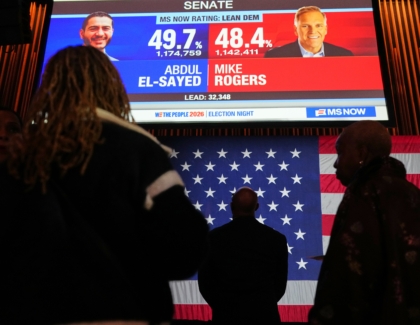
Where exactly do the midterms leave CBS News? Bari Weiss, whom the Daily Beast has characterized as “MAGA-curious,” has been editor in chief for more than a year now. Last November, Weiss said, at an event alongside Ben Shapiro, that she wanted to “speak for the 75 percent” of Americans who “still believe passionately in the American project” and do not want propaganda from the left or right. In practice, though, she has faced allegations of watering down critical coverage, which exploded in the firings of multiple 60 Minutes correspondents last spring, several of whom raised concerns about editorial interference. (Sharyn Alfonsi and Scott Pelley, both formerly of 60 Minutes, joined Columbia Journalism School this academic year as journalists-in-residence.) Weiss’s strategy does not appear to be working. Recent 60 Minutes episodes have garnered a diminished viewership and, on Election Day, CBS recorded the lowest primetime viewership figures of the six major TV networks, at 2.8 million, according to Nielsen data. It trailed NBC (6.7 million), ABC (5.2 million), Fox (4.3 million), CNN (4.1 million), and MS Now (3.7 million). (Like other networks, total viewership for CBS on Election Day was up compared with the 2022 midterms.)
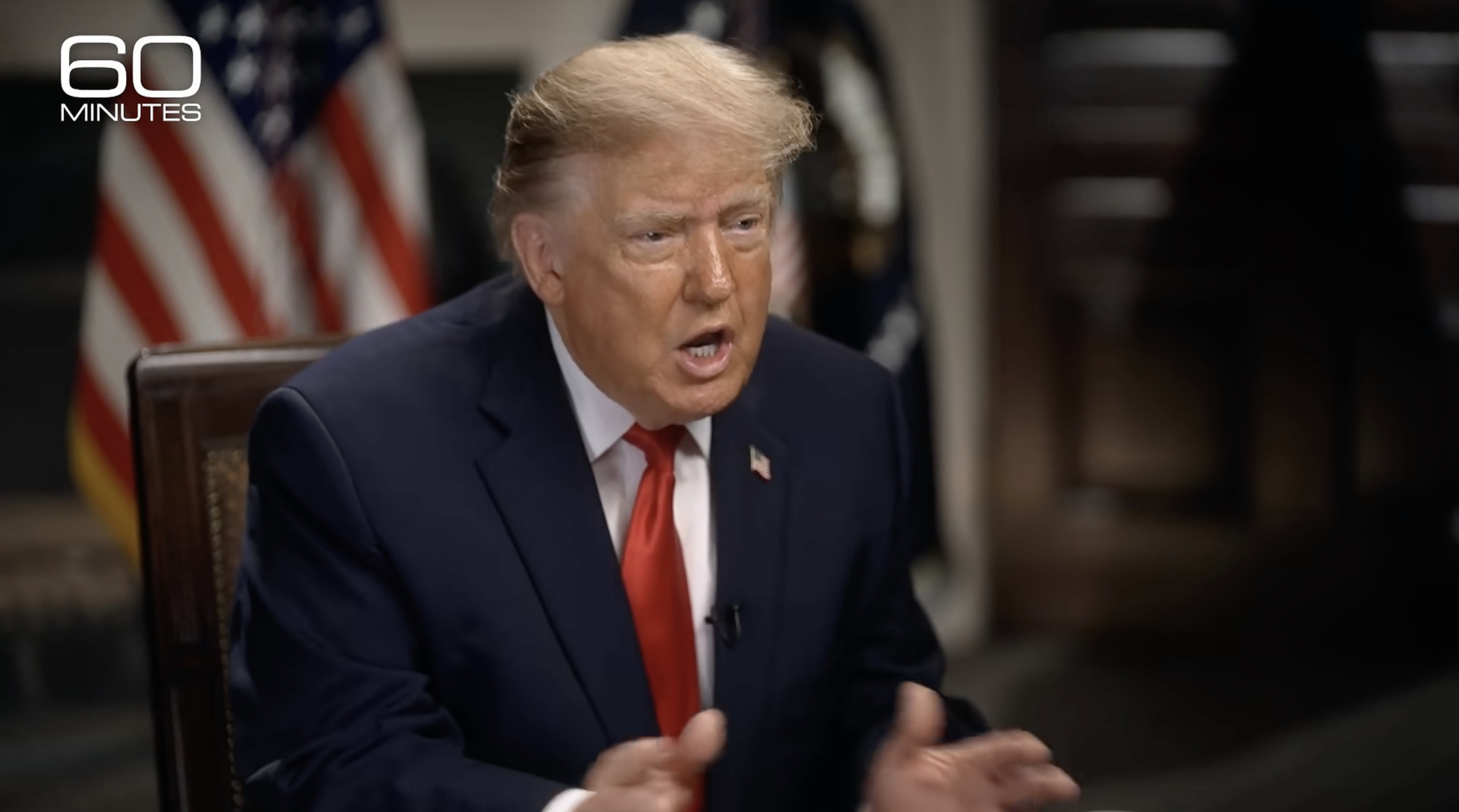
Whether CBS will change course to win back a greater share of viewers remains to be seen, but there were some clues in the 60 Minutes episode that aired on Sunday night. Ross Douthat landed the first substantive post-election interview with Trump, which was conducted on Friday. Douthat, formerly of New York Times Opinion, who rose to become one of America’s most prominent conservatives with his Interesting Times podcast, was seated across from the man who’d just overseen the worst electoral wipeout of American conservatives in at least half a century. He pressed Trump on a number of his boasts, failures, and corruptions, yet his interview questions were largely shrugged off. (That might have been his podcast-confessional style, or it might have just been Trump’s relentless verbosity, which has posed similar problems for many journalists.) I couldn’t help but wonder, was all CBS’s cozying up worth it?
Elsewhere in conservative media land, there are signals that Rupert Murdoch, who has had a complicated relationship with Trump, is ready to move on now that the MAGA fever has broken. On Wednesday, the editorial board of the Wall Street Journal announced the arrival of “the Trump reckoning,” saying he was the “main architect” of the Republican collapse and that “the GOP needs a debate about what it stands for after Donald Trump, and let’s hope it starts this week.” Even the New York Post, which has banged the drum of Trumpism for years, ran bruising front pages. On Wednesday, the Post highlighted voters’ “historical rebuke,” and on Thursday, a Post headline noted that JD Vance “puts blame for midterm shellacking on Trump’s Iran war.” The irony that the Post had cheered on the war from the start appears to have been lost on its editors.
The story has so far been more complicated for Fox News. Trump lashed out at the network on election night, saying it “bears responsibility for these losses by constantly and consistently putting on the Dumocrat opposition, and worse.” That seemed a little undeserved. Fox’s primetime opinion hosts—such as Sean Hannity, Laura Ingraham, and Jesse Watters—have long elevated Trump to cultlike status. And its hosts and talking heads continued to give Trump an easy ride on election night, as The Guardian’s Jeremy Barr noted after—tough gig!—apparently watching more than six and a half hours of the network’s rolling coverage. Yet Fox’s on-screen pundits could only spin so much. “We believe President Trump will be judged as a bold and consequential leader,” Watters said. “But in the short term, voters delivered judgment day, and it was no bueno.”
Jonah Goldberg, a former Fox contributor who resigned in 2021 over the network’s direction, and who is now the editor in chief of The Dispatch and a CNN contributor, told me that Fox’s dilemma is that “they’ve been riding the tiger of Donald Trump for a decade, and now the tiger is tired and very unpopular.” He continued: “My understanding is that Rupert Murdoch never had a particularly high opinion of Trump. It was a marriage of convenience. And part of the unique problem that Fox has is that it’s been a ratings success for so long that they’ve gotten accustomed to the cash it throws off.” Figuring out what comes after Trumpism, he added, carries the same challenge faced by the GOP: how not to alienate the network’s base.
The day after the election, the official White House X account posted a photo of Trump in the Oval Office, with his brow furrowed and his fists on the table, alongside the caption “PSA: Trump is still your president.” We in the media industry will forget that at our peril. For two more years, Trump’s hand will steer the federal government. He has plenty of time to continue wreaking havoc on the press—by suing publications, blocking access, subpoenaing reporters’ records, directing Justice Department investigations, and weaponizing Federal Communications Commission regulations—and his wounded-dog disposition suggests he will continue, or even accelerate. If the media’s early capitulations tell us anything, though, it is that news organizations must keep fighting back.
Other Notable Stories
By Jem Bartholomew
- On Thursday, Salon announced it is ceasing publication after thirty-one years. “After careful consideration, we have reached the difficult decision that our publishing model is no longer sustainable,” the online magazine said in a statement. Salon was founded in November of 1995. Back then, “the idea that an ambitious magazine could exist only online was unprecedented,” Nathan Heller, a staff writer at The New Yorker, wrote on X in reaction to the news of its closure. “Within three years, it had hundreds of thousands of readers, illustrious contributors, and mentions in the same breath as its print peers. A brave thing—gone not forgotten.”
- The stock price for Trump Media & Technology Group Corp. (TMTG), of which Trump is the largest shareholder via a trust managed by his oldest son, plunged by about a third following the midterm results. Shares of the company, which owns Truth Social, had closed on Election Day at 5.96 dollars. By the end of the week, they were trading at 3.99 dollars per share, significantly reducing Trump’s net worth, at least on paper. As I wrote for CJR in May, the actions of TMTG have gotten increasingly weird during Trump’s second term; last December, it announced it was merging with a nuclear-fusion company.
- Trump’s legal team has filed an appeal to the US Court of Appeals for the Eleventh Circuit to keep alive his defamation claim against the Wall Street Journal, over its coverage of an apparent birthday letter Trump wrote to Jeffrey Epstein. (Judge Darrin Gayles, of the US District Court for the Southern District of Florida, has twice dismissed Trump’s lawsuit.) Across the pond, Prince Harry, Elton John, and four other prominent figures who brought a privacy case against the Daily Mail’s publisher alleging that the paper had unlawfully gathered information about them—a case that Justice Matthew Nicklin of the UK High Court dismissed in July—have challenged Nicklin’s ruling at the Court of Appeal.
- The Washington Post’s Drew Harwell and Scott Nover reported over the weekend that Laura Loomer, the far-right influencer who has sometimes had Trump’s ear, has been paid by private clients for posts to her nearly two million X followers. They write: “Bank transaction emails and a wire transfer statement reviewed by the Washington Post appear to show four payments totaling more than $60,000 sent to Loomer and a Florida-based company registered in her name, King Breaker Media, since May of last year.” The documents did not specify the purpose of the payments, they added; Loomer claimed that she is a journalist and denied being paid to post. In other Post news, Karen Attiah, a former opinion columnist whose firing—after comments she posted online in the wake of Charlie Kirk’s killing—was overturned by an independent arbitrator in August, will not be returning to the paper, and has reached a settlement, Status reported.
- And last Thursday, Trump again barred CNN from the Oval Office, upending pool coverage of an event at which Trump declared the room a national monument, Status reported. Kaitlan Collins, CNN’s chief White House correspondent, said on X that “the White House blocked us from being allowed in,” which she described as “self-defeating” given that the president “presumably wants to have TV coverage” of the ceremonial event. Lawyers for CNN, MS Now, and Politico are contesting Trump’s efforts to ban journalists from the White House grounds and in smaller spaces to which pool members require access.
Has America ever needed a media defender more than now? Help us by joining CJR today.