Sign up for the daily CJR newsletter.
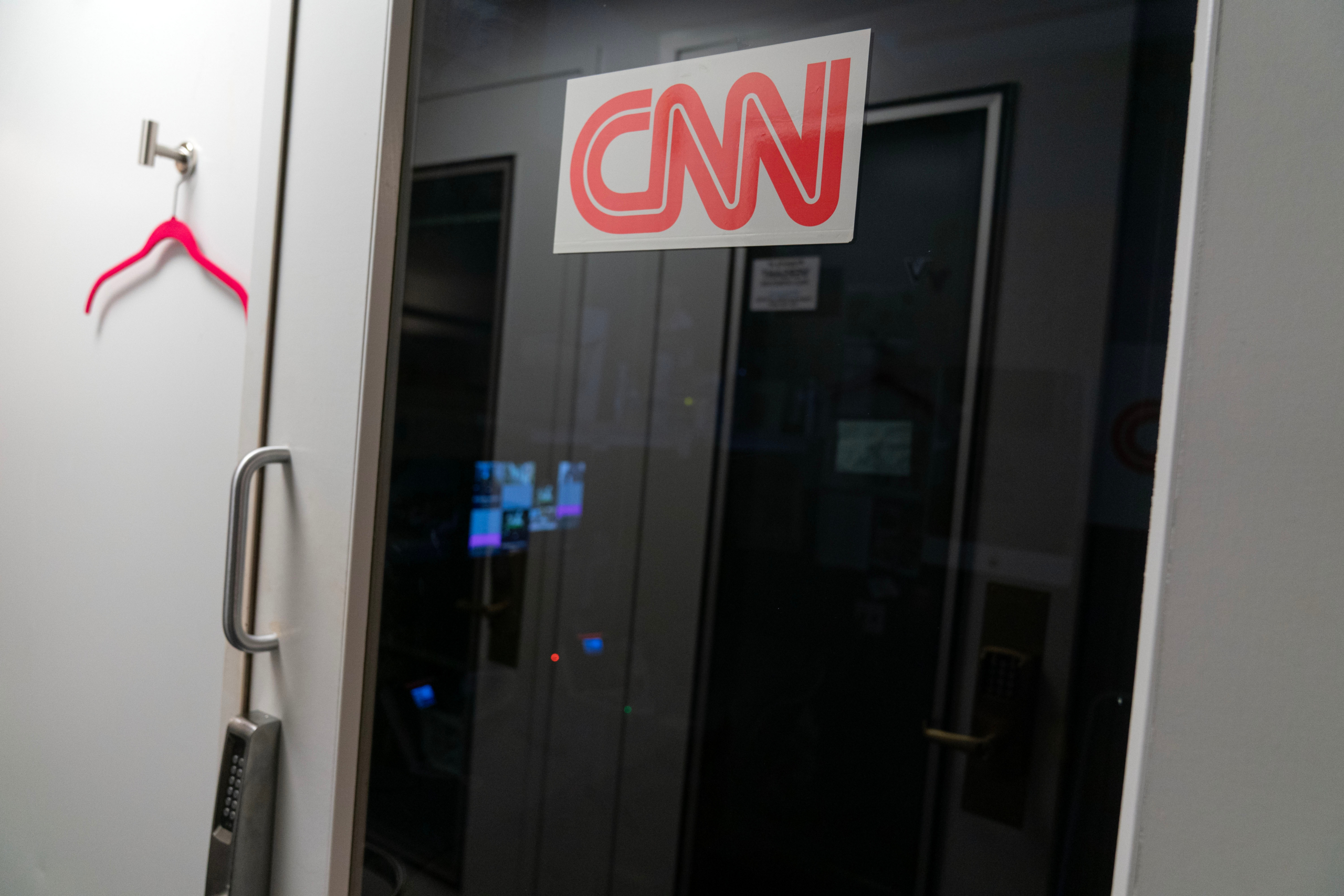
This week promises—or threatens, depending on your interpretation—to be a major one for the American press. On Tuesday, Paramount Skydance is expected to close its takeover of Warner Bros. Discovery in a deal worth 111 billion dollars. This will result in the formation of a new global media behemoth, known simply as Skydance. Its chief executive, David Ellison, a man who held a gala this year “honoring the Trump White House,” will then control two of the five news organizations that make up the White House broadcast pool, CBS News and CNN. The latter of those networks is currently being shut out of its pool duties at Trump’s direction. On September 18, Trump said he was ejecting CNN from the White House press corps along with MS Now and Politico. Judge Timothy J. Kelly, of the US District Court for the District of Columbia, issued a temporary restraining order forcing the reinstatement of journalists from the banned outlets to the press corps. But the administration has continued to bar CNN’s cameras from the broadcast pool, creating a new distinction within long-standing access norms. At 11am ET on Thursday, the same day the restraining order is set to expire, Kelly will hear arguments from the banished outlets, all of which are hoping to regain permanent access. If the stars align, this could be the week Ellison is crowned king of broadcast news, and Donald Trump faces limits on his power to control the press.
Ellison—a forty-three-year-old former movie producer and the son of Larry Ellison, the cofounder of Oracle, who is worth 184 billion dollars—has taken pains to signal continuity at CNN. In the Wall Street Journal, Joe Flint reported that Ellison is negotiating hard to keep Mark Thompson, the chief executive of CNN, in place beyond the end of his existing contract in early 2027, while Bari Weiss, the divisive editor in chief of CBS News, “isn’t expected to have a role involving CNN at close of the deal.” (Adam Piore profiled Thompson for CJR in 2024.) Reports have suggested that top CNN talent—including Anderson Cooper, who exited 60 Minutes shortly after Weiss took over—would leave if Weiss got the keys to the network. CBS News under her tenure has been criticized for its friendly coverage of the Trump administration. (“I would rather work for Rupert Murdoch,” Kara Swisher, a CNN contributor and Original Series host, said on her podcast.) But despite some reports framing this as Weiss being “SNUBBED,” or her fate being “up in the air,” we should not assume there won’t be some role for her at CNN in the future. Keeping Thompson on as CEO at CNN, at least for a while, is a way for Skydance to get “the noise to go down in the news part,” Swisher told me when I contacted her over the weekend, “since it is sucking up the oxygen and they have bigger issues, like the insane debt, so they need to kick the can down the road here.” (A representative for Paramount Skydance did not respond to a request for comment over the weekend.)
Swisher has said she plans to depart the network when her contract expires on December 31. “I am but a bit player, but it would be hard to imagine staying with such uncertainty and no overall news strategy that makes sense to me with a Paramount leadership that is not exactly knocking it out of the park,” she told me by text message. “It feels chaotic and careless and incompetent, and times are both too important and too precarious for journalism to mess around. Plus, the political overlay they added so cloddishly seems boneheaded in the best of times. This is not the best of times.” (Swisher went on: “I love Mark Thompson and the current leadership and staff at CNN and think they are aces.… I trust them completely.”)
The completion of the merger raises uncomfortable questions about media capture in the United States. “Looking at the Ellisons’ takeover of CNN (as part of many other media assets), there are striking comparisons with what has happened to the media in illiberal countries like Orbán’s Hungary, and even in Putin’s Russia,” Martin Moore, the director of the Centre for the Study of Media, Communication, and Power at King’s College London, and the coauthor of last year’s Dictating Reality: The Global Battle to Control the News, told me. “This is known in Russia as the Sistema strategy—using loyal allies as proxies who take over media assets and then give the government effective editorial control, while maintaining a semblance of autonomy.”
As Kyle Paoletta wrote for CJR this spring, in the long term, an Ellison-controlled CNN “likely won’t replicate Fox News, but it will look to stay in Trump’s good graces.” Paoletta went on: “The tone may come to sound much like the Weiss-era CBS Evening News: bloodless and bland.” (A CNN representative did not respond to a comment request over the weekend.) The risk of media capture “is greater when a news organization is controlled by an owner with extensive economic interests that are affected by government decisions,” which “creates more potential channels through which political influence could operate,” Andrea Prat, the Richard Paul Richman Professor of Business at Columbia Business School and professor of economics at Columbia, told me. “The Ellison family’s interests extend much further outside media, most importantly through Oracle, which has extensive interactions with the federal government.”
CNN in the pre-Ellison era has been engaged in a battle with the Trump administration. Ahead of Thursday’s hearing on the White House press ban, the Justice Department reiterated that CNN and the other banned outlets “have failed to maintain minimum professional journalistic standards by publishing classified and national security information.” (Last week I pointed out the shakiness of this argument.) The DOJ’s filing on Friday also argued that the plaintiffs would fail because Trump’s actions are “not retaliatory because the mere denial of special access is not an adverse action that would objectively chill a reasonable reporter.” When questioned by Eric Cortellessa, of Time, in an interview last week, about whether he was ignoring Kelly’s temporary order with regard to CNN and the others, Trump seemed to play dumb. But Steven Cheung, the White House director of communications, jumped in with a revealing comment. “The judge basically ordered” the administration to reinstate the banned outlets’ “access back to the White House, but that’s different than allowing the pool into the events in the Oval Office or on Air Force One,” he said.
In other words, this administration is trying to draw a line between press entry to the White House complex and access for broadcast pool cameras to tighter spaces like Air Force One. Television news networks have been pooling coverage of the White House since the Dwight D. Eisenhower administration. But that only works when all members of the pool have access to the president. It’s that kind of long-standing journalistic custom, which enables a functional democracy, that the Trump administration has sought to erode in its quest to dismantle critical reporting. We’ve seen the same dangerous urge in the banishment of reporters from the Pentagon and in the weaponization of the Federal Communications Commission. Until now, the White House broadcast pool has not sent a replacement when CNN has been banned. But if the pool blinks, American broadcasters risk becoming complicit in Trump’s attack on the free press.
Many of the Trump administration’s assaults on the news industry since the start of his second term have been showy, gasp-inducing, and bordering on cinematic. A raid on a Washington Post reporter’s home. The arrests of two independent journalists for covering a church protest in Minnesota. The detention of journalists by the immigration-industrial complex—and the deportation of one of them last year—sometimes in apparent retaliation for unwanted reporting. Alarming, dramatic, shameful. This week, though, we see two stories that, although quieter, could have long-lasting implications for the American press: the minting of Ellison as one of the world’s most powerful media moguls, and a crucial test in a federal courtroom for what kind of power Trump—or any would-be despot in the Oval Office—can exert over the press.
Other Notable Stories …
By Jem Bartholomew
- Journalists at the Cornell Daily Sun gave an interview to Andrea González-Ramírez of The Cut. The Daily Sun, the student newspaper, spent months reporting the story of a woman who has accused seven fraternity members of drugging and raping her. It also published an editorial that printed the names of the accused—and excoriated Cornell University’s “pathetic” failure of the woman. (A Times reporter was there when the Daily Sun wrote the editorial.) On Friday, S. Mitra Kalita, writing for CJR, gave a dart to outlets reporting on that case that relied on dehumanizing language such as “alleged victim.” “Journalists can protect the presumption of innocence without casting immediate doubt on the accuser or undermining her humanity,” Kalita wrote.
- Last Wednesday, Gavin Newsom, the governor of California, signed a bill to give news organizations thousands of dollars in tax credits for hiring journalists—the first of its kind in the country. Under the plan, which is being hailed as a way to combat the decline of local outlets, newsrooms can get up to twenty thousand dollars in tax credits for the first five journalists hired, then fifteen thousand dollars for every additional journalist, with no cap, the Los Angeles Times reports. “This is one of the models out there that seems like the most efficient way to do it without putting a thumb on the scale about which newsrooms survive,” Neil Chase, the chief executive of CalMatters, said in a statement.
- The Trump administration is facing criticism for buying pro-Trump propaganda ads with taxpayer money that have aired across cable and network TV stations. The ads—which have also run on CNN and MS Now—have been criticized by lawmakers from both parties “as a possible violation of federal laws against using taxpayer dollars for ‘publicity or propaganda purposes,’” the New York Times reported. Trump, defending the ads last Wednesday, said: “I’m not promoting myself because I’m not running for office. I’m promoting the country.”
- Last Monday, in the Times’ and other major publishers’ ongoing copyright infringement lawsuit against OpenAI, the plaintiffs’ lawyers asked Judge Sidney H. Stein, of the US District Court for the Southern District of New York, to disregard the Justice Department’s intervention in the case. In September, the DOJ filed a statement supporting OpenAI, arguing that the scraping of news articles was protected under the “fair use” doctrine. Graham James, a Times spokesperson, criticized the DOJ statement, saying it “appears to be an effort to further enrich the world’s largest companies—and the administration’s largest donors—while undermining this country’s free press.”
- In Egypt, security forces have detained the entire newsroom of Matsadaash, which translates from Arabic to “Don’t Believe It.” Authorities have accused the outlet’s staff of six journalists of spreading disinformation. The Committee to Protect Journalists is urging Egyptian authorities to release them and drop the charges and calling for information about where they are being held. Egypt is ranked 169 of 180 on the Reporters Without Borders World Press Freedom Index.
- David Folkenflik, NPR’s media correspondent, published a story on Sunday about two multimillion-dollar lawsuits against Fox News that blame the network for the deaths of four people traveling alongside Benjamin Hall, a Fox correspondent, in Ukraine in 2022. Folkenflik said he interviewed fifteen people, including the parents of Oleksandra “Sasha” Kuvshynova, who blame Hall for their daughter’s death. The story details allegations that “Fox News and its star correspondent ignored repeated and urgent warnings to stay away from the danger zone outside the city limits of Kyiv.” The allegations raise questions about “ambition and negligence” on the part of Hall and Fox, Folkenflik writes.
- And a sliver of good news: according to a Gallup poll released last week, trust in the media has in fact climbed over the past year. The number of Americans who said they trust the mass media a “great deal” or a “fair amount” rose to 33 percent, up from 28 percent last year. (But still down from a high of 72 percent in 1976.) The poll was conducted between September 1 and 17, before Trump began denying White House access to CNN, MS Now, and Politico. “Americans’ confidence in the news media has pulled back from last year’s record low,” Lydia Saad, of Gallup, wrote, “but trust remains historically weak and polarized.”
Has America ever needed a media defender more than now? Help us by joining CJR today.