Sign up for the daily CJR newsletter.
“I don’t think we’re going to necessarily ask for a declaration of war. I think we’re just gonna kill people that are bringing drugs into our country, okay? We’re gonna kill them. They’re gonna be, like, dead.” Those were the words of President Donald Trump on October 23, speaking at a White House roundtable about the administration’s military campaign against boats in the Caribbean and the Pacific. Over the past three months, the US military’s Southern Command has hit at least twenty-one vessels with air strikes and killed at least eighty-three people. The administration alleges, without providing evidence, that these boats were trafficking drugs to the US.
Last week, the Washington Post reported new information about the verbal directive given by Defense Secretary Pete Hegseth during the first attack, on September 2. “The order was to kill everybody,” an insider told the paper. (Hegseth said the story was “fake news.”) According to the Post report, commanders were tracking a boat holding eleven people that they suspected of carrying narcotics. They launched a missile, “igniting a blaze from bow to stern.” When the smoke cleared, commanders saw that “two survivors were clinging to the smoldering wreck.” To comply with Hegseth’s direction, they launched a second missile. No one survived.
The UN’s High Commissioner for Human Rights said in October that the air strikes “violate international human rights law” and urged the US to cease immediately. Human Rights Watch has condemned the strikes as “unlawful extrajudicial killings.” Amnesty International labeled the campaign “a murder spree.” Yet it has not been a domestic scandal in the US—until recently, it has been met largely with a shrug.
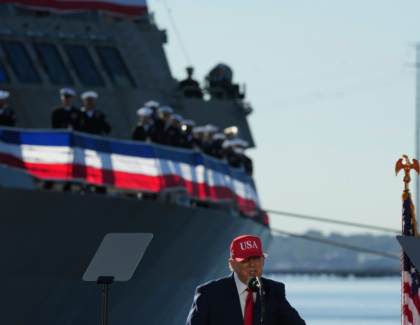
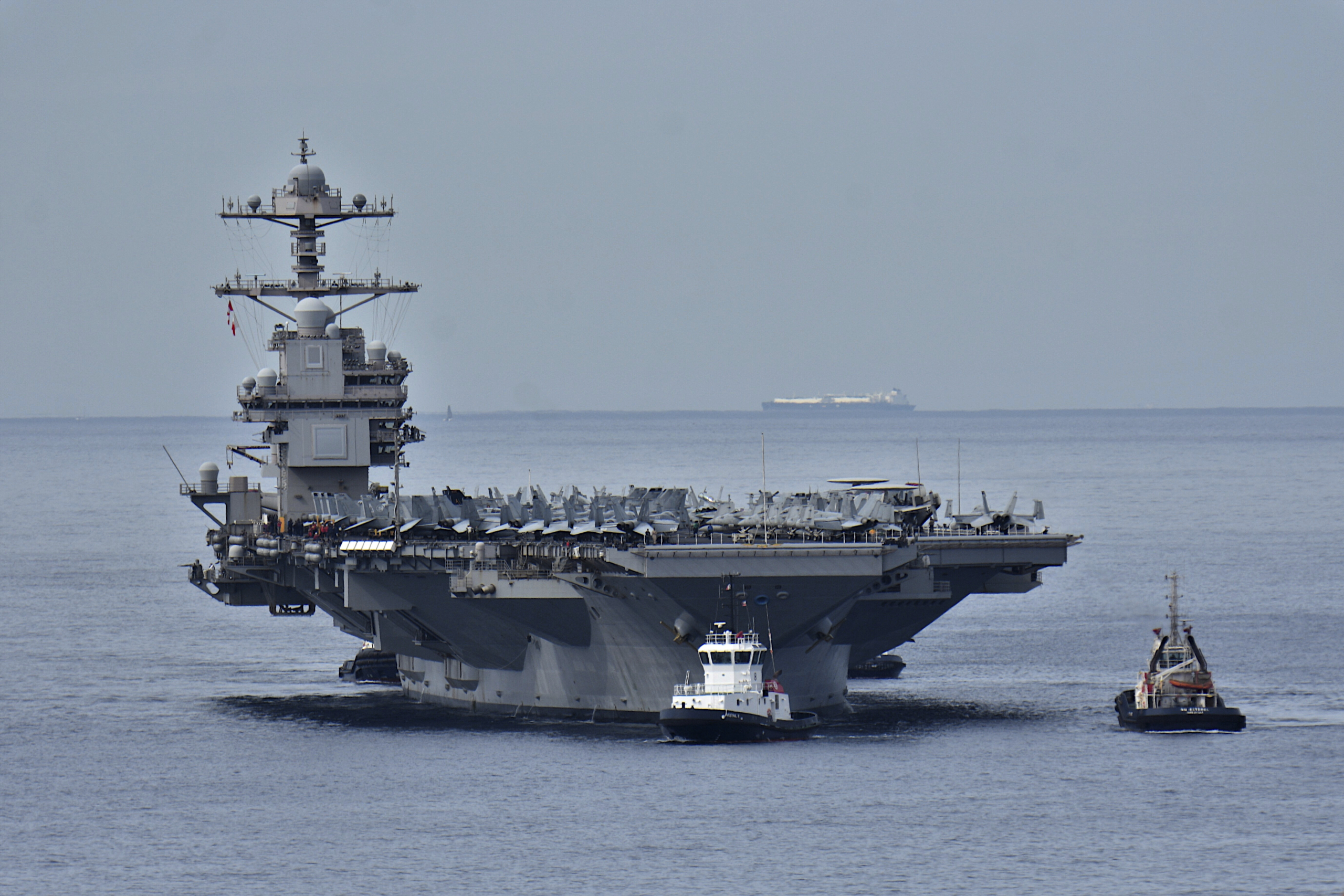
Attention is starting to perk up now, as the killings morph into higher-stakes tensions with Venezuela. In the past few weeks, the US has dispatched the largest naval task force to the Caribbean since the Cuban missile crisis, including the world’s biggest aircraft carrier: the USS Gerald Ford, greater in length than the Eiffel Tower is tall, and with the capacity to launch strikes deep into the Venezuelan interior. On Saturday, Trump posted on Truth Social that the airspace above Venezuela should be considered closed, fueling speculation about an American attack. The US accuses Nicolás Maduro, Venezuela’s president, of leading a sophisticated drug trafficking ring. Maduro accuses the US of “imperialist aggression.”
It’s unclear what the Trump administration’s real purpose or aim is with regard to Venezuela. The obscurity is partly due to the administration’s clampdown on national security reporting. Under Hegseth’s direction, the Defense Department has tried to pour liquid nitrogen on independent journalism. In September, correspondents at the Pentagon were asked to sign a pledge not to report unauthorized information, including nonclassified information. Most of them chose to tear up their access badges rather than agree to the loyalty oath. The remaining rump of the Pentagon press corps—MAGA-friendly outlets and influencers—have so far offered little indication that they will hold the administration to account. Journalists who refused to sign the pledge, and are continuing their reporting outside the building, have also spoken about a deepening culture of fear among officials.
Journalists and foreign policy observers have been forced into a guessing game about the administration’s intentions regarding Venezuela, parsing the president’s Truth Social posts like a tarot deck. “We’re learning about things like the deployment of the USS Gerald Ford by tweet,” Nancy Youssef, an Atlantic staff writer on national security, told the magazine’s podcast recently. Youssef has described reporting as “being in a very large room with a very small flashlight.”
The administration has tried to frame its campaign of air strikes as something like the war on terror. It alleges the boats being blown up are not simply drug traffickers but “narco-terrorists” or “unlawful combatants,” and last month the State Department said that the “Cartel de los Soles” was a foreign terrorist organization led by Maduro. This was despite the department’s international narcotics control strategy report, released in March, not mentioning the organization. The New York Times reports that NGOs and former Drug Enforcement Administration officials say no such cartel even exists; “Cartel de los Soles” is best described as a figure of speech, arising in the nineties, referring to generals corrupted by drug money, rather than an organization with an internal hierarchy, purpose, division of labor, and so on.
Moreover, Venezuela, according to the UN Office on Drugs and Crime, plays a minimal role in the drug trade, and mostly as a transit route to Europe, not the US. The country is not a manufacturer or key trafficker of fentanyl, which largely enters the US from Mexico. Most of the cocaine entering the US comes from Colombia, Peru, or Bolivia via the Pacific, not Venezuela. And a range of reports suggest that some of the people targeted by air strikes were fishermen, not sophisticated drug smugglers. (Meanwhile, for all the tough talk on drug trafficking, Trump said on Friday that he would pardon convicted cocaine importer Juan Orlando Hernández, the former Honduran president.)
The “narco-terrorist” designation seems crucial to the administration’s claims that its strikes are “lawful.” Just like in Afghanistan and Iraq, with al Qaeda and ISIS, Hegseth said in October, “we will track them, we will map them, we will network them, and we will hunt them and kill them.” It is part of a wider initiative to draw the military into day-to-day law enforcement, alongside the deployment of federal troops to American cities. Even some Republicans have been squeamish about this approach. “You cannot have a policy where you just allege that someone is guilty of something and then kill them,” Rand Paul, the chairman of the Senate Homeland Security Committee, has said. “What kind of person would justify blowing up people when one out of four boats may well not have drugs on them?” On Friday the Republican-led Senate Armed Services Committee said it planned to conduct “vigorous oversight” on the strikes.
Can the administration get away with these “extrajudicial killings”? In terms of international law, a former chief prosecutor at the International Criminal Court said last month that they could be treated as crimes against humanity. Domestically, the “foreign terrorist organization” designation is “completely unconvincing,” Brian Finucane, a former legal adviser at the State Department, told the BBC. But in the new world of great-power relations, everything is muddied and permissible. One thing is clear, however: you don’t have to support Maduro—who is widely believed to have stolen last year’s election, and who has cracked down on Venezuela’s democratic freedoms and the independent press—to believe that summary execution without trial belongs in the pages of history rather than the twenty-first century.
Some media organizations have accepted the administration’s drug-trafficker framing, and not just the MAGA-friendly outlets newly installed at the Pentagon. At the October 23 roundtable, the press pack seemed to be largely made up of sycophantic journalists, with one young reporter asking, encouragingly, why the US didn’t just declare war on Venezuela; another congratulated the cabinet, referring to arrests of apparent “criminal illegal aliens” who officers allege are rapists and pedophiles, saying “you guys have done an amazing job in Memphis.”
Other reporting has pushed beyond the administration’s framing—or, indeed, Maduro’s—and explored the concerning legal backdrop to the military actions as well as sketching the human cost of the missile strikes. Eyder Peralta reported from Trinidad for NPR about how fishermen were terrified of entering the water for fear of US strikes—with his journalism highlighting the complexities that, amid poverty and a rough economy, “maybe some of these people are both fishermen and drug smugglers. We don’t know.”
Peralta spoke to the grandmother of a man presumed to have been killed by a US air strike: Chad Joseph, a twenty-six-year-old who left Trinidad for Venezuela to work. “She hopes that one day the phone rings and it’s him,” Peralta said. “But in her heart, you know, she knows that he’s very likely dead.”
Other Notable Stories …
- Last week, CJR and the Tow Center for Digital Journalism debuted the Journalism 2050 Podcast. Hosted by Emily Bell and Heather Chaplin, the show welcomes an eclectic range of guests to ask: Where is our field going over the next quarter century? Episodes will be released every two weeks, and speakers include Douglas Rushkoff, Ben Smith, Azmat Khan, Anya Schiffrin, Maria Bustillos, Candice Fortman, Sarah Alvarez, and more. “There was a remarkable consensus on the path forward: providing information, and connection, from the ground level,” Bell writes. You can listen to the first episode here.
- The White House opened a new front in its war on the press on Friday, with the start of what it calls a “hall of shame” to highlight the “media’s false and misleading stories.” The tracker calls out reporters by name and has an “offender of the week.” The Post defended its reporting after being featured in the list. The administration’s move follows ongoing lawsuits against the New York Times and Wall Street Journal, threats against the BBC, and settlements with CBS and ABC. (The Guardian has tracked twenty-eight times since 2017 that Trump has threatened TV networks he will strip their licenses, even though he doesn’t wield that power.) Trump has also lashed out at women reporters in recent weeks. He has called journalists asking questions “ugly” and “stupid” and ordered one to be “quiet, piggy.” The Guardian’s Arwa Mahdawi has described Trump as “the misogynist-in-chief.”
- One to watch this week: the newly minted, MAGA-friendly Pentagon press corps will have a meet-and-greet at the Defense Department, the Post reports. Most media organizations refused to sign the restrictive pledge and handed in their badges in October. The Pentagon scribes now include far-right influencer Laura Loomer, the Gateway Pundit, and the National Pulse. They will meet Pete Hegseth and press secretary Kingsley Wilson at events Monday through Wednesday. For a primer on the MAGA-friendly Pentagon press, read Ivan L. Nagy’s piece for CJR here.
- The saga at the BBC lurched on last week. Key figures at the organization were pulled before a parliamentary select committee last Monday for a grilling by MPs. That included the chair, Samir Shah, and board member Robbie Gibb—who was widely reported to have pushed the hardest internally on claims of systemic “woke” bias that eventually led to two executives resigning. But the MPs’ line of inquiry was more “three hours of gentle nudging” than an “interrogation,” according to Prospect editor Alan Rusbridger (who appeared on The Kicker over the summer). Bizarrely, Michael Prescott, the man who sparked the whole row by writing a document filled with instances of supposed liberal bias, told the committee the BBC was not institutionally biased. Meanwhile, a Dutch historian delivering an annual BBC lecture claims he was censored after a line in his speech (that Trump is the “most openly corrupt president in American history”) was removed from the broadcast. For context, see the piece I wrote about the right-wing foes targeting the BBC here.
- Tucker Carlson has launched his own precious-metals company, the Journal reports. The former Fox News host, who left the company in 2023, has founded Battalion Metals, which “offers coins, bars and support for precious metals IRAs.” What makes this different from Carlson simply taking a check for advertising another precious-metals firm, the Journal writes, is that “he has a huge megaphone to highlight the themes fueling [gold’s] rise.” (The company is reportedly selling gold coins at prices between 2 and 5 percent higher than futures prices.) It comes after Carlson faced a backlash—including from many conservatives, such as House Speaker Mike Johnson—for platforming Nick Fuentes, the far-right activist and Hitler admirer.
- And The New Yorker published a charming photo series by Ann Hermes, who spent six years documenting America’s local newsrooms. The photographs show reporters working in offices surrounded by junk, detritus, scrap, and lots and lots of paper—the messy engine rooms where truth is produced. The photos sent The New Yorker’s Zach Helfand reminiscing about his own “cherished dump” at The Trentonian in New Jersey. “You wonder if trust in the media would be a little higher if CNN staged its programs somewhere dingier and more human.” Hermes certainly believes there’s something magical about local news journalists. “These are people who do their grocery shopping at the same place the police chief does,” she told the magazine. “They’re accountable to their readers in a way that a lot of national reporters aren’t.”
Has America ever needed a media defender more than now? Help us by joining CJR today.