
Sign up for the daily CJR newsletter.
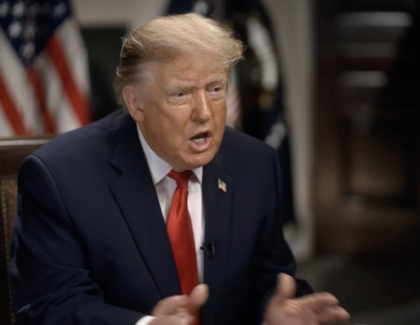
Donald Trump wants to throw a reporter in prison for compromising national security. He talked about it in 2019, when he threatened a Time magazine photographer who took a photo of a letter Trump had received from Kim Jong-un. He mentioned it multiple times while campaigning for Republican congressional candidates in 2022. And he said it this year, when he threatened journalists who published classified information about the downing of a United States fighter jet in Iran. “We’re going to go to the media company,” he told reporters at a news conference in April, “and we’re going to say, ‘National security—give it up or go to jail.’”
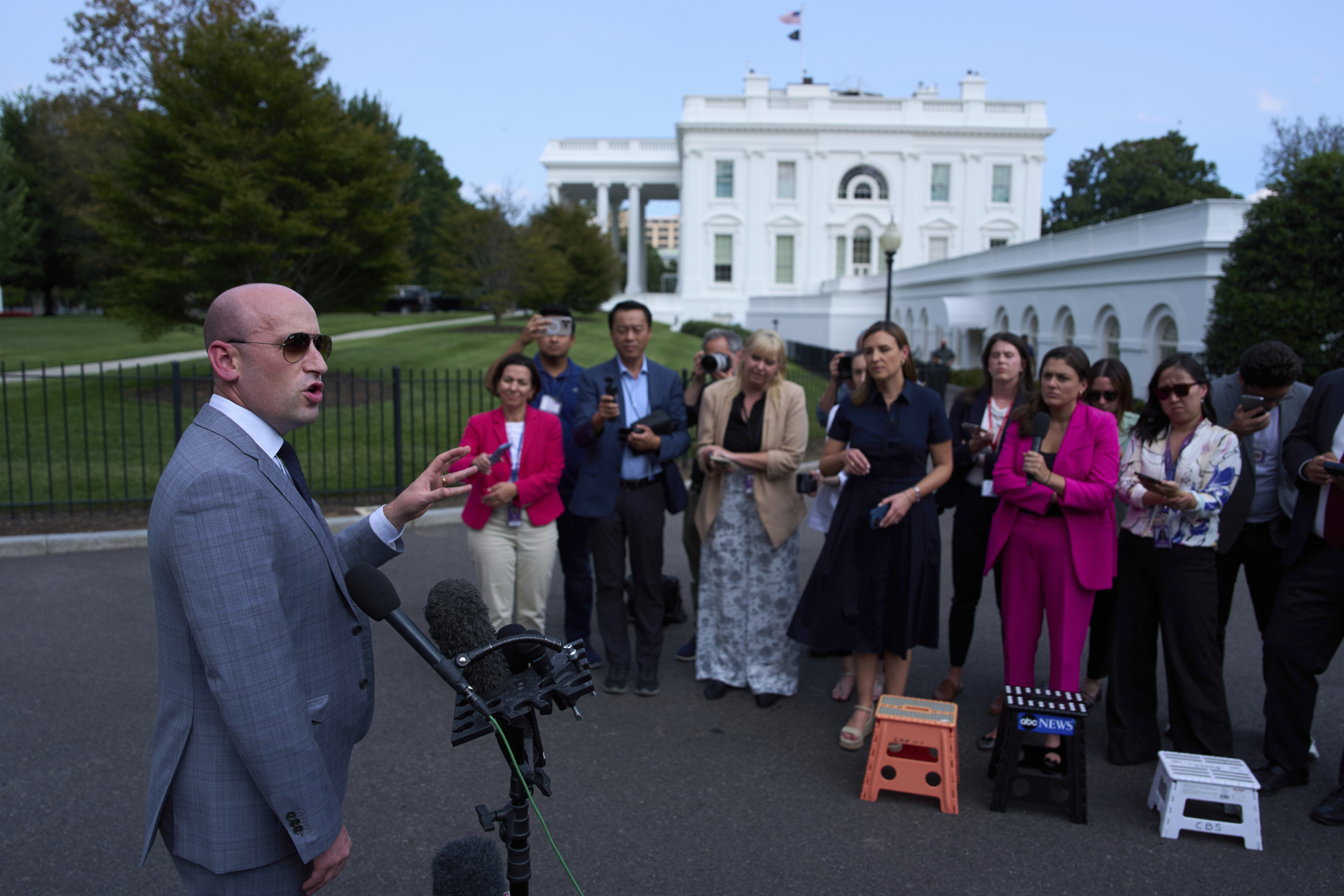
Trump’s appointment this month of Stephen Miller—a longtime MAGA adviser, documented white supremacist, and architect of the administration’s hard-line immigration policies—as White House chief of staff could accelerate that goal. Recently, The Atlantic reported that Susie Wiles, the former chief of staff, had “pushed back” on Trump’s plans to use criminal-leak investigations and other tactics, including arrests, to get journalists to reveal their sources. But in Miller, Trump has both a yes-man and an attack dog. On the day of Miller’s appointment, the White House said in a statement that he “has been a driving force behind the administration’s major successes—driving violent crime to historic lows, securing the border at unprecedented levels, and dismantling large-scale fraud.” He is loyal and methodical; a source told The Atlantic that Trump wanted somebody who would “crack skulls,” and there’s a sense among those who have studied Miller that he might enjoy doing so. Jean Guerrero, his biographer, put it this way in a recent interview with MS Now: “He is someone who takes pleasure in inflicting pain.”
Several journalists have already been arrested under the second Trump administration. Last year, Mario Guevara, who spent more than a hundred days in Immigration and Customs Enforcement detention, was deported to El Salvador. In January, federal agents took Don Lemon and Georgia Fort into custody after they reported on a church protest in Minneapolis. ICE has continued targeting noncitizens, arresting Estefany Rodríguez, from Colombia, in Nashville; Wilmer Solano, from Venezuela, in Miami; and Luis Galeano, a Nicaraguan journalist who has been stripped of his citizenship, in Orlando. They have since been released, but Carlitos Ricardo Parias, a creator-journalist known as Richard LA, remains behind bars.
None of those arrests have amounted to the true prize for Trump, however. He has long sought the scalp of a national security journalist who publishes government secrets, ideally leaked by a confidential source whose identity might also be revealed to devastating personal effect. (“In my opinion,” Trump said at a rally in Arizona in October, “leakers should be shot.”) Back in February of 2017, just weeks into his first term, Trump told James Comey, who was then the director of the FBI, that his war on whistleblowers “may involve putting reporters in jail,” as Comey wrote in a memo at the time. “They spend a couple days in jail, make a new friend, and they are ready to talk,” Comey recalled Trump telling him. Finding the right target could land an argument Trump has long made about journalists: that they are not the friends, but the enemies, of the American people.
The first Trump administration obtained the communication records of plenty of journalists—including Ali Watkins, a New York Times reporter, and journalists at the Washington Post and CNN—on national security grounds. In his second administration, the FBI’s search of the home of Hannah Natanson, a Washington Post reporter, in Virginia, and the seizure of her devices, marked a low point, though in February, a federal judge rejected the Department of Justice’s demand to search the material those devices held. Since then, the administration has amped up the pressure by subpoenaing a number of journalists in an attempt to expose their sources. In March, the DOJ ordered Ellen Nakashima, a national security reporter at the Post, to testify before a grand jury. Also in the spring, it targeted the Wall Street Journal over its Iran war coverage. In July, the DOJ went after New York Times reporters over a story about security problems with Trump’s new Air Force One, a gift from Qatar. And in August, the Times revealed that Matthew Cole, a freelance national security reporter who wrote about a top-secret, failed Navy SEAL Team Six mission in North Korea for the paper, had been subpoenaed months earlier.
The DOJ has withdrawn its subpoenas in all those cases but Cole’s. Early this month, the United States Court of Appeals for the Fourth Circuit, in Richmond, rejected an attempt by the Justice Department to obtain “extensive private data” from LinkedIn about a group of Times reporters that appears related to the story about the failed SEAL mission. “A request by the government to scoop up reporters’ records wholesale and ascertain the identity of their sources would tip the balance against informed discourse in a manner inimical to democratic health,” Judge Harvie Wilkinson, a Reagan appointee, wrote, according to the Times. “It is important not to view the value of a free press in isolation. Press freedom is among those things viewed by autocrats worldwide as a threat to their grip on power.” The appeals court sent the request back to a lower court to be amended. On Thursday, prosecutors, who are seeking two years’ worth of Cole’s conversations and notes, will appear in the United States District Court for the Eastern District of Virginia in a bid to get him to testify before a grand jury. One of his lawyers, David A. O’Neil, has said that the move is “another attempt by the Trump administration to punish the free press for doing its job,” and that he’s “confident the district court will uphold the important First Amendment interests at stake.” The Times declined my request for comment over the weekend, but Charlie Stadtlander, a Times spokesman, has said that the “administration’s attempts to access reporter communications continue its pattern of targeting a free press—actions that both violate constitutional protections and undermine the public’s right to know about their government.”
Cole, meanwhile, has spent recent weeks on a tour to promote his new book, Princes and Thieves: Jared Kushner and Mohamed bin Zayed’s Secret Plot to Remake the Middle East, which links two billion dollars in slush funds from Gulf state leaders to Trump’s son-in-law. (Kushner served as a senior adviser during Trump’s first administration, focusing on Middle East policy; more recently, he participated in negotiations between Israel and Hamas, and in February he was appointed United States special envoy for peace missions.) A few weeks ago, a reporter asked Trump what he thought about Cole’s book. “It’s a false story,” Trump said. “It was totally an incorrect story. It was just fake news. Amazing.”
During the lead-up to the 2024 election, Kyle Paoletta wrote for CJR about how Trump might try to use the Espionage Act to stifle press freedom. Media lawyers expressed some concern that the plea deal in the case of Julian Assange, the WikiLeaks founder who was charged with eighteen counts related to espionage, set a dangerous precedent for journalists, “since it included his admission of guilt to multiple counts of conspiring not only to disclose confidential information, but also to obtain it.” In the future, Jane Kirtley, a law professor at the University of Minnesota, suggested to Paoletta, “courts will be adjudicating whether a reporter’s asking a source for national defense information constitutes a conspiracy.”
These types of charges against reporters are still unlikely to stick. But they are nevertheless costly and act as a deterrent. They have also changed how national security journalism is done in many newsrooms, adding layers of complexity to what is already an extraordinarily challenging field. It’s tempting to interpret MAGA’s midterms losses this month as a harbinger of change. But other administrations, including that of Barack Obama, have cracked down on national security reporting and leakers in similar ways. The press should continue watching this administration’s antidemocratic actions closely. Lest we forget: Trump is still the president, and the newly elevated Miller is the man who said that “the powers of the president to protect our country are very substantial and will not be questioned.”
Other Notable Stories
By Carolina Abbott Galvão
- The Online News Association announced that it is pausing in-person events and will not host a conference in 2027. “Before the pandemic, the annual conference was ONA’s biggest source of revenue, and together with grants, it sustained the organization,” Niketa Patel, ONA’s CEO and executive director, said in a letter. “This is no longer true. The costs of large convenings have climbed sharply while professional development and sponsorship budgets have shrunk.” It is unclear whether the organization will host conferences in years to come. In the statement, however, Patel noted that she and the board, which remains “committed to ONA’s mission,” will be “exploring partnerships” and other ways to “carry this work forward.”
- In an alarming report about the rise of so-called ghost newspapers, Jana Cholakovska, of NJ.com, traced many such publications—which have been bought by private equity firms and stripped of staff and resources—back to Chatham Asset Management, a secretive hedge fund headquartered in New Jersey that bought McClatchy out of bankruptcy in 2020. Private equity owners are buying struggling papers and treating them “less like a newsroom than a distressed asset to be squeezed,” to “extract as much subscriber and advertiser revenue as they can,” Cholakovska wrote. This is, of course, bad news for local media, but there may be a silver lining: audiences are learning to find and prioritize outlets that invest in on-the-ground reporting and build “real ties to their readers,” Cholakovska argued.
- Judge Jeffrey T. Kuntz of the US District Court for the Southern District of Florida has allowed Trump’s lawsuit against the BBC to proceed, rejecting the British broadcaster’s attempts to have the case dismissed. The president is suing the BBC over a documentary he argues was “intentionally, maliciously, and deceptively” doctored. The BBC has apologized for editing that gave “the mistaken impression that Trump made a direct call for violent action,” but said it “was not evidence of a fundamental bias in the BBC’s news reporting and did not constitute defamation.” (My colleague Jem Bartholomew wrote recently about the case for CJR.)
- On Thursday, the New York Times published an account of how it decides to credit competitors, a controversial subject, particularly for smaller and local publications that often accuse the Times of passing their scoops off as its own. Acknowledging that the paper’s “track record isn’t perfect,” Patrick Healy, the Times’ assistant managing editor for standards and trust, wrote that “citing peers for their original work is a journalistic strength.” Joe Kahn, the paper’s executive editor, said that its approach should be “generous rather than grudging.” Disclosure, he continued, “strengthens rather than weakens” Times journalism.
- In a piece on the Democratic National Committee’s online-creator strategy, Semafor’s Max Tani observed that the party had been “outmaneuvered” by Republicans, who had succeeded in creating a new alternative media ecosystem that helped them “circumvent traditional gatekeepers.” In the lead-up to the midterms, however, Democrats changed their tune and began investing in online strategy. “By and large,” the right is “not inherently better” at the internet, Barrett Adair, a political activist and creator, told me recently at Crooked Con. “They just invested in the infrastructure earlier.”
- And The Atlantic has hired Amanda Mull, Annalisa Quinn, and Erik Slavin as staff writers. Mull is returning to the magazine from Bloomberg Businessweek. Slavin comes from Stars and Stripes. (The Defense Department fired him in August when he refused to cooperate with its censorship demands, a saga my colleague Ivan L. Nagy wrote about for CJR.) Quinn served most recently as deputy editor for the Boston Globe’s Sunday magazine; in September, she wrote a viral story about changes to the strict masking policy at a lesbian bar in Western Massachusetts.
Has America ever needed a media defender more than now? Help us by joining CJR today.