Sign up for the daily CJR newsletter.
Today, we’re introducing the Journalism 2050 issue, a project from the Columbia Journalism Review and the Tow Center for Digital Journalism, with support from the Patrick J. McGovern Foundation. In reported features, columns, interviews, a podcast series, and more, we look at the future of the media industry and shifting habits of news consumption. We’ll be featuring pieces from the issue in the newsletter over the coming weeks, and you can find it all here.
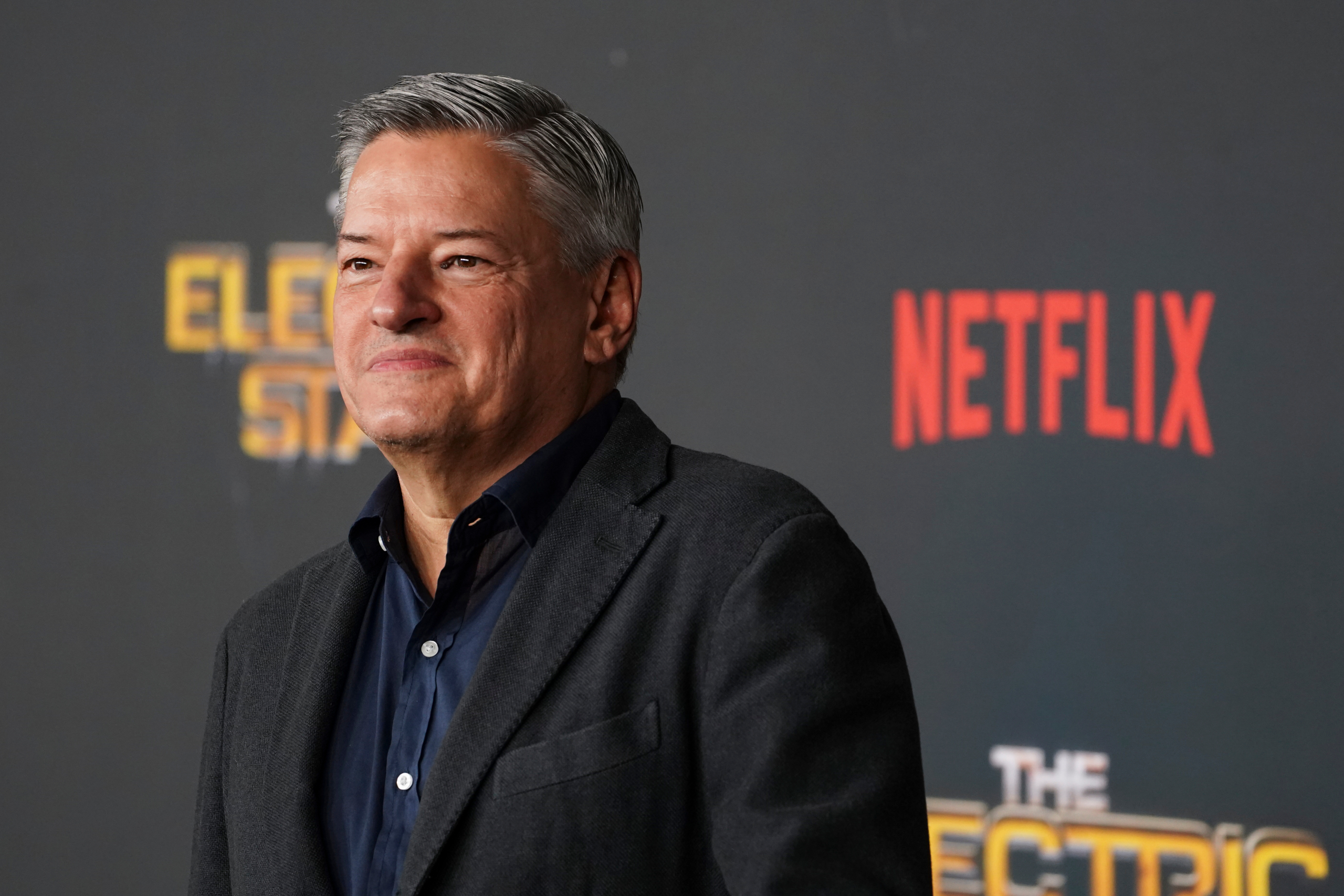
On Friday, Netflix announced that it planned to acquire Warner Bros. Discovery for nearly eighty-three billion dollars. For many, the deal represents the dominance of a streaming-service tech company over a century-old Hollywood studio. If the merger is approved by regulators, Netflix will absorb popular franchises including Batman and Harry Potter; classic movies including The Wizard of Oz and Casablanca; and HBO’s prestige programs, like Succession and The White Lotus. Warner Bros. will spin off CNN and other cable networks into a separate company. “In a world where people have so many choices, more choices than ever how to spend their time,” Ted Sarandos, co–chief executive of Netflix, said, “we can’t stand still.”
In response to news of the deal, a group identifying itself as a collection of “concerned feature film producers” sent an open letter to members of Congress expressing worry that a Netflix takeover of Warner Bros. Discovery would “destroy” theatrical releases for films, and that the economic and creative future of the industry was at stake. The letter called for regulators to give the deal “the highest level of antitrust scrutiny.” Chris Murphy, a senator from Connecticut, wrote on X that “this deal is a classic antitrust violation” with serious implications for the movie industry. Even so, he noted, “there are some quietly rooting for it because a Paramount takeover (that includes CNN) would be worse.”
Losing out to Netflix in the bidding war were Paramount and Comcast. Paramount in particular aggressively pursued the acquisition of Warner Bros. Discovery in its entirety, with its cable news divisions intact. Some have argued that a Paramount Skydance takeover represented an even darker scenario, because it would have given David Ellison, the CEO of Paramount who has close ties to President Donald Trump, control of news media from CBS to CNN. For now, though, Netflix remains uninterested in CNN. On Monday morning, Paramount Skydance placed an all-cash bid to acquire WBD for roughly 108 billion dollars, in an attempt to beat the Netflix deal.
The Washington Post reported that many CNN staffers were relieved by this outcome. A CNN staffer said in an email, “Being swallowed by Paramount would’ve meant merging with CBS—obvious cuts, re-org., etc.” Another said, “There’s some short-lived relief I think that it wasn’t Paramount, and Bari won’t be our boss,” referring to Ellison’s recent appointment of Bari Weiss as head of CBS News.
Where this leaves CNN is uncertain. Gunnar Wiedenfels, who is currently the chief financial officer of Warner Bros. Discovery, is expected to lead the new cable spin-off, to be called Discovery Global, which will include TLC, HGTV, Food Network, and Discovery. During a recent call with the company’s leadership, Wiedenfels and David Zaslav, the chief executive of WBD, discussed aspects of how that would look, though much remains unsure; as Deadline observed, many of these networks have had their programming budgets cut over the past few years as the focus has moved to streaming, “but they still make a lot of television shows.” As a staffer told Deadline, “It seems like we’re going to be wading through the mud for the next 18 months.”
That includes CNN, where staffers will follow the lead of Mark Thompson, the network’s chief executive. Last summer, Adam Piore reported for CJR on Thompson’s takeover of CNN at a time of challenge both for WBD’s finances and for cable news broadly. Thompson—who previously had an effective run as the CEO of the New York Times, where he aggressively pursued a digital revenue strategy that brought the paper out of existential crisis—got to work bringing many of the same ideas to bear at CNN. “Over the years, we’ve built this mansion with twelve different kitchens, all making dinner every night with a ton of leftover waste,” a CNN executive told Piore. “We now have to go back and build a bigger kitchen in the main house to serve everybody who lives in the house.” In other words, Piore observed, “a gut job.” Thompson, he found, was known to move deliberately—not always the pace of twenty-four-hour news. “The fate of CNN,” he wrote, “may depend on whether, absent devoted support from a publisher-family, executives and shareholders can be expected to show patience.”
The Netflix deal now will start making its way through the regulatory process of the Federal Communications Commission—where Brendan Carr, the chair, appears to use his authority, as CJR’s Kyle Paoletta wrote, to “force the nation’s broadcasters into fealty to Donald Trump.” Part of Paramount’s argument to Warner Bros. Discovery, according to CNN’s Brian Stelter, was that its offer would be relatively likely to be approved by regulators, since both David and Larry Ellison, his father, are friends with Trump. But as Bloomberg noted, Sarandos has been building his own close relationship with the president. On Sunday, after a reporter for Fox News asked Trump, “Should Netflix be allowed to buy Warner Bros.?” Trump said, “I don’t know, that’s going to be for some economists to tell. I’ll be involved in that decision, too.” He added, of Sarandos: “He was in the Oval Office last week.… He’s a great person. He’s done one of the greatest jobs in the history of movies and other things.”
As a devoted fan of Succession, I can’t help but draw a parallel with that show’s finale, when a Swedish tech billionaire played by Alexander Skarsgård seizes control from the three Roy children in line to take over their family’s media company, Waystar Royco, and its conservative news entity, ATN. What mattered to the billionaire, ultimately, was not the news, but the influence and power that come with controlling it. In the real-life Netflix-Warner deal, CNN is left out of the equation. It seems it is seen as a complication rather than a prize to be won. A liability, maybe, or just not significant enough to fight over?
Other notable stories…
By CJR staff
- Olivia Nuzzi, a former Washington correspondent for New York Magazine who departed that position in October of 2024 and was hired as the West Coast editor of Vanity Fair earlier this year, is leaving her new role. Nuzzi and Vanity Fair said in a statement that they “mutually agreed, in the best interest of the magazine, to let her contract expire at the end of the year.” The development comes after the buzzy release of Nuzzi’s memoir, American Canto, about a romantic relationship with a man she refers to as “the politician,” widely believed to be Robert F. Kennedy Jr., and a series of allegations published on Substack by Ryan Lizza, Nuzzi’s former fiancé, that she acted as a “private political operative” for Kennedy.
- The New York Times has filed a lawsuit alleging that the Department of Defense violated the First Amendment when it implemented new rules, in October, limiting what and how journalists can report. As a result of the new restrictions, almost every major news organization handed in its press badge and relinquished access to the Pentagon. For CJR, Ivan L. Nagy reported on the dissolution of the Pentagon press corps and the moving in of right-wing outlets loyal to Trump.
- Unionized journalists at Politico and the PEN Guild won an arbitration case against Politico management that protested the implementation of two AI features without proper consideration of safeguards. “If the goal is speed and the cost is accuracy and accountability, AI is the clear winner. If accuracy and accountability is the baseline, then AI, as used in these instances, cannot yet rival the hallmarks of human output,” the arbitrator wrote in his ruling, as reported by Nieman Lab. The ruling is one of the first tests of violation of AI policy in media union contracts.
- The Committee to Protect Journalists spoke to three reporters taken on escorted visits to Gaza following the October 2025 ceasefire. “Their experiences show consistent patterns of restricted movement, curated interactions, pre-publication review, and staged visuals,” CPJ wrote. In August, CJR published a feature compiling urgent ideas from influential journalists, researchers, academics, and advocates on how to defend press freedom in Gaza.
- And members of the New Yorker Union interrupted the documentary premiere of The New Yorker at 100, executive-produced by Judd Apatow, to distribute fliers in protest of the recent firing of four Condé Nast staffers. (One of the fired workers, Jasper Lo, had been a fact-checker at The New Yorker and makes an appearance in the film.) In attendance at the premiere was the Newhouse family, which owns Condé Nast; CEO Roger Lynch; Sarandos, the Netflix CEO; Tina Brown; Martha Stewart; and Molly Ringwald.
Has America ever needed a media defender more than now? Help us by joining CJR today.