Sign up for the daily CJR newsletter.
Do you remember where you were ten years ago, when a 2005 video leaked from Access Hollywood in which Donald Trump told Billy Bush, a former host of the show, that when you’re a star, “you can do anything”? Specifically, Trump was referring to assaulting women: “Grab ’em by the pussy.” It was October (surprise!), two days before the second debate of the 2016 presidential election, in which Trump was to face Hillary Clinton, the Democratic nominee. I was in a car headed for Washington, DC, when my friend John delivered the news from the backseat. “Holy shit,” he said. “That’s it. He’s done.”
Trump, of course, was not done. Access Hollywood is, though: after thirty years, the series is ending, part of a strategic move by NBCUniversal away from the first-run-syndication business, as audiences increasingly prefer streaming. That type of show—in which the access to Hollywood is performed by talking heads in and of the place, for those of us outside, via publicist-wrapped confections—has felt outmoded for a while now. In our social media age, celebrities have gotten smaller, just big enough to fit in the palm of your hand. The resulting sense of intimacy imparts authenticity, even if, most of the time, it’s as contrived as the tape Mario Lopez logs. To what are we getting access, exactly? But even Hollywood can’t keep everything behind the curtain. “Along with Donald Trump and me, there were seven other guys present on the bus at the time, and every single one of us assumed we were listening to a crass standup act,” Bush wrote in 2017. “He was performing. Surely, we thought, none of this was real. We now know better.”
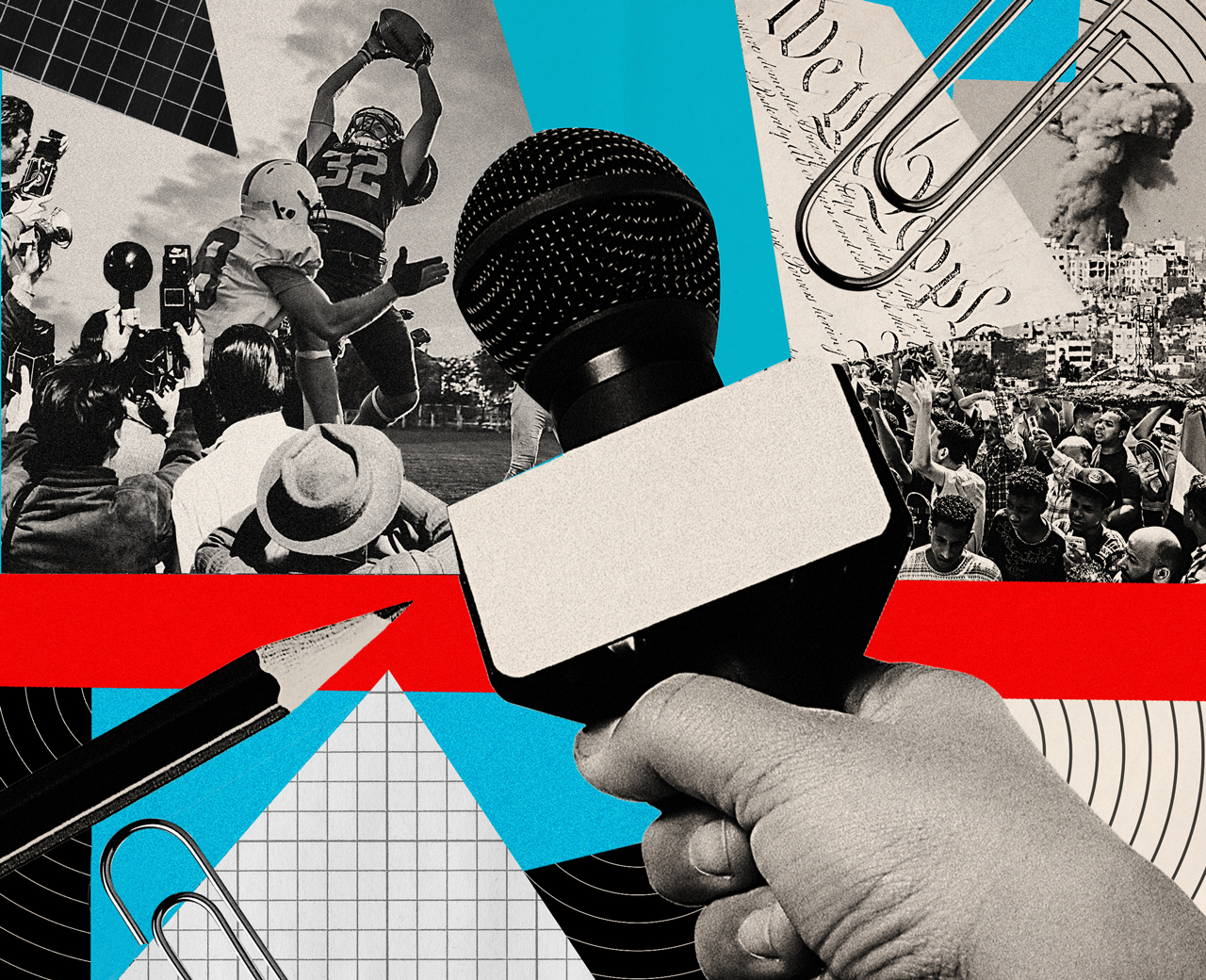
Access is great. There’s no two ways about it. We all like to go behind closed doors—whether it’s a famous person taking off her makeup or a whistleblower revealing what went south at a private meeting. Trump—as a reality TV personality, first, and the president of the United States, second—understands this acutely, and so we see him take reporters’ phone calls on his cell, saying contradictory things about one war or another. Death counts pile up. Does he think it’s an act, or is this real to him? Either way, his comments become “exclusives” and “scoops,” moving markets. Politics, press, performance—the bus rolls on. “When we talk about the process,” Joan Didion wrote in 1988, “we are talking, increasingly, not about ‘the democratic process,’ or the general mechanism affording the citizens of a state a voice in its affairs, but the reverse: a mechanism seen as so specialized that access to it is correctly limited to its own professionals.” These professionals include everyone from “those who ask and those who answer the questions on the Sunday shows, to the media consultants, to the columnists, to the issues advisers, to those who give the off-the-record breakfasts and to those who attend them; to that handful of insiders who invent, year in and year out, the narrative of public life.”
Plus ça change. Access Hollywood may be disappearing, but TMZ has gone to Washington. “Casting is 90 percent of it,” Harvey Levin, the mastermind of TMZ, tells Susie Banikarim, for a column in CJR’s new special issue on access. The guys Levin selected are “affable and approach their new gig with a sense of guilelessness that most reporters do not possess,” Banikarim writes. This grants TMZ’s DC operation a special form of access—to the misty air in the space between the major stories formed by political consensus and then to an audience that has not been otherwise paying much attention to what goes on inside the Beltway. “I think a lot of political reporters are used to just the way things work. It’s like the water they swim in, so they don’t write about it,” Tim Miller, the host of The Bulwark Podcast, tells Banikarim. “Regular people who don’t live in DC are interested in seeing more of the behind-the-scenes stuff and don’t care about this kind of silly reverence about the way things are supposed to be done in the Capitol.”
On the flip side, we find the White House Correspondents’ Association, whose stated purpose is to serve as a bridge between the press corps and the administration, negotiating access. (They also give out scholarships.) And yet here we are, as the Trump administration sues journalists, investigates them, arrests them, throws them in detention—and, in the case of Mario Guevara, deports them. “Depending on your view,” Liz Skalka writes, “the association has been either shrewdly calculating in its restrained approach or shamefully feckless, projecting normalcy during an autocratic time.” The annual WHCA dinner has come into focus in light of its abrupt, frightful end; Weijia Jiang, the organization’s president, tells Skalka that the WHCA is committed to some sort of redo: “I don’t think we can do nothing.” And yet Lisa Stark, a former ABC journalist who organized an open letter opposing the decision to host Trump at the event, says the president has “made it clear that there is no letup in his assault on independent journalists and independent journalism.” Most recently, the Trump administration has drafted a nondisclosure agreement prohibiting federal workers from sharing anything deemed to be “confidential government information.”
The restrictions, workarounds, glories, and trade-offs of journalistic access sweep from Washington to Los Angeles (check out Haley Mlotek on glossy magazines and their codependency with stars) to Nashville (where Maddy Crowell finds Lauren Chen—who ran Tenet Media, an alleged Russian scheme—back in the saddle) and around the world, as Joel Simon talks with Dan Rather, Jon Lee Anderson, Christiane Amanpour, and others about sit-downs with dictators. Elsewhere in the issue, we hear about how access works from the people who know best, including Margaret Brennan, the host of Face the Nation; Taffy Brodesser-Akner, of the New York Times magazine; and Jazmine Hughes, a contributing writer at New York. “I don’t think that there is such a thing as too close,” the author Michael Wolff argues. Not everyone feels that way. Six years into her time covering Michigan State football and basketball for the Detroit Free Press, Jemele Hill asked her editor if she could change beats. “I was concerned that I was getting too chummy with the people I was covering,” she says. “After a while, you start to feel the familiarity of complacency.”
There’s much more and, in the coming weeks, Megan Greenwell, the host of our podcast, The Kicker, will talk about access with a series of special guests. Stay tuned for that. In the meantime, you can find the whole access issue here. Thanks for reading.
Has America ever needed a media defender more than now? Help us by joining CJR today.