Sign up for the daily CJR newsletter.
Some news from the home front: Today the Columbia Journalism Review is live with an updated homepage design. We encourage you to check it out at cjr.org—where you’ll always find more features, podcasts, and special issues than we can fit in your inbox. And we hope you’ll invest in the work that we do by becoming a member or supporting CJR with a donation.
In Silent Spring, the 1962 book that exposed the hazards of indiscriminately spreading the insecticide DDT, and other pesticides, across the American landscape, Rachel Carson wrote that the public was being “fed little tranquilizing pills of half truth” by authorities and the chemical industry. They were reassuring people that chemical insecticides were harmless to humans, pets, and plants. Carson’s research suggested that they were not—that they were, in fact, poisoning rivers, choking wildlife, and infiltrating the very cells that make life possible. “We urgently need an end to these false assurances, to the sugar coating of unpalatable facts,” she wrote.
Following the book’s release, and under pressure from a dismayed public, the cogs of the federal government slowly began to move. In 1970, Richard Nixon ordered the creation of the Environmental Protection Agency (EPA). Two years later, despite fierce lobbying from the chemical and agricultural industries, the EPA banned DDT from agricultural use across the nation. Back then, the facts still mattered. Today things look quite different.
Since 2009, the EPA has assumed a major role in regulating the emitting of greenhouse gases, which scientists, in an overwhelming global consensus, say are causing man-made global heating. Under the Obama administration, the EPA issued what became known as the “endangerment finding,” determining that greenhouse gases are harmful and must be regulated under the Clean Air Act. But on February 12 of this year, President Donald Trump and Lee Zeldin, the administrator of the EPA, announced that the agency is overturning that finding, effectively relinquishing its authority to regulate emissions for six pollutants, including methane and carbon dioxide. “Over the generations, fossil fuels have saved millions of lives,” Trump claimed when announcing the policy. “This radical rule became the legal foundation for the Green New Scam”—the president’s term for policies to curtail greenhouse gas emissions under the Biden administration—“probably one of the greatest scams in history.” The action, he added without providing evidence, “will save American consumers trillions of dollars.”
Undoing the endangerment finding “has to rank as one of the signal moments in America’s descent into idiocracy,” Bill McKibben wrote in The New Yorker on Friday. (Environmental groups have sued over the EPA’s action.) The move builds on a year of efforts to crush sustainable energy projects, such as wind and solar, and to drive up fossil fuel use, with investment and tax incentives for producers of coal, oil, and gas. Trump, who received record donations from the oil industry in the 2024 election cycle, has attacked climate change as a hoax. On the climate—as with other policy areas, including tariffs, immigration, military intervention, and election integrity—Trump has thrown out little pills of half truth: He doesn’t bother sugarcoating the unpalatable facts anymore. He simply pretends they don’t exist.
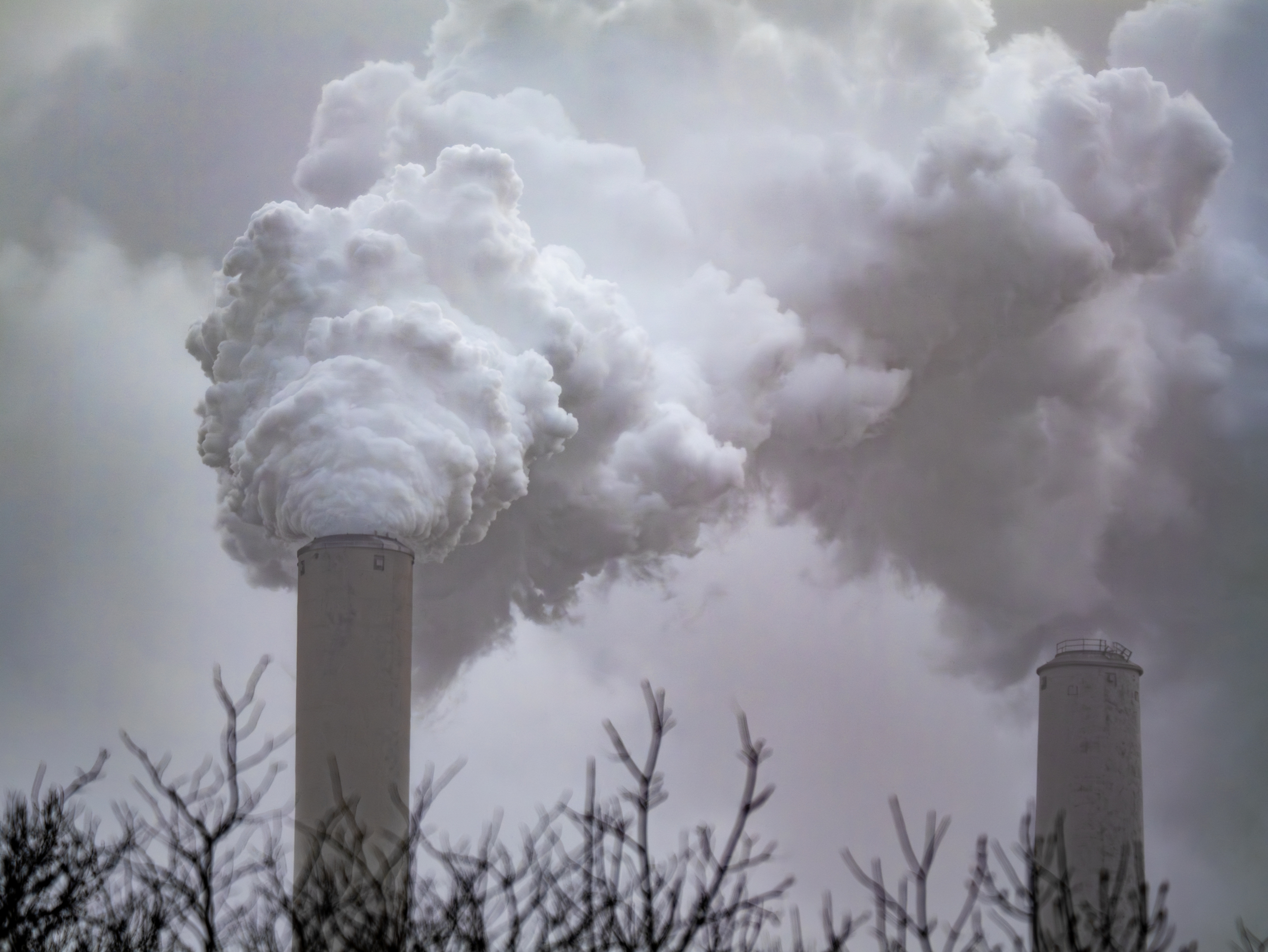
For news organizations, the administration’s repeated denial of the facts of climate science presents a number of challenges. One is around language. Journalists’ repeating the rampant falsehoods, emitted from the White House like plumes of soot (to give a flavor: “windmills are driving the whales crazy”; solar power is “farmer destroying”; coal and oil are “beautiful, clean”), risks laundering them into legitimate, evidence-backed positions. But ignoring these delusional statements carries the separate danger of sanewashing Trump’s policies—that is, the journalistic practice of excusing or normalizing deranged or extreme positions. Reporters have bumped up against this problem time and again when covering Trump since he first ran for president, in 2016. There is, of course, one route around these obstacles: directly calling out falsehoods as lies.
Media executives may also be tempted to use the federal government’s willful head-burying over global warming as an excuse to downgrade environmental coverage. We’ve seen some frustrating examples of this in recent months. In November, when administration officials snubbed the UN’s COP30 climate conference in Brazil, The Guardian’s Jonathan Watts noted that none of the four major US networks—CBS, NBC, ABC, and Fox News—sent a team to cover the talks. This is exactly what the White House wants: for us to look away.
Moreover, the recent brutal cuts at the Washington Post reportedly included the gutting of its climate team. At least fourteen climate journalists were dismissed, according to Sammy Roth, a former LA Times climate columnist who now writes the Substack newsletter Climate-Colored Goggles. Roth said the decision to lay off these journalists “only adds to a sad trend of legacy media organizations pulling back from climate coverage, even as global warming accelerates.”
Even worse than climate erasure, though, is appeasement. Days after the layoffs, the Post’s editorial board published a piece with the headline: “EPA is right to reverse Obama overreach.” (“It’s about time,” the article said, arguing, in the spirit of Jeff Bezos’s recent diktat for a focus on “personal liberties and free markets,” that the endangerment finding was “used by bureaucrats ever since to dramatically expand the federal government’s power over cars.”) To see this play out at a newspaper that won the Pulitzer Prize for Explanatory Reporting for its brilliant “2°C: Beyond the Limit” climate project is all very sad. The Wall Street Journal’s editorial board also cheered on the administration, attacking—with no apparent irony—supporters of the endangerment finding as “unhinged from reality.” I’d bet White House officials, who keep a keen eye on the media, have taken note of these editorials. To Trump, who loves a good fight with the press, the Post and Journal pieces send clear signals: Please, we don’t want trouble!
Even amid the backsliding, outlets continue to publish quality journalism on the big story looming over humanity’s future. The New York Times’ Lisa Friedman and Maxine Joselow delivered a strong story delving into the outsize role a cadre of four conservative activists played in the EPA action. Several outlets—including, notably, the Post, just days before imposing layoffs—foregrounded the threats of global heating in their coverage of the Milan-Cortina Winter Olympic and Paralympic Games.
The climate story is inextricably linked with a host of other newsroom coverage priorities. In a revealing post last week, Amy Westervelt, an investigative climate reporter, illustrated how climate change appears as a theme in numerous recent stories. Climate denial appears in emails sent by Jeffrey Epstein. The fate of natural resources plays a central role in the conflicts and tensions in Gaza, Venezuela, and Greenland. Big Tech remains thirsty for water and power to service AI data centers. And law enforcement agencies have come to apply the label of “domestic terrorist”—deployed against environmental campaigners going back years—to protesters of Trump’s federal immigration crackdown. As Covering Climate Now puts it, climate is “a story for every beat.”
The Trump administration may be burying its head. But journalists can’t afford to look away now.
Other Notable Stories …
- Tricia McLaughlin, spokeswoman for the Department of Homeland Security (DHS), announced plans last week to leave her post. In January, CJR’s Amos Barshad profiled McLaughlin, who grew up in Cincinnati and later worked on Vivek Ramaswamy’s presidential bid before joining Trump’s second administration. “As the Trump administration’s voice for its expansionist immigration machine, she has become a star in MAGA-world,” Barshad wrote. McLaughlin’s departure is the latest shake-up at DHS after this year’s fatal shootings of Renee Good and Alex Pretti by immigration enforcement officers. Molly O’Toole, who won a Pulitzer for immigration reporting, told Barshad that, under McLaughlin, DHS is “blatantly lying to the American public.”
- Meanwhile, the entertainment giant Warner Bros. Discovery (WBD), which put itself up for sale in the fall, said last Tuesday that talks were restarting with Paramount Skydance, CBS News’s parent company, just weeks after negotiations ended. Netflix has agreed to acquire WBD in a deal valued at 72 billion dollars—which does not include cable assets such as CNN, TBS, and TNT—but has faced competition from Paramount, which has sought a hostile takeover of WBD. Paramount, which has floated a 77.9-billion-dollar offer, also seeks WBD’s cable assets, in an acquisition that would significantly grow the Ellison family’s media empire, which I wrote about for CJR here. WBD has set a shareholder vote on the Netflix deal for March 20.
- Anderson Cooper is leaving 60 Minutes, the CBS News show where he is a correspondent, to focus on his job as an anchor on CNN, he announced last Monday. Working on 60 Minutes has been “one of the great honors of my career,” said Cooper, who is fifty-eight, citing a desire to spend more time with his two young sons. (The news was first reported by Breaker.) Reporting for Status, Oliver Darcy wrote that “Cooper had grown increasingly uneasy with the rightward direction the network has charted under [Bari] Weiss’s leadership and David Ellison’s ownership of parent company Paramount.” Last night saw the airing of Cooper’s 60 Minutes segment investigating claims of “white genocide” in South Africa, which Status reported was being subjected to “intense editorial scrutiny” by CBS News.
- Stephen Colbert, host of The Late Show with Stephen Colbert, made a surprising statement on air on Monday: “You know who is not one of my guests tonight? That’s [Democratic] Texas state representative James Talarico. He was supposed to be here, but we were told in no uncertain terms by our network [CBS]’s lawyers, who called us directly, that we could not have him on the broadcast”—amid fears, Colbert said, of violating the Federal Communications Commission (FCC)’s equal-time rule. (CBS, however, contradicted that version of events, saying that there was no prohibition and that it merely provided legal guidance on complying with the equal-time rule.) Colbert’s interview with Talarico was uploaded to the show’s YouTube channel instead. On air, Colbert addressed Brendan Carr directly: “Sir, you’re chairman of the FCC, so FCC you,” he said.
- In the UK, Axel Springer, the owner of Politico and Business Insider, has joined a rival bid for the Telegraph newspaper, The Guardian reports. The owner of the Daily Mail, the Daily Mail and General Trust (DMGT), agreed to a deal to buy the Telegraph for about 655 million dollars late last year, an acquisition that would create a media powerhouse and bring two right-wing papers under the ownership of Britain’s Rothermere family. But this month the DMGT proposal was referred to competition authorities by the UK’s Labour government, likely spelling a monthslong delay. Axel Springer joined a consortium led by Dovid Efune, the New York Sun owner, for a rival bid.
- Four journalists and a lawyer were arrested and interrogated on Tuesday in Yaoundé, the capital of Cameroon, for investigating a state-run migrant detention center where the US Department of Homeland Security had recently deported people, the New York Times reported last week. (None of the deportees were Cameroonian citizens, according to the Times.) “It was an extremely stressful experience,” said Randy Joe Sa’ah, a freelance journalist who was briefly detained. The journalists included three who were reportedly on assignment for the Associated Press. The five were later freed.
- And Georgia Fort entered a not-guilty plea on Tuesday to federal felony charges relating to a protest she filmed in January inside a church in Saint Paul. CJR’s Carolina Abbott Galvão and Riddhi Setty covered the arrests of Fort and Don Lemon, a former CNN anchor and the host of The Don Lemon Show on YouTube, who was likewise arrested last month for covering the protest. “The free-speech and free-press guarantees of the First Amendment fully protect such newsgathering and reporting activities, and Fort’s arrest is a transparent and unconstitutional attempt by our federal government to intimidate journalists and chill their protected speech,” Fort’s attorney has said. “She will be vigorously defending herself against these charges.”
Has America ever needed a media defender more than now? Help us by joining CJR today.